
Last updated August 25, 2026
Free on-site gate assessment - hinges, posts, and your LiftMaster or Nice gate operator checked before anything is quoted
The assessment is free and the quote is the invoice.

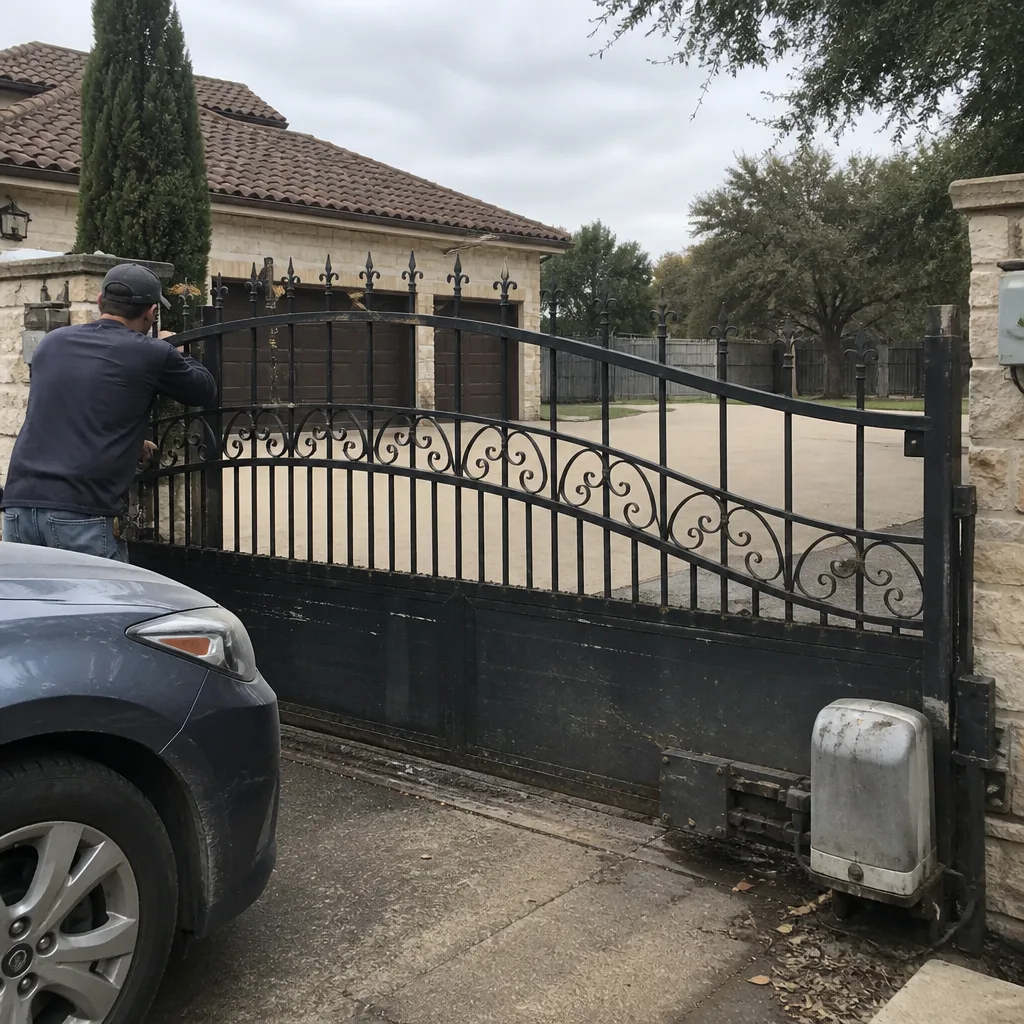 Before
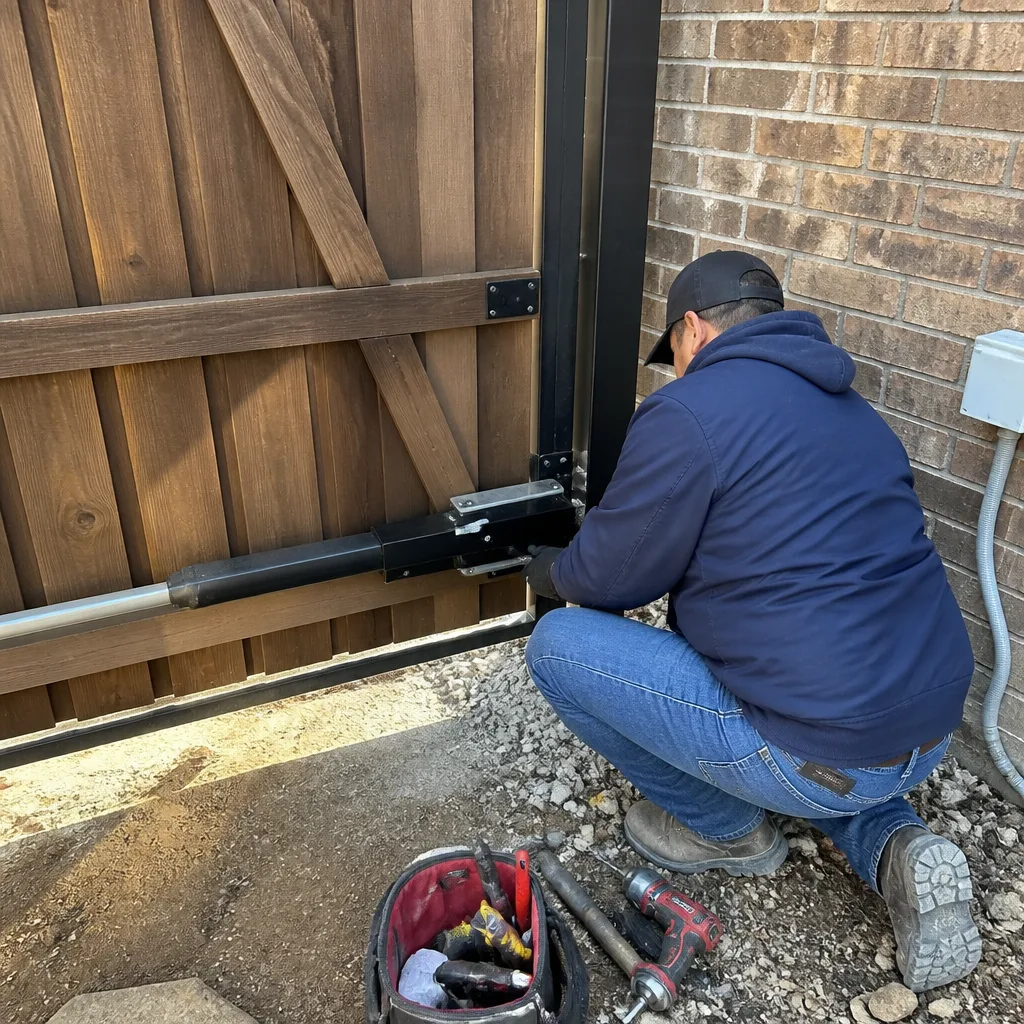 After
After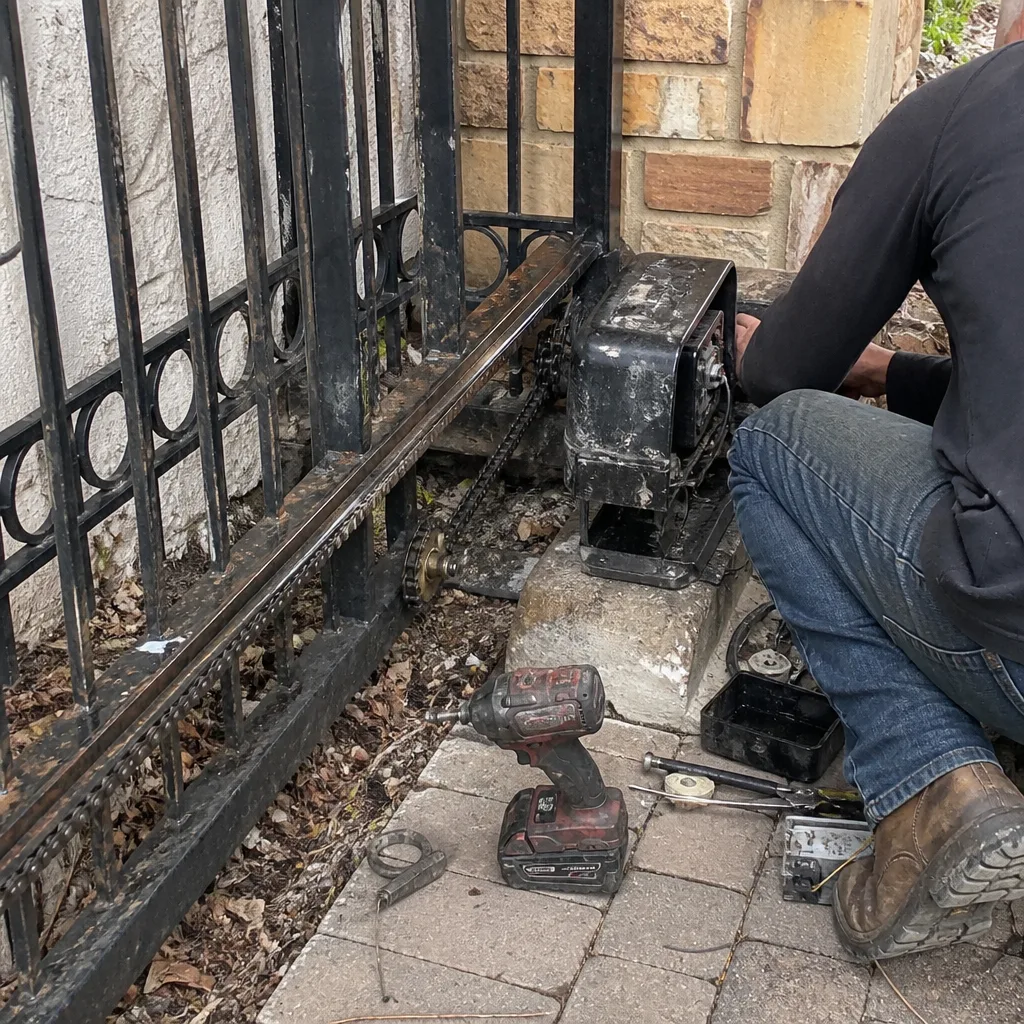 Before
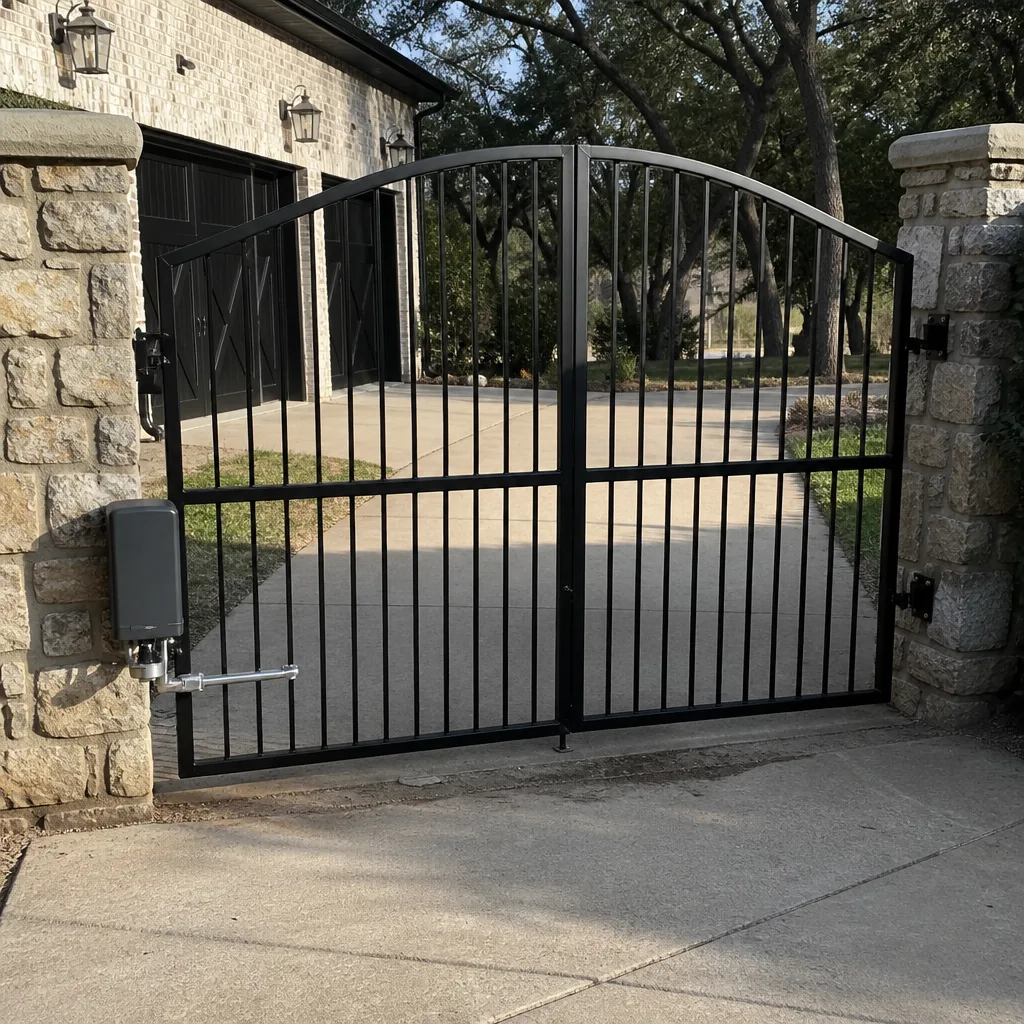 After
After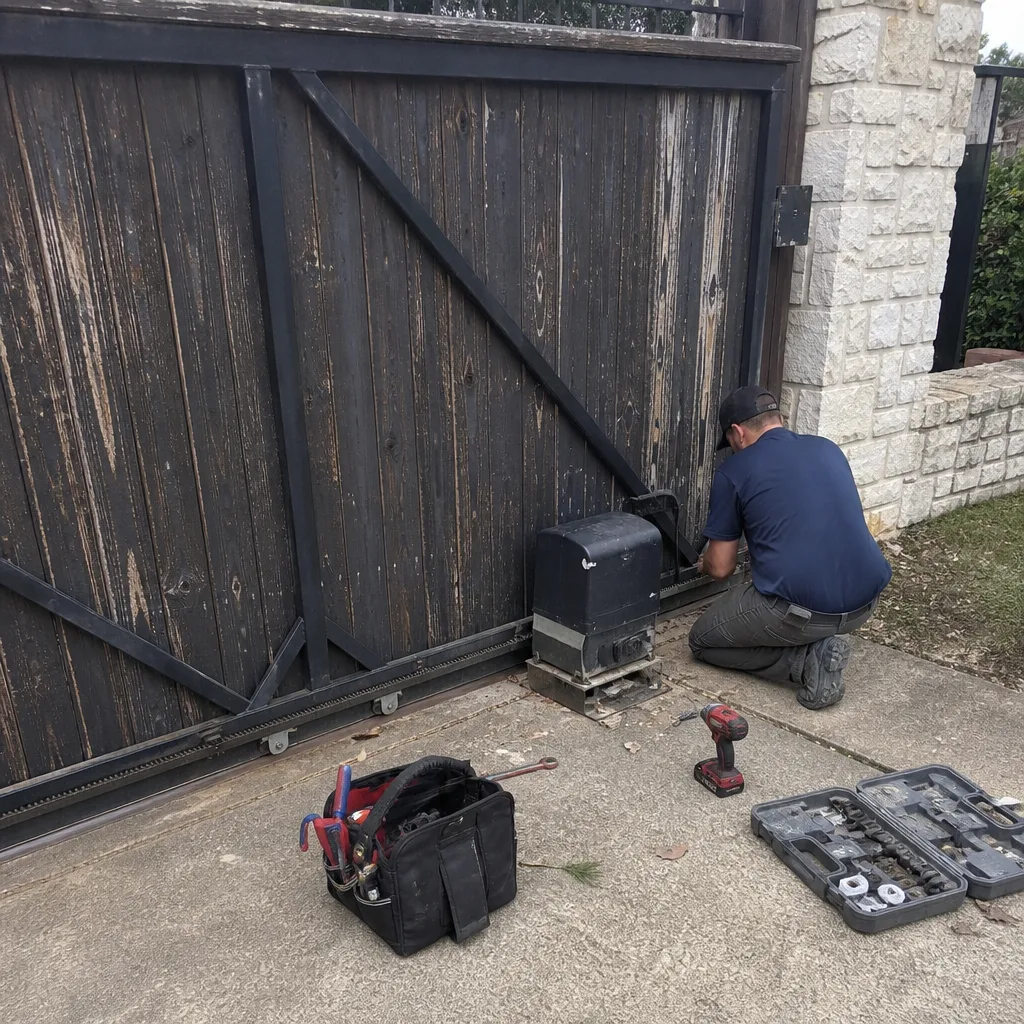 Before
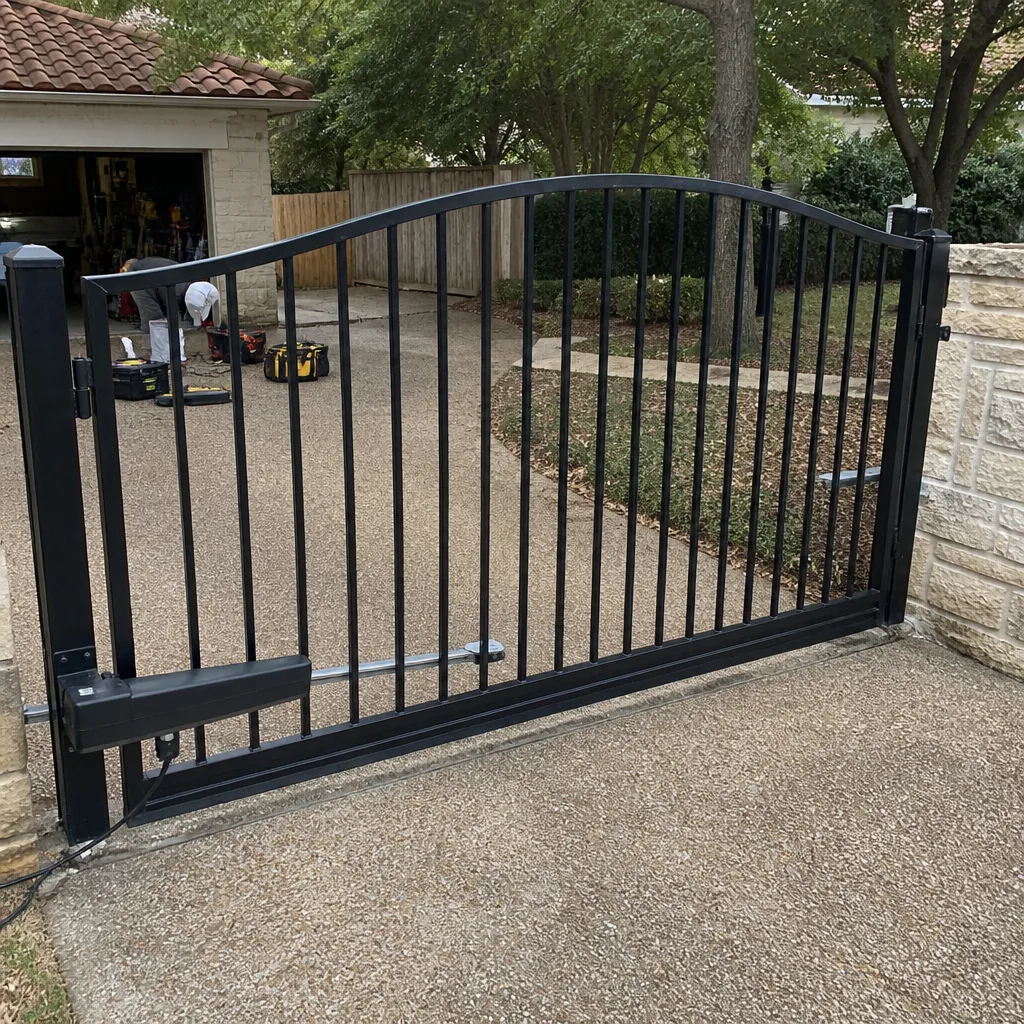 After
AfterSeasonal Gate Repair Care for Grapevine: Year-Round Homeowner’s Guide
Most Grapevine homeowners don’t think about their driveway gate until it stops moving. That’s understandable, but it’s also expensive. A gate is a mechanical system exposed to Texas weather 365 days a year, and the repair bills we see in Grapevine are almost always traced back to a small issue that was ignored for six months too long. The good news is that seasonal care takes about twenty minutes per season, and it’s the difference between a gate that lasts fifteen years and one that needs major work in five. This guide walks you through what to check, when to check it, and what you can safely handle yourself versus what belongs in the hands of a professional. By the end, you’ll have a clear seasonal rhythm for keeping your gate running smooth through Grapevine’s freeze nights, hundred-degree summers, and everything in between.
Quick Answer
Seasonal gate care in Grapevine means four simple inspections per year: lubricate hinges and rollers each spring and fall, check the opener’s force settings and safety reverse before summer heat and winter freezes, clear the track or chain of debris monthly, and test the battery backup every six months. Most homeowners can handle lubrication and visual inspection; electrical adjustments and spring tension work should always go to a trained gate technician.
Table of Contents
- Spring Gate Maintenance in Grapevine
- Summer Heat and Your Gate Opener
- Fall Preparation Before the First Freeze
- Winter Gate Care for Grapevine’s Cold Snaps
- Monthly Checks That Take Five Minutes
- What Seasonal Gate Repairs Cost in Grapevine
- Common Mistakes to Avoid
- When to Call a Professional
- Frequently Asked Questions
- The Bottom Line
Spring Gate Maintenance in Grapevine
Spring in Grapevine is when your gate wakes up from winter and gets back to daily use. The soil has shifted with winter moisture, the hinges have sat through a few freeze cycles, and the wind has deposited fine dust into every moving part. This is the season to do the year’s most thorough inspection. We’ve worked on gates across town, from the older estate properties near Lake Grapevine to the newer builds south of Highway 114, and the spring issues are remarkably consistent.
What spring does to your gate: The freeze-thaw cycle of a Texas winter, mild as it is, causes metal to expand and contract. Bolts that were tight in October can be a quarter-turn loose by March. The chain or belt on your opener stretches slightly with temperature change. Dried mud from winter rain cakes onto the track, and if the gate is on a slope, it’s now dragging slightly against a shifted concrete pad.
Here’s the spring checklist we recommend to every Grapevine homeowner:
- Inspect every hinge and bolt with a wrench, not just your eyes. Loose hardware is the leading cause of gate sag. A sagging gate puts three times the normal load on the opener motor.
- Clean the track, chain, or belt thoroughly. Use a stiff brush to remove caked dust and mud. Grapevine’s clay-heavy soil dries into something closer to concrete than dirt.
- Lubricate all pivot points. Use a silicone-based lubricant or white lithium grease on hinges, rollers, and the opener’s drive screw. Avoid WD-40, which washes out and leaves the metal bare.
- Test the safety reverse. Place a 2×4 on the ground in the gate’s path and close the gate. It should reverse on contact. If it doesn’t, stop using automatic close and call a technician.
- Check the gate’s level. Stand at the end of the gate and sight across the top rail. Any visible sag means hinge or post issues that will get worse through the year.
The $89 Seasonal Tune-Up we offer covers the full spring checklist, including torque checks on every bolt and a full opener diagnostics pass. For the homeowner who prefers hands-on care, these five steps cover the essentials. Spring maintenance done right means the gate sails through summer without a hiccup.
Summer Heat and Your Gate Opener
Grapevine summers are hard on everything, and your gate opener is no exception. Temperatures regularly cross 100 degrees from June through September, and the surface of a black iron gate can reach 160 degrees in direct sun. The electronics inside your opener are rated for heat, but sustained exposure takes a toll. The real summer culprit, though, is thermal expansion of the gate itself.
What summer does to your gate: Metal expands when it heats. A 16-foot gate can grow nearly a quarter-inch in length between a February morning and an August afternoon. If the gate was hung tight with no thermal clearance, that expansion pushes against the hinges and the post, forcing the opener to work against resistance. In our experience across Grapevine, summer is when we see the most opener motor burnouts, and almost all of them trace back to a gate that was adjusted too tight in cooler weather.
Summer-specific checks:
- Watch the gate’s speed at 3 p.m. The hottest part of the day is when thermal binding shows up. If the gate slows noticeably, the installation needs clearance adjustment, not a new motor.
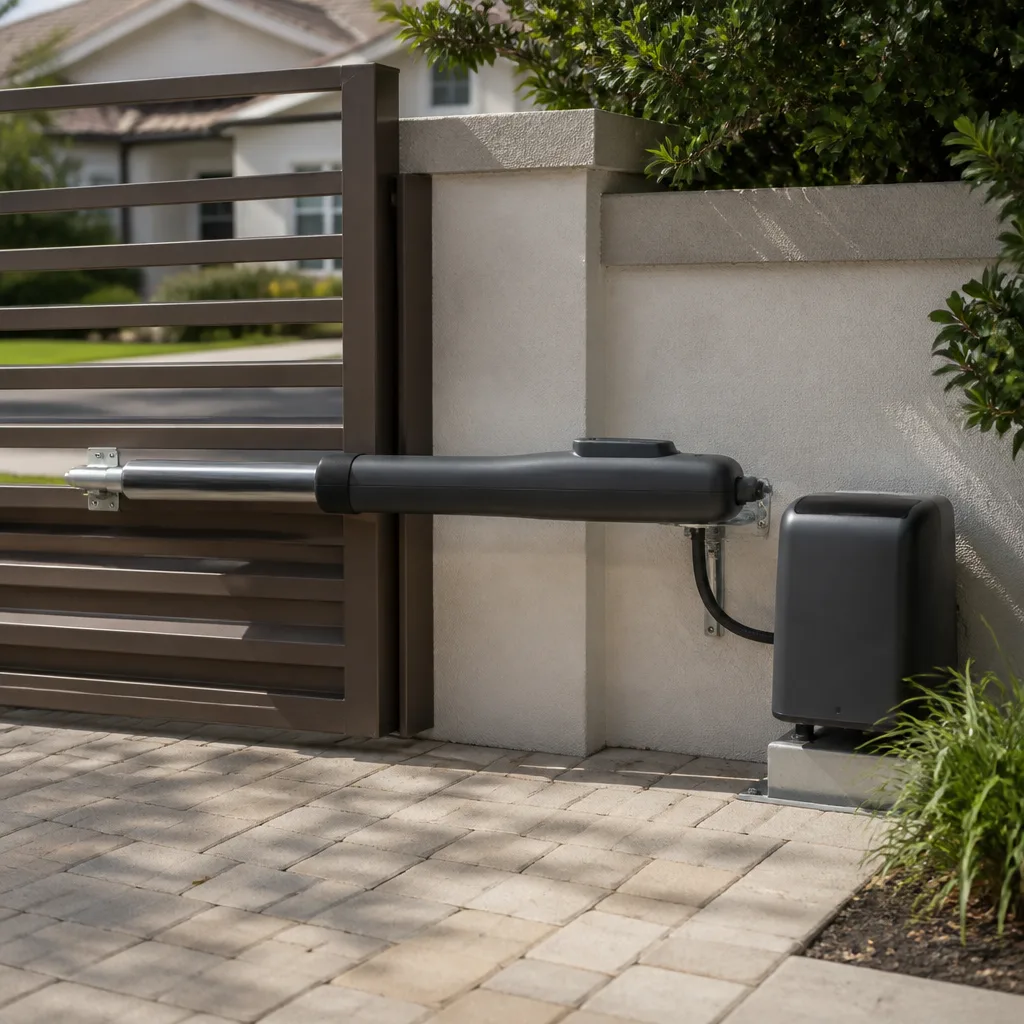
- Check the opener’s cooling vents. Dust, spider webs, and grass clippings block airflow. A quick pass with a dry brush keeps the electronics from cooking.
- Keep the track clear of grass clippings. In Grapevine’s growing season, weekly mowing throws debris into the track channel, and trampled grass turns into a paste that hardens like glue.
- Re-test the safety reverse monthly through the summer. Heat dulls sensor performance on older openers. A sensor that worked in April might not respond in August.
If your gate runs slower in the afternoon than the morning, that’s a clearance issue, not your imagination. Call before the motor fails. A technician can adjust the hinge points and post brackets in under an hour. A burned-out motor is a much bigger job.
Fall Preparation Before the First Freeze
Fall in Grapevine is the calm before the furnace and the freeze. October gives us mild days perfect for a thorough once-over, and a couple hours of work now prevents most urgent winter calls. The single most important fall task is addressing any moisture entry points. Water that sits in a crack or a hinge pin during a freeze will expand and split metal.
That’s not theoretical. Ice expands with roughly 30,000 pounds per square inch of force. When a Grapevine gate hinge has a hairline crack and water seeps in during a November rain, the first hard freeze of December will widen that crack. By February, the hinge fails, and the gate drops.
Fall checklist:
- Inspect for cracks in all metal parts. Early fall is the time to catch them. A cracked hinge is a $150 replacement. A dropped gate can mean a new post, new hinges, and gate realignment, which runs into the thousands.
- Lubricate thoroughly before temperatures drop. Grease and silicone perform better when applied in 70-degree weather than in 40-degree weather.
- Check weather stripping and rubber seals. On gates with a bottom rubber flap or a seal along the top, make sure it’s intact. Torn seals let water into the gate’s internal frame.
- Test the manual release. Disengage the opener and swing the gate by hand. It should move smoothly with no binding. If it drags or catches, address it now because cold weather stiffens lubricant and makes it worse.
- Check battery backup function. Most modern openers from LiftMaster, Viking, and BFT have a battery. Unplug the opener and run the gate. If it doesn’t move, the battery needs replacement before winter power flickers.
Fall maintenance is the one season we hear homeowners say they’re glad they did. It’s insurance against the two or three truly cold weeks Grapevine gets each year.
Winter Gate Care for Grapevine’s Cold Snaps
Grapevine winters are mild compared to the Panhandle, but they’re not harmless. We get enough freezes, ice storms, and wild temperature swings to cause real gate problems. The 2021 freeze taught every North Texas homeowner a lesson about what cold weather does to outdoor mechanical systems, and gates were no exception.
What winter does to your gate: Cold makes metal contract and stiffens every lubricant. Grease that flows at room temperature turns thick as cold honey at 30 degrees. The opener’s motor draws more current to push through the cold grease, and that extra current heat and wear shorten the motor’s life. Ice is the other enemy. A gate that freezes to the ground or the post will stall the opener, which keeps pushing until a limit switch trips or a gear strips.
Winter care steps:
- Do not force a frozen gate. If the gate won’t move after a freeze, don’t hold the remote and let the opener grind. Disengage the manual release and try to move the gate by hand. If it won’t budge, clear the ice with warm (not boiling) water or wait for the sun.
- Keep the gate path clear of ice. Even a thin sheet of ice under the gate wheel adds enough resistance to stress the opener chain.
- Use a cold-weather lubricant. White lithium grease and silicone both work in freezing temperatures. If the gate was lubricated in the fall with a standard product, a light touch-up with cold-weather lube prevents the stiff hinge problem.
- Check the safety sensors more often. Cold air and damp conditions cause condensation on photo-eye lenses. A quick wipe with a dry cloth keeps the gate from reversing randomly.
- If the power goes out, run the gate on battery only when necessary. Battery backup is for getting in and out, not for daily use. Cold temperatures reduce battery capacity by up to 30 percent, and a depleted battery fails when you need it most.
Cold snaps are also when we remind Grapevine homeowners that a live person answers our phone 24 hours a day. A gate stuck open at 2 a.m. during an ice storm is not the time to leave a voicemail and hope for a callback.
Monthly Checks That Take Five Minutes
Seasonal care is the backbone of gate upkeep, but five minutes a month is the glue that holds it all together. These are checks anyone can do, they require no tools beyond a rag and your eyes, and they catch the slow-developing problems before they become urgent calls. We tell every Grapevine homeowner the same thing: a gate in good condition is mostly boring. The goal is to keep it boring.
The five-minute monthly check:
- Open and close the gate twice. Listen to it. A smooth gate hums. A gate with problems scrapes, squeaks, grinds, or jerks. The sound a gate makes is the earliest warning system you have.
- Look at the track and the chain or belt. Debris, rust, or slack are visible in ten seconds. Anything that looks different from last month is worth investigating.
- Check the gate’s position at rest. If the gate doesn’t close to the same spot it did last week, the limit switch or the sensor may be shifting.
- Wipe the photo-eye lenses. Two dry passes with a clean rag prevent most random-reverse issues.
- Look at the posts. Any new crack at the base of a post, any lean, any soil washout around the footing. Posts are the foundation of the whole system, and post problems are always cheaper to address early.
This monthly rhythm fits into a larger home maintenance routine. Pair it with checking your sprinkler heads or testing your smoke alarms, and it becomes automatic. The homeowners whose gates last twenty years in Grapevine are not doing more work. They’re doing consistent work.
What Seasonal Gate Repairs Cost in Grapevine
One of the most common questions we hear is what gate repairs actually cost. The honest answer is that it depends on what’s wrong, but we’ll give you the numbers we see across Grapevine, from the established neighborhoods around Oak Grove Park to the newer subdivisions near Grapevine Mills. These are the prices our technicians quote most often.
Every repair at Ironworks Gate Co. is priced up front and agreed before any work starts. That’s not a policy we advertise; it’s just how we’ve done business for over four decades, and homeowners in Grapevine have come to expect it. You’ll know the number before a bolt is turned, and that number doesn’t change when the invoice comes.
Typical repair costs we see in Grapevine
- Hinge replacement: $120 to $280 per hinge, depending on gate weight and hinge type. Most residential gates need two to three hinges replaced together.
- Opener motor replacement: $450 to $950 installed, depending on the brand and whether the existing bracket and arm can be reused. Brands we service include LiftMaster, FAAC, BFT, and Linear, and the motor replacement on a mid-size swing gate usually falls in the $550 to $700 range.
- Circuit board replacement: $250 to $500 installed. On modern openers, the board is often the first electronic component to fail from heat or power surges.
- Safety sensor replacement: $85 to $180 per sensor pair, including alignment and testing.
- Full seasonal tune-up: $89 for the complete inspection, cleaning, lubrication, torque check, and opener diagnostics.
- Track cleaning and realignment: $95 to $220, depending on track length and how far out of alignment the gate has drifted.
These numbers reflect what we quote in the Grapevine market as of this writing. Prices for gate work in DFW are higher inside the 820 loop than they are in the suburbs, but Grapevine sits firmly in the mid-range. The thing to remember is that small repairs stay small when they’re addressed. That $150 hinge becomes a $3,000 gate replacement when the gate drops and twists the post.
We also run standing offers that soften the bill: $50 off any repair over $250, a free second opinion on any written estimate from another company, and a permanent 5% discount for seniors and veterans. These are not promotions. They’re on every job, every day, and if you qualify, the discount applies without you having to ask.
Common Mistakes to Avoid
After 42 years of gate work, we’ve seen every mistake a homeowner can make, most of them more than once. The frustrating part is that nearly all of these are preventable. Grapevine’s climate and soil create specific failure patterns, and the mistakes below are the ones that show up in our service calls month after month.
- Using the wrong lubricant. WD-40 is a solvent, not a lubricant. It strips the existing grease and leaves hinges dry. Grapevine’s clay dust then settles into the bare metal and grinds it like sandpaper. Use silicone spray or white lithium grease, nothing else.
- Ignoring a slow gate. A gate that closes slower than it used to is not “just getting old.” It’s telling you something: low voltage, a failing capacitor, increasing hinge resistance, or a dragging wheel. Every one of those issues is cheaper to fix now than in six months.
- Adjusting the spring tension without training. Torsion springs on a gate store thousands of pounds of force. A homeowner attempting an adjustment with a screwdriver is risking a serious injury. This is one part of gate work where even we tell people to stop and call a professional.
- Letting the gate rest on the open stop for hours every day. If you leave your gate open for long stretches in Grapevine’s summer heat, the motor stays in the energized position while the metal expands. Over a season, that wrecks the limit switch calibration.
- Concrete work without checking gate clearance. A new sidewalk, a driveway extension, or a raised flower bed changes the grade under the gate. In Grapevine’s expansive clay soil, a one-inch change in grade is enough to make the gate drag.
- Buying the cheapest replacement part online. We see generic opener parts from online marketplaces fail within a year. A Viking or FAAC gate opener needs genuine components. The cheap part costs twice as much by the time you pay for the second repair.
When to Call a Professional
Some gate care is safely DIY. Lubrication, visual inspection, cleaning the track, and testing the safety reverse are all within a homeowner’s reach. Other work is not, and the line is usually drawn where you need tools beyond a rag and a wrench. When a gate has high-tension springs, any adjustment carries real risk. Torsion springs are under extreme tension, and a spring that releases unexpectedly can cause serious injury. That work belongs with a trained technician who has the right tools and experience.
Call a professional when the gate sags visibly, when the opener’s electrical components misbehave, when the gate won’t stay on track, when the post shows any lean, or when the safety reverse won’t test correctly. These are not DIY fixes, and the cost of a wrong attempt is almost always higher than the service call would have been. Ironworks Gate Co. offers free estimates in Grapevine. Call (432) 237-4128 and describe what you’re seeing, and a live person will give you an honest read on whether it needs a technician.
Frequently Asked Questions
Twice a year is the baseline for Grapevine’s climate: once in spring and once in fall. Homes with gates near heavy tree cover or open to the prevailing south wind may need quarterly lubrication because dust and debris accumulate faster. Use silicone spray or white lithium grease on hinges, rollers, and the opener’s drive mechanism, and avoid WD-40, which strips lubrication rather than adding it. If you’d rather not do it yourself, our $89 Seasonal Tune-Up includes full lubrication, and we’ll walk you through what we’re doing.
Thermal expansion is the usual culprit in Grapevine. A metal gate grows longer in hundred-degree heat, and if the original installation didn’t leave enough clearance, the gate binds against its hinges and post. The opener motor works harder against that resistance, and the gate slows down. The fix is a clearance adjustment on the hinges and brackets, not a new motor. Call (432) 237-4128 for an exact diagnosis, and we’ll quote you upfront.
We service nine major gate-automation brands, including LiftMaster, FAAC, BFT, and Linear, so whatever opener is on your Grapevine driveway, we’re trained and equipped on it. The advantage of a technician who knows your specific brand is that the correct diagnosis happens on the first visit, not the third. Mention your opener brand when you call, and we’ll send a technician who works on that exact model regularly.
Yes. From the power run and the safety edges to the keypad and the opener itself, we handle the full scope of gate automation. Every opener installation includes proper grounding, safety reverse setup, and a walkthrough so you know exactly how to operate and test the system. The price is quoted and agreed before any work starts, and the job is covered by our 90-Day Done Right Promise in writing.
Minor repairs like hinge replacement run $120 to $280 per hinge, circuit boards run $250 to $500, and full opener motor replacements typically land between $450 and $950. The specific number depends on your gate’s size, weight, and opener brand. Every repair is quoted up front and approved by you before we start, and we don’t raise the price when it’s time to write the invoice. Call (432) 237-4128 with a description of the problem, and we’ll give you an honest range.
The $89 Seasonal Tune-Up includes a full inspection of the gate, hinges, posts, track, and opener; cleaning and debris removal; lubrication of all pivot points; a torque check on every visible bolt; safety reverse testing; and a complete opener diagnostic pass. We also check the battery backup and the photo-eye alignment. It takes about an hour, and you’ll get a written summary of what we found and what, if anything, needs attention. Call (432) 237-4128 to schedule, and a live person answers.
The Bottom Line
A Grapevine gate that gets regular seasonal attention rarely has dramatic failures. The hinge that gets lubricated in the spring doesn’t seize in August. The clearance that gets adjusted in the fall doesn’t bind in February. The track that gets cleaned monthly doesn’t warp under the strain of a dragging wheel. The gate’s lifespan is decided by the consistency of small acts, not the size of the repairs. If you take nothing else from this guide, take the five-minute monthly check and the twice-yearly lubrication. Do those two things, and your gate will likely outlast every other mechanical system on your property. When you need a hand, with a tune-up or a repair, we’re here. From our Ironworks Gate Co. home base, we’ve served Grapevine homeowners for over four decades, and we plan to be doing this work for another forty years.
Call (432) 237-4128 for a free estimate, or to schedule your seasonal tune-up. A live person answers, any hour, any day.
Written by Victor Salinas, Owner at Ironworks Gate Co., serving Grapevine since 2013.