
Last updated August 25, 2026
Free on-site gate assessment - hinges, posts, and your LiftMaster or Nice gate operator checked before anything is quoted
The assessment is free and the quote is the invoice.

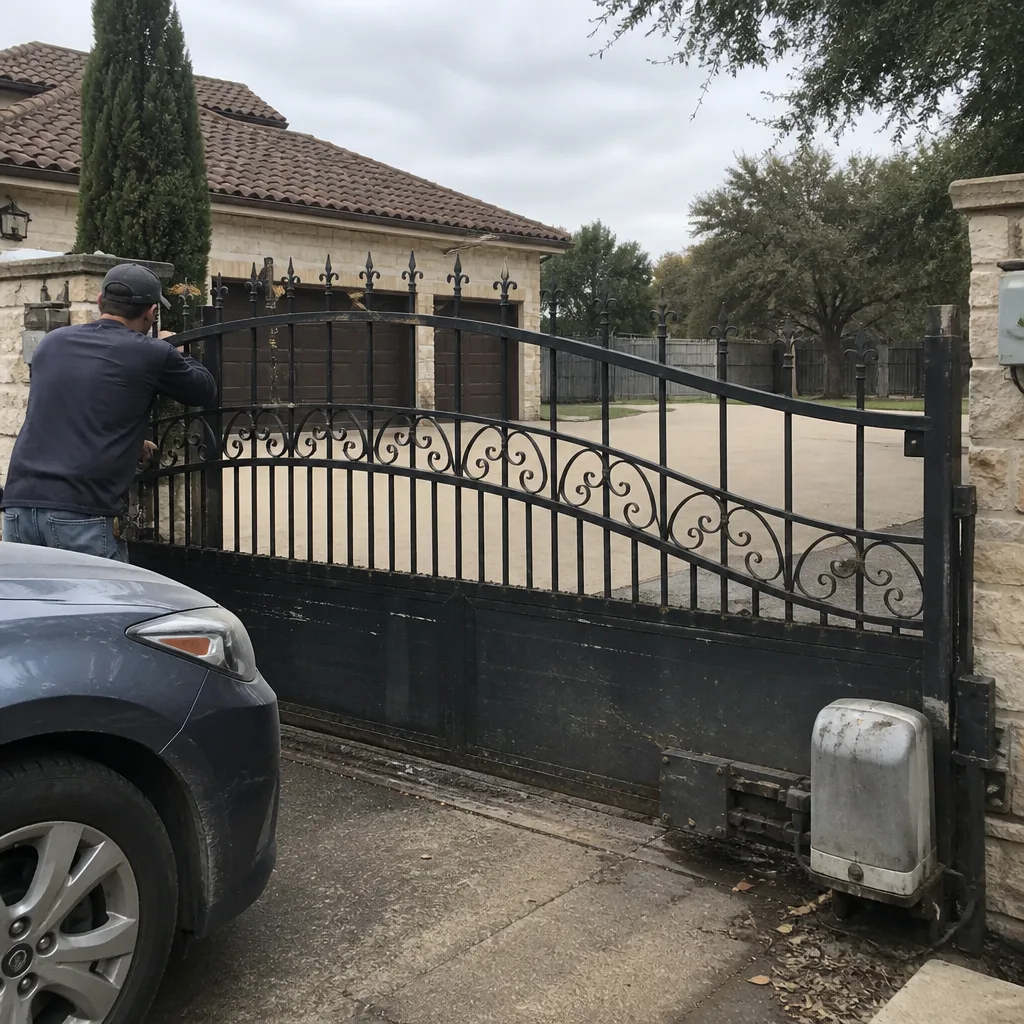 Before
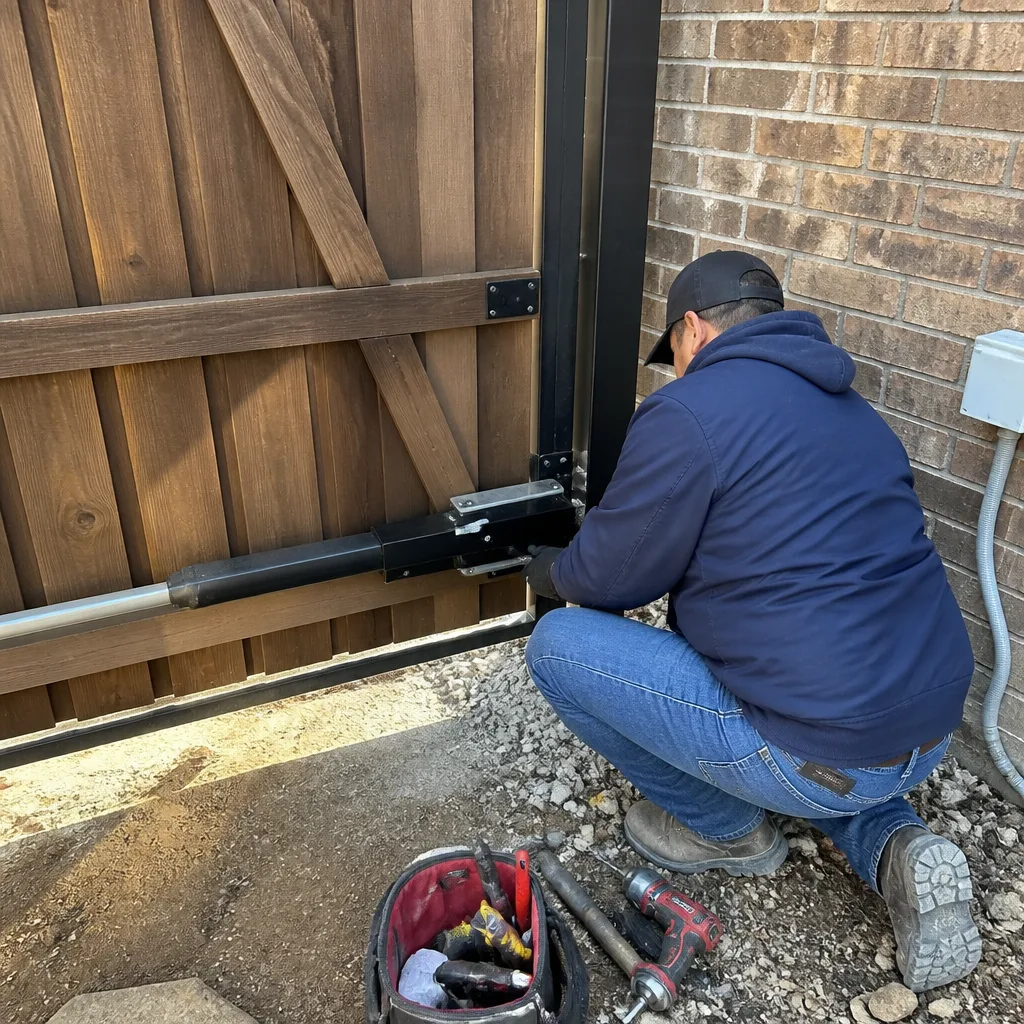 After
After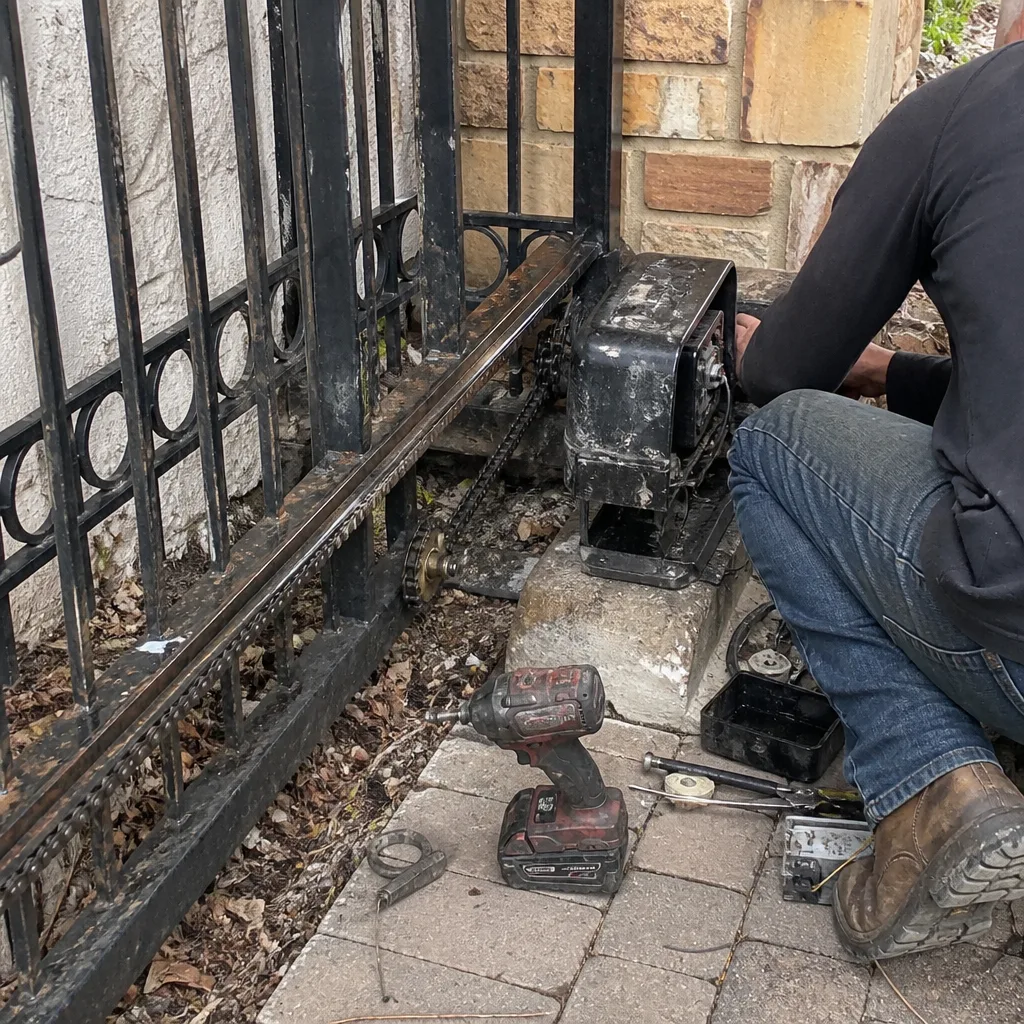 Before
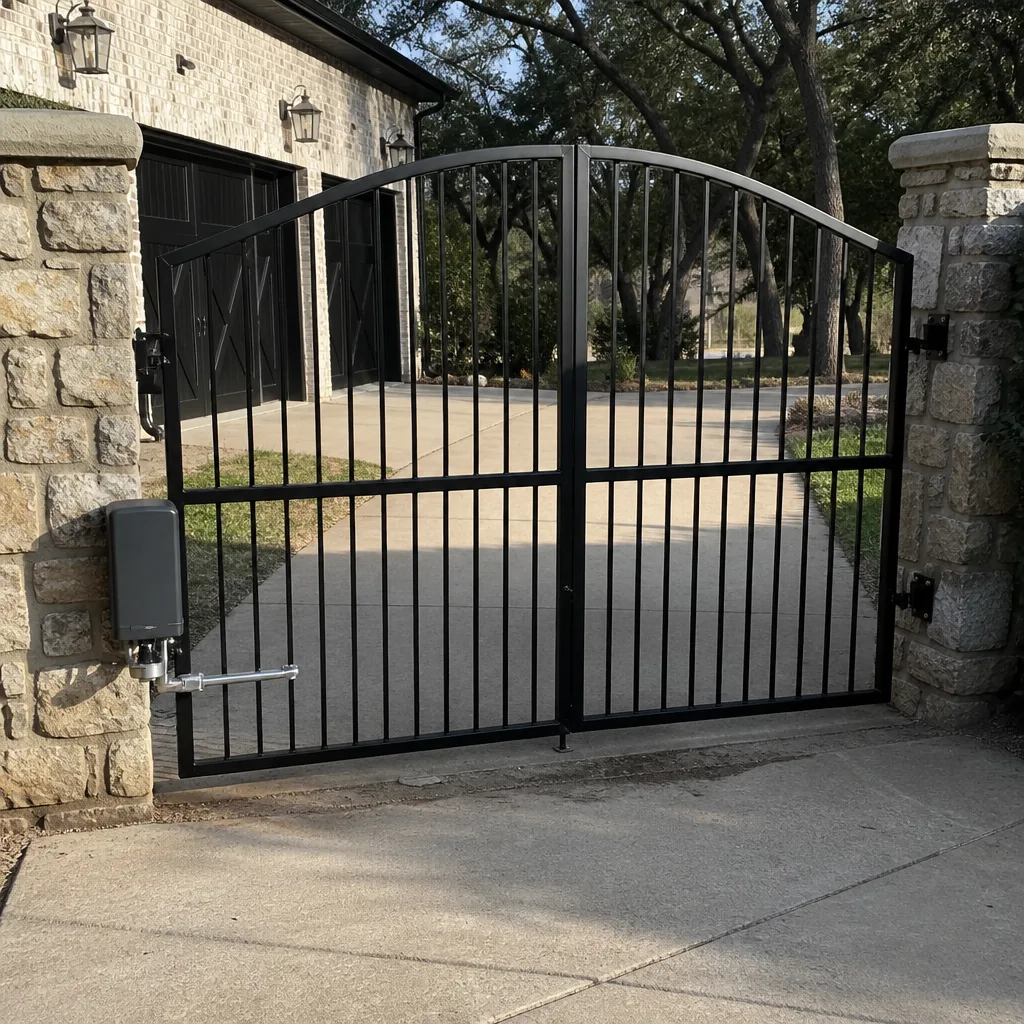 After
After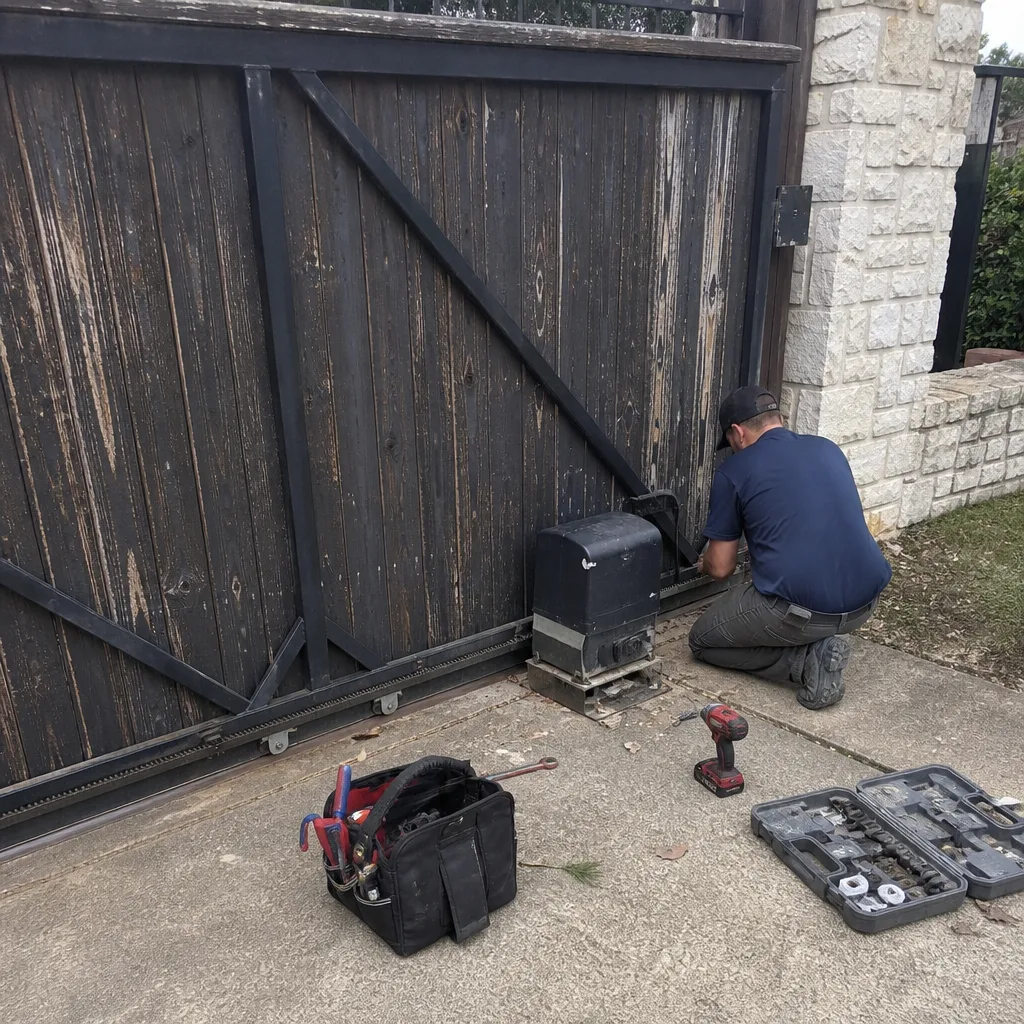 Before
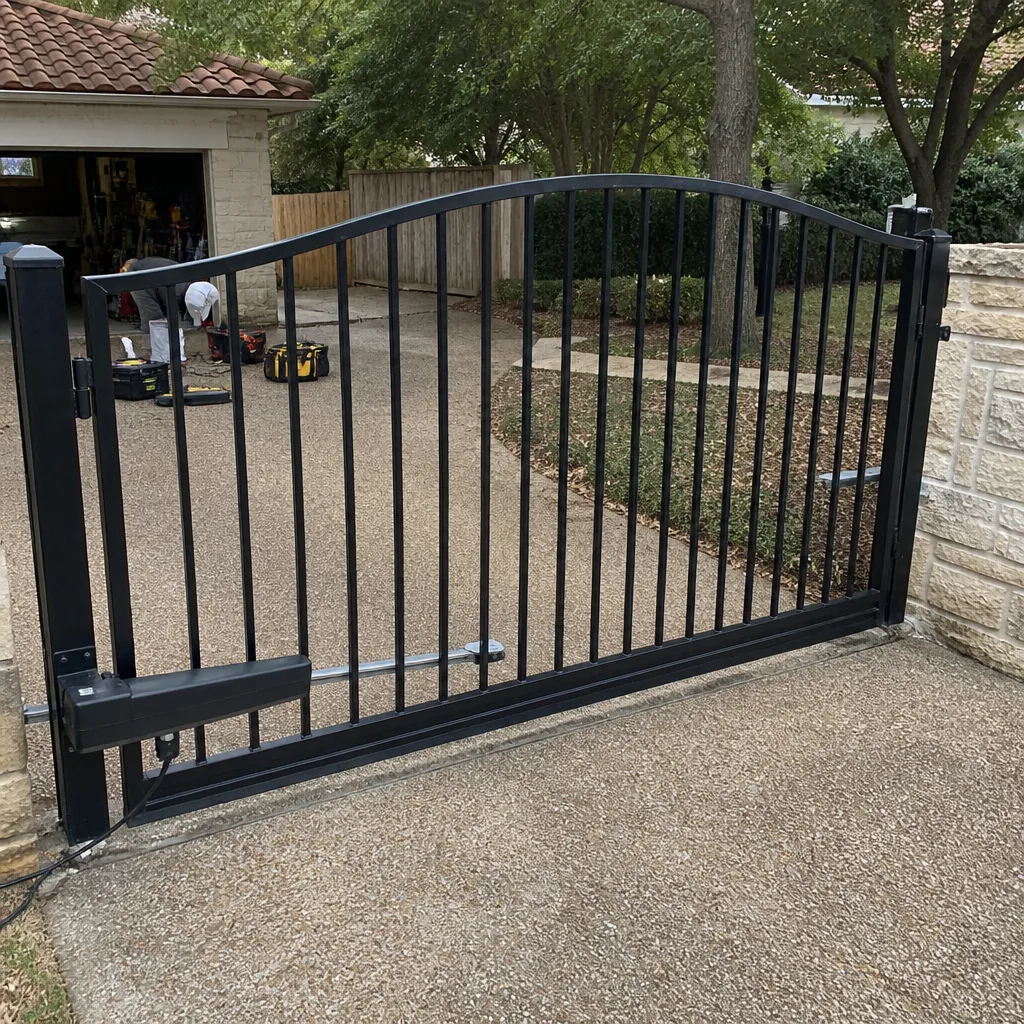 After
AfterGate Repair Warning Signs: A Grapevine Homeowner’s Reference Guide
Most Grapevine homeowners don’t think about their driveway gate until it stops working. That’s understandable. But here’s the thing: a gate rarely fails without warning. It talks to you for weeks, sometimes months, before it quits. A slight scrape here, a half-second hesitation there, a motor that sounds a little more tired than it did last spring. The homeowners who catch these signals early spend a few hundred dollars on a repair. The ones who don’t spend a few thousand on a replacement. This guide will teach you to read the signs before your gate reads its last.
Quick Answer
A gate that scrapes, shudders, hesitates, or groans is telling you something specific is wearing out, usually a hinge, wheel, sensor, or motor component. In Grapevine’s climate, the most common culprits are rusted hinge pins, sun-baked sensor eyes, and motors stressed by clay soil shifting under the concrete posts. Address these warning signs within a few weeks and most repairs stay under $400. Ignore them and you’re looking at a full gate or opener replacement.
Table of Contents
- Warning Sign #1: The Gate Is Making New Sounds
- Warning Sign #2: The Gate Moves Differently
- Warning Sign #3: The Motor Is Working Harder Than It Should
- Warning Sign #4: Visible Sagging, Leaning, or Rust
- Warning Sign #5: The Safety Sensors Are Acting Up
- Warning Sign #6: The Remote or Keypad Is Unreliable
- Warning Sign #7: The Gate Loses Power or Trips the Breaker
- Common Mistakes to Avoid
- When to Call a Professional
- Frequently Asked Questions
- The Bottom Line
Warning Sign #1: The Gate Is Making New Sounds
A healthy gate makes a consistent sound. You’ve heard it thousands of times. A steady hum from the motor, the soft click of the latch seating, the faint rattle of wheels on track if you have a sliding gate. When any of those sounds change, pay attention.
Here’s what we’ve learned in over 42 years of gate work in Grapevine: sound is the earliest warning system you have. It costs nothing to listen. And most of the time, the sound points to a fixable problem, not a fatal one.
What Different Sounds Mean
- A metallic scraping or grinding: This usually means metal-on-metal contact where there shouldn’t be any. On a swing gate, it’s often a hinge pin that has worn or shifted. On a sliding gate, it’s typically a wheel bearing that’s given out or a track that’s misaligned. The sound won’t fix itself, and every cycle makes the wear worse.
- A high-pitched squeal during operation: This often points to the motor’s belt or chain drive slipping or a bearing crying for lubrication. It’s one of the more straightforward fixes, but if you let it go, the slipping component will eventually fail entirely.
- A thumping or banging at the end of travel: When a gate slams into its end stops instead of decelerating smoothly, the internal limit controls may be out of adjustment or the motor’s gearbox may be stripped. Every slam shocks the motor, the hinges, and the post anchors.
- A low groaning or straining sound: The motor is telling you it’s working too hard. This could mean a partially seized hinge, a wheel that’s no longer rolling freely, or a gate whose weight is no longer balanced. In Grapevine, where clay soil expands and contracts with moisture, we regularly see gates whose post alignment has shifted enough to add serious resistance.
The rule of thumb: if the sound is new, get it looked at. Replacing a $12 hinge pin is a quick job. Replacing a motor burnt out from months of fighting a seized hinge is not.
Warning Sign #2: The Gate Moves Differently
You know your gate’s rhythm. It opens in about 14 seconds. It closes in about 14 seconds. It starts moving the moment you press the remote. When that rhythm changes, something underneath has changed first.
Movement Changes to Watch For
- It hesitates before starting. You press the button and there’s a pause, a click, maybe two, before the gate actually moves. This often indicates a capacitor going bad in the motor or a limit switch that’s no longer reading correctly.
- It moves slower than it used to. A gate that takes 20 seconds instead of 14 is a gate fighting extra resistance. The cause could be a low battery in a solar system, a motor that’s losing torque, or mechanical drag from a misaligned wheel or hinge.
- It jerks or stutters mid-travel. That’s not normal. A smooth-operating gate shouldn’t look like it’s catching on something. Jerky movement usually points to a track problem on a slider, a damaged hinge on a swing gate, or an obstruction the gate is trying to push through.
- It stops partway and reverses. This is a real warning sign. The gate’s internal obstruction detection is triggering, which means something is physically blocking it, OR the sensitivity setting has drifted. In our experience with Grapevine properties, we often find this on gates where tree roots have shifted the post or track just enough to trip the sensor.
- It doesn’t close all the way. Maybe it leaves a two-inch gap. Maybe it reverses right before seating. Either way, your gate is telling you the limit settings are off or the physical alignment has changed.
Here’s the counterintuitive part: many homeowners wait on these issues because the gate still “works.” It opens. It mostly closes. But every cycle with a movement problem is putting heat and wear on the motor and the hardware. A gate that moves differently is a gate already breaking. The question is whether you catch it early enough to keep the repair small. For a fuller picture, read our Ironworks Gate Co. home service overview to understand what a full inspection covers.
Warning Sign #3: The Motor Is Working Harder Than It Should
The motor on a gate opener is a lot like the engine in your car. It’s engineered to do a specific amount of work, and when it has to work harder than that, it runs hot and wears out early. A motor that’s routinely hot to the touch after cycling is a motor on borrowed time.
Why Grapevine Motors Run Hot
There are a handful of reasons we see this across Grapevine, and they’re worth understanding:
- Clay soil shift: The native soil in much of the Grapevine area is expansive clay. It swells when wet and contracts when dry. Over years, this movement can shift the post that anchors your gate or the concrete pad under your track. The result: the gate no longer travels in a true line, and the motor has to muscle it through the misalignment.
- Texas sun on the control board: Openers mounted in direct afternoon sun take a beating. The heat soaks into the plastic housing and cooks the control board. Components degrade faster. We see more failed capacitors and fried boards in August than any other month.
- Undersized openers: A gate that was originally hung with no opener, then retrofitted later, sometimes gets an opener that’s too small for the gate’s weight and wind load. North Texas gets real wind. A motor that’s undersized will run hot, cycle after cycle, until it quits.
- Neglected hardware: Hinges that haven’t been greased in years, wheels that need bearings, tracks caked with dirt. All of it adds drag. The motor works harder to do the same job it did easily when everything moved freely.
We service motors on nine major brands, including Viking and Linear, so we’ve seen the same failure patterns repeat regardless of manufacturer. The brand matters less than the installation and the maintenance. A well-installed, properly sized motor on a gate that moves freely will run for 15 years or more. The same motor fighting a shifted post may fail in five.
If your motor housing is hot to the touch, or if you hear the motor running longer than it used to, that’s the time to call someone. Every hot cycle is aging your equipment faster than the calendar is.
Warning Sign #4: Visible Sagging, Leaning, or Rust
Some warning signs you don’t need to listen for. You can see them from the driveway. A gate that sags toward the latch side. A post that’s no longer plumb. Rust blooms at the weld joints. These are structural issues, and they don’t get better with time.
The Three Visual Signs That Matter Most
- Sagging at the latch end: On a double swing gate, one leaf may start to hang lower than the other. You’ll notice the latch no longer lines up cleanly, or the gates don’t meet at the same height. The cause is almost always a worn hinge or a post that’s shifted. The fix gets more expensive the longer you wait, because the added stress transfers to the other hinge points and eventually the post itself.
- A leaning post: The hinge post is the foundation of the whole system. When it leans even a few degrees, the entire gate geometry changes. The gate drags. The latch misses. The motor strains. In Grapevine’s clay soil, leaning posts are one of the most common calls we get, especially after a wet spring followed by a hot, dry summer. The soil does its dance and the post moves with it.
- Rust at critical joints: Surface rust on a steel gate is cosmetic, mostly. But rust at a weld joint, at a hinge pin, or where a bracket mounts to the post is structural. Rust expands as it forms, which means a rusting joint is actively pushing itself apart. Left alone, it becomes a crack. A crack becomes a break. And a broken hinge on a 400-pound gate is not something you want to witness.
The honest truth: most of these visual problems were fixable for under $200 when they first appeared. A sagging gate six months in might just need a hinge pin and some adjustment. A sagging gate two years in might need post re-setting, hinge replacement, and realignment, and if the welds have been stressed too long, you’re into fabrication territory.
Walk out and look at your gate today. Really look. Is it level? Are the posts straight? Is there rust at the joints? If the answer to any of those is no, make a call before the next winter rain soaks the clay and makes everything shift a little more.
Warning Sign #5: The Safety Sensors Are Acting Up
Modern gate openers have safety systems designed to protect people and vehicles: photoelectric sensors, edge sensors, and obstruction detection built into the motor. When these systems start misbehaving, most homeowners treat it as an annoyance. The gate reverses for no reason, or won’t close, or the remote acts dead. Here’s the thing: safety sensor problems are real safety problems. They should never be ignored or bypassed.
Common Sensor Failure Patterns
- The gate reverses immediately when closing: In most cases, this is the photoelectric sensor either blocked by something, misaligned, or failing. In Grapevine, where we get strong afternoon sun at certain angles, sun glare can sometimes blind a sensor and cause false triggers. More commonly, a sensor that’s been on the gate for ten or fifteen years is simply wearing out.
- The gate won’t close at all: The system thinks something is in the path. It might be a sensor that’s failed in the “blocked” position, or a wiring issue between the sensor and the control board.
- The gate closes but doesn’t stop when something is in the way: This is the genuinely dangerous one. If the safety systems aren’t functioning, a gate can close on a car, a pet, or a person. No gate is worth that risk.
- Intermittent issues: The gate works fine for a week, then reverses for no reason, then works fine again. Intermittent failures are often loose connections, corrosion in a wiring junction, or a sensor that’s starting to fail from heat exposure.
We work with FAAC and BFT systems among others, and the safety sensor logic is similar across brands. The sensor sends a signal. The control board reads the signal. If the signal says “blocked,” the gate doesn’t move. The problem is that sensors get dirty, they get sun-baked, they get knocked out of alignment by mowers and kids and the occasional delivery truck. And when they fail, the gate either won’t operate or operates without the safety net it’s supposed to have.
If your gate has started reversing for no reason, or if you’ve noticed the safety edge doesn’t respond the way it should, do not disconnect anything and do not adjust the sensitivity to “fix” it. Get it looked at properly.
Warning Sign #6: The Remote or Keypad Is Unreliable
You press the remote. Nothing. You press it again. The gate opens. You pull into the driveway, press the button to close, and the gate ignores you. You try the keypad. Same story. Intermittent remote problems are maddening, and they’re also a signal that something in the receiver or the control board is failing.
What Intermittent Remote Response Usually Means
- The remote battery is dying. This is the simplest explanation and the easiest fix. If you haven’t changed the battery in a couple of years, start there.
- The receiver antenna is compromised. The antenna on the opener picks up the radio signal from your remote. If the antenna wire is damaged, corroded, or tucked behind metal, the range drops dramatically. The gate might work when you’re close but not from the street.
- The control board is failing. This is the expensive version. Receivers are often built into the main control board on modern openers. When the board starts to go, the first symptom is usually intermittent remote response. Then the keypad gets flaky. Then the gate stops responding entirely.
- Radio interference: In a growing area like Grapevine, new wireless devices, LED lighting, and other electronics can occasionally interfere with gate remote frequencies. If the problem started around the same time as a new device was installed nearby, this is worth considering.
- The keypad membrane is worn. Outdoor keypads take a beating from Texas sun and weather. The membrane that covers the buttons degrades, and eventually water gets in and shorts the contacts.
Here’s our honest advice: if a fresh battery doesn’t fix the remote, the problem is almost certainly not the remote. It’s the receiver or the board. And those aren’t homeowner-repairable. Continuing to use a gate that responds when it feels like it isn’t just inconvenient, it can leave you locked out or leave your property unsecured overnight.
Warning Sign #7: The Gate Loses Power or Trips the Breaker
A gate opener that trips its breaker every few weeks is not something to shrug off. Breaker trips mean the motor is drawing more current than the circuit is designed to handle. That’s either a motor that’s failing, a capacitor that’s shot, or a wiring issue somewhere in the run.
Power-Related Warning Signs
- The breaker trips when the gate operates: The motor is pulling too much current. This can happen because the motor is undersized, because mechanical resistance has increased, or because the motor itself is failing. The breaker is doing its job. If you reset it and it trips again, stop resetting it and call someone.
- The gate’s battery backup kicks in regularly: A gate shouldn’t be running on its backup battery during normal operation. If you hear the distinctive beep or see a battery indicator lit on the control panel, your main power feed may be compromised. This could be a tripped GFCI, a rodent-damaged wire, or a failing power supply.
- The gate runs fine sometimes and not others: Power fluctuations can cause erratic gate behavior. If the gate behaves differently in the evening than it does in the afternoon, or if it works fine on weekends but not during the week, you might be looking at an electrical supply issue rather than a mechanical one.
- The solar panel isn’t keeping up: Many Grapevine properties use solar-powered gate openers to avoid trenching power lines. A solar system that was sized correctly for the original gate may not be adequate for an aging motor, especially in winter when the days are shorter and the sun is lower.
If your gate trips a breaker, the first step is to check for obvious debris blocking the track or hinges. Clear it and reset the breaker once. If it trips again, that’s your answer. Something more serious is wrong, and continuing to reset the breaker isn’t just risky for the opener, it’s a potential fire hazard in the control panel.
Common Mistakes to Avoid
- Ignoring new sounds. That scrape or groan is a diagnostic tool you didn’t have to pay for. A gate making a new sound is a gate asking for attention. Most of the repairs we do at Ironworks Gate Co. started as a sound somebody ignored for six months.
- Lubricating without cleaning first. Spraying grease over dirt and grime just makes a grinding paste that accelerates wear. Clean the hinge or wheel first, then lubricate. Better yet, have someone who knows what they’re doing handle it.
- Adjusting the opener to “fix” mechanical problems. When a gate starts dragging, some homeowners crank up the opener’s force setting to push through it. Now the motor is working harder than it was designed to, and the underlying problem (worn hinge, misaligned track) keeps getting worse. You’re spending motor life to avoid a hardware fix.
- Bypassing safety sensors. We cannot say this strongly enough. If your gate’s safety sensors are causing problems, bypassing them or disconnecting them is dangerous. A driveway gate can weigh several hundred pounds. It will not stop for a child or a pet if the safety systems are disabled. Fix the sensor or replace the opener, but do not defeat the safety system.
- Waiting on a leaning post. In Grapevine’s expanding clay soil, a post that’s leaning one degree this year may be leaning three degrees next year. Once the post has moved, the gate geometry changes, the motor strains, the hinges wear unevenly, and the repair scope grows every month. Early post re-setting is far cheaper than the cascade of damage it prevents.
- Attempting spring or cable repair without training. Some gate designs use heavy tension springs. These are not garage door springs, but they can still store a dangerous amount of energy. If you see a broken spring or a frayed cable, do not attempt to remove or replace it yourself. That’s a job for someone who works with them regularly and has the right tools and training.
- Assuming a working gate is a healthy gate. This is the one that costs people the most money. A gate can operate for months while a hinge pin grinds down, a wheel bearing disintegrates, or a capacitor swells. The gate “works” right up until it doesn’t. Then the failed component has usually damaged the components around it. Regular inspection catches the problem before the cascade.
When to Call a Professional
There are gate problems a homeowner can handle: changing a remote battery, clearing obvious debris from the track, checking that nothing is physically blocking the gate. These are reasonable weekend tasks. But the moment you’re dealing with a motor that’s running hot, a breaker that keeps tripping, visible post movement, or safety sensors that aren’t working correctly, it’s time to make the call. These are not problems that respond to elbow grease.
At Ironworks Gate Co., we offer free estimates in Grapevine. If you’re not sure whether what you’re hearing is normal or the start of something, call (432) 237-4128. A live person answers, 24 hours a day. We’ll ask about what you’re seeing and hearing, and we’ll give you an honest read on whether it needs a technician or can wait. No pressure. Just a straight answer.
Frequently Asked Questions
Most gate repairs in Grapevine run between $150 and $500, depending on what’s failed. A simple hinge pin replacement or sensor alignment is at the low end. A control board replacement or motor rebuild is at the higher end. At Ironworks Gate Co., the price is quoted and agreed before any work starts, and every job is backed by our written 90-Day Done Right Promise. We also offer $50 off any repair over $250. Call (432) 237-4128 for a free estimate.
In most cases, yes. We stock common parts on every service truck, and most Grapevine gate repairs are completed in a single visit. If your gate is stuck open or stuck closed, call (432) 237-4128. A live person answers 24 hours a day, and we’ll tell you honestly when we can be there.
The most common causes are a blown capacitor in the motor, a failed control board, a tripped breaker from mechanical drag, or a safety sensor knocked out of alignment. Grapevine’s clay soil contributes to this, because post shifting adds resistance that stresses the electrical components over time. A gate that “suddenly” stopped was usually accumulating damage for months.
A quality opener that’s properly sized and maintained typically lasts 10 to 15 years, even in Texas heat. Openers mounted in direct afternoon sun without shade, or openers that are undersized for the gate’s weight and wind load, tend to fail sooner. Our $89 Seasonal Tune-Up is designed to catch the problems that shorten opener life before they become failures.
Ironworks Gate Co. is trained and equipped on nine major gate-automation brands, including FAAC, BFT, Linear, and Viking. Whatever opener is on your driveway, we can diagnose it correctly on the first visit and repair it right.
In most Grapevine cases, a sagging gate can be repaired by replacing the worn hinge, re-setting the post, or re-welding a failed joint. The gate itself is usually fine unless the structural steel has rusted through. The sooner you address the sag, the less damage it does to the rest of the hardware. Call (432) 237-4128 and we’ll tell you what you’re actually looking at, free.
The Bottom Line
A driveway gate is a mechanical system, and every mechanical system talks. The scrape you hear at 7:15 every morning. The hesitation when you press the remote. The sag you notice when you’re pulling out of the driveway. These are not personality quirks. They’re diagnoses. The homeowner who listens spends a little now. The homeowner who doesn’t spends a lot later. The gate that’s making noise today will be the gate that won’t open on the one morning you can’t be late. Listen to it. And when it’s telling you something you don’t know how to fix, call someone who does. We’ve been doing this in Grapevine for over 42 years. We’ll be here for the next 42 too.
Ironworks Gate Co. offers free estimates in Grapevine. Call (432) 237-4128. A live person answers, 24 hours a day. Done right, and backed in writing.
Written by Victor Salinas, Owner at Ironworks Gate Co., serving Grapevine since 2013.