
Last updated August 25, 2026
Free on-site gate assessment - hinges, posts, and your LiftMaster or Nice gate operator checked before anything is quoted
The assessment is free and the quote is the invoice.

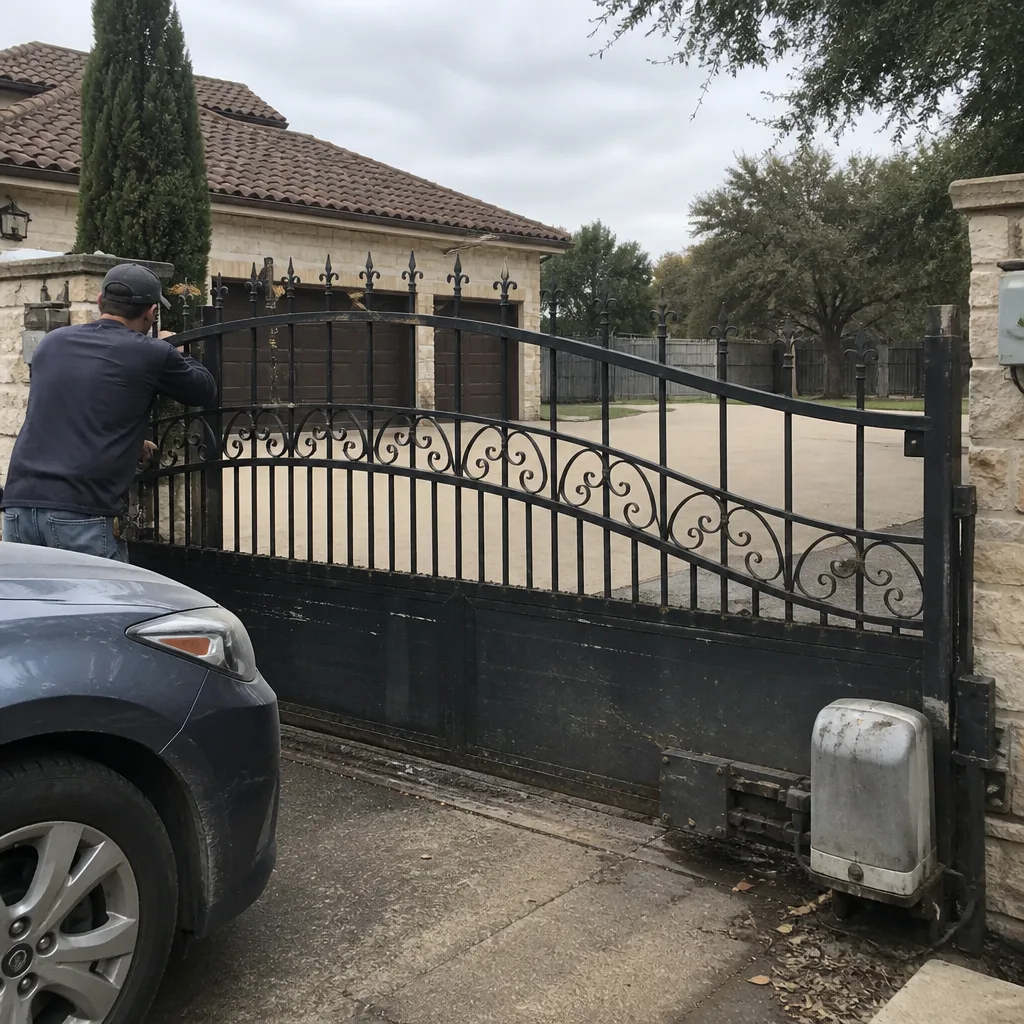 Before
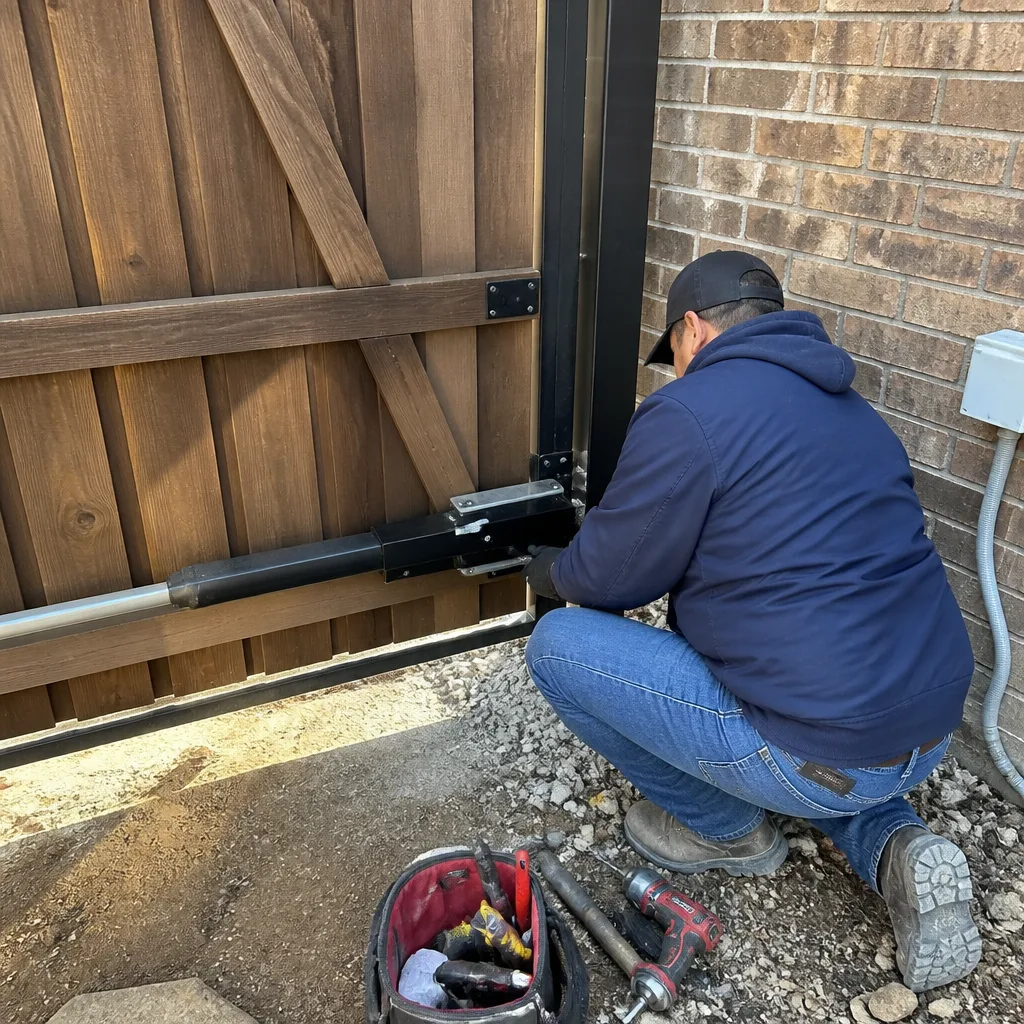 After
After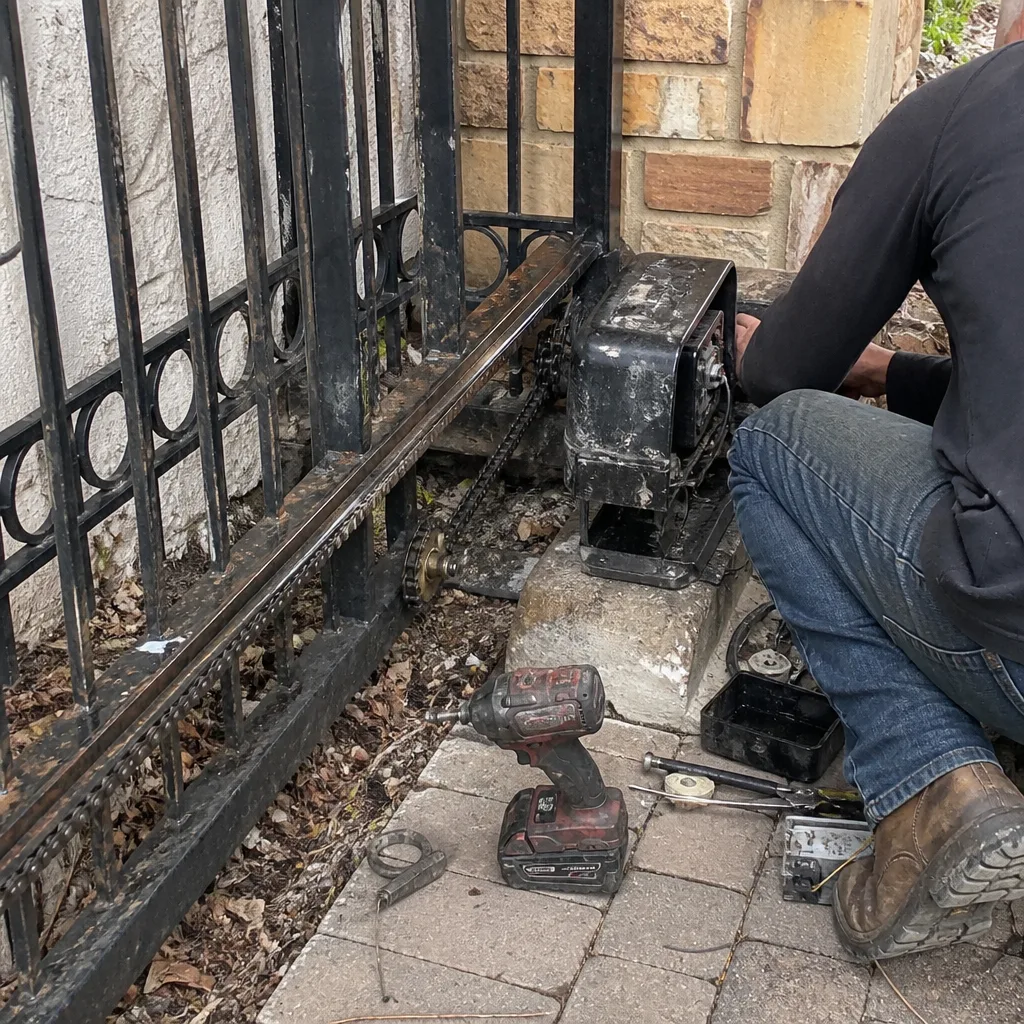 Before
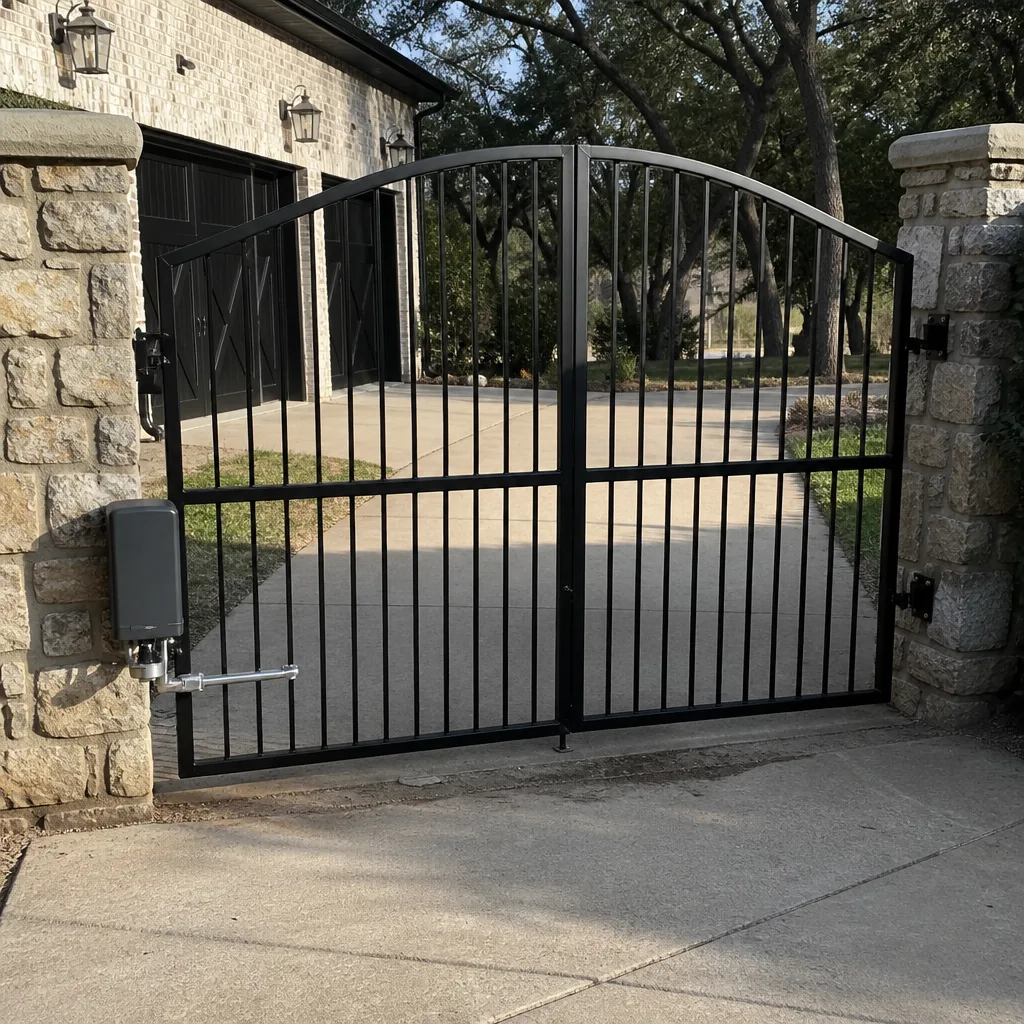 After
After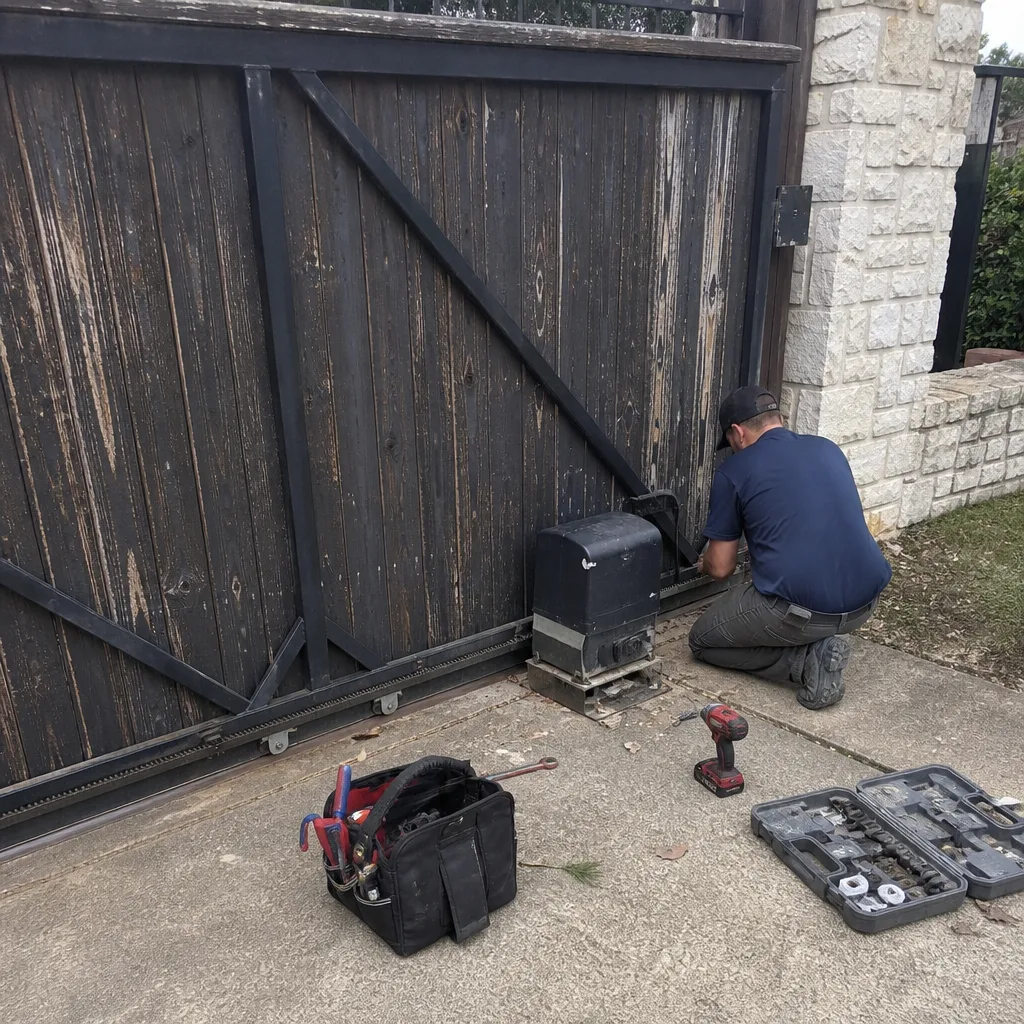 Before
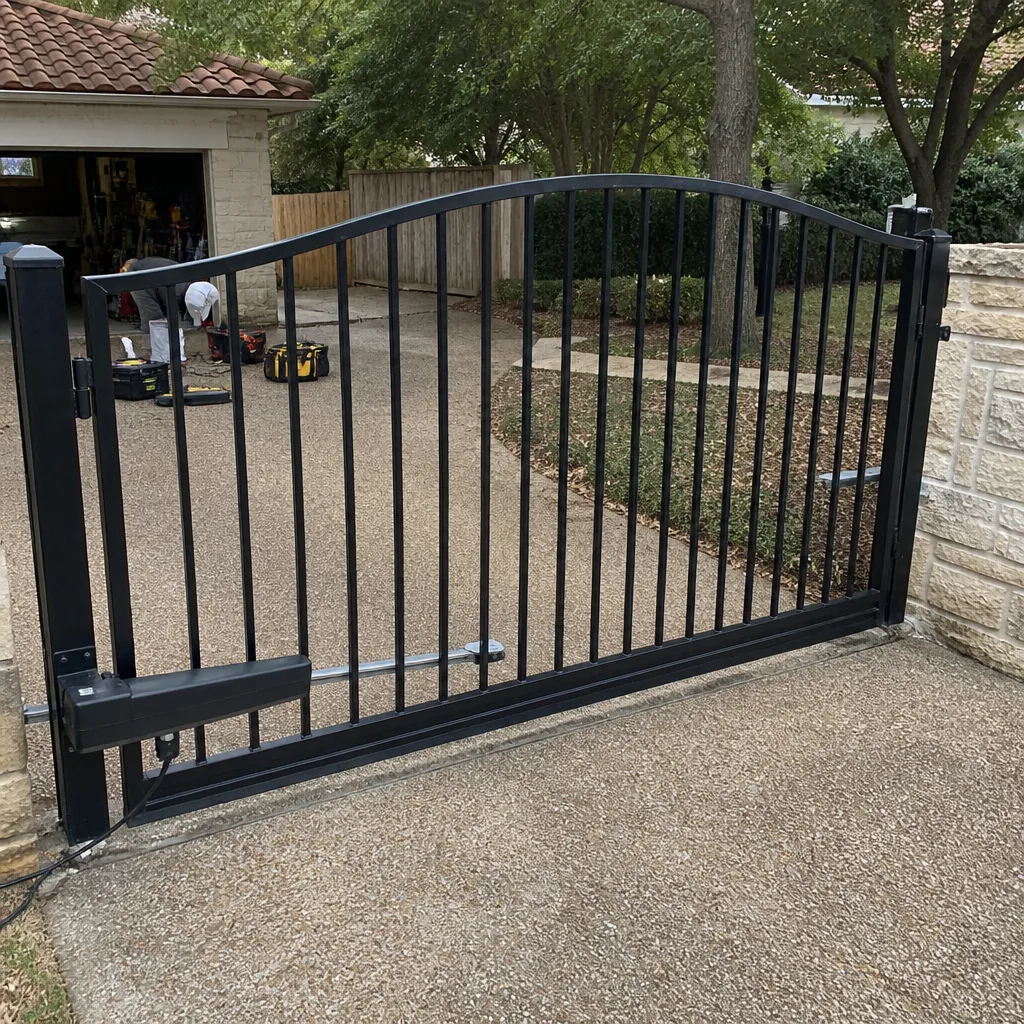 After
AfterGate Repair Cost Breakdown: The Grapevine Homeowner’s Reference for 2026
Here’s a number most Grapevine homeowners don’t expect: the average driveway gate repair bill in this area lands between $275 and $650, even though most of the parts involved cost under $100. The money goes to knowing what’s actually wrong. A gate that won’t open could be a $40 capacitor or a $900 circuit board, and telling the difference takes a trained eye, not a guess. This guide breaks down what gate repair costs in Grapevine in 2026, line by line, so you know what’s fair before you pick up the phone.
Quick Answer
Gate repair in Grapevine, TX typically costs between $275 and $650 for most common fixes in 2026. Simple repairs like hinge adjustments or keypad batteries run $125 to $200, while motor replacements and circuit board work run $500 to $1,500 or more. Emergency and after-hours calls add $75 to $150 to the base service fee.
Table of Contents
- What Actually Drives Gate Repair Cost in Grapevine
- 2026 Grapevine Gate Repair Pricing Table
- The 8 Most Common Gate Repairs, Explained and Priced
- Automation Repairs vs. Mechanical Repairs: Why the Bill Differs
- Labor Costs in Grapevine: What You’re Paying For
- Parts: Where the Money Goes and What’s Fair
- Why Grapevine’s Climate Works Your Gate Harder
- DIY vs. Hiring a Pro: A Straight Answer
- Common Mistakes to Avoid
- When to Call a Professional
- Frequently Asked Questions
- The Bottom Line
What Actually Drives Gate Repair Cost in Grapevine
Gate repair pricing comes down to four things: the part that failed, the labor to reach it, the brand of opener on your gate, and the condition of the surrounding hardware. In Grapevine, we also see a fifth factor that homeowners don’t think about until it’s on the invoice: deferred maintenance. A gate that hasn’t been serviced in five years costs more to repair than one that got a yearly tune-up, because small problems compound.
Let’s walk through each factor so you can read any quote with clear eyes.
1. The Part That Failed
This is the obvious one. A worn hinge costs less than a burned-out circuit board. But here’s the part most people miss: the part itself is rarely the whole story. A hinge that seized didn’t fail in isolation. It put extra strain on the opener motor for months, and that strain may have shortened the motor’s life too. A competent repair includes checking what the failed part affected. That’s why a $40 hinge replacement sometimes comes with a recommendation to adjust the motor’s force settings, which adds labor but prevents a much bigger bill later.
2. Labor to Reach It
Some repairs take 20 minutes. Some take half a day. Access matters. A swing gate operator mounted inside a brick column takes longer to open and close than one bolted to a steel post. An underground gate operator – common in estate properties around Grapevine lake communities – requires excavation or at least careful digging to access. Slide gates with buried track work can hide the problem in places that require removal of the gate panel itself.
3. The Brand of Opener
This one surprises people. The opener brand on your gate changes the repair price. Viking and DoorKing parts tend to be straightforwardly available from local supply houses, which keeps things moving. FAAC and BFT parts sometimes require ordering from a distributor’s warehouse, which adds a day or two and occasionally a shipping charge on top of the part. Linear and Mighty Mule parts are generally the least expensive at retail, but the electronics can be less forgiving of power surges, which matters in North Texas storm season.
4. Surrounding Hardware Condition
Your gate opener doesn’t work alone. It works with hinges, wheels, track, posts, and a power supply. If the gate panel weighs more than the opener’s rated capacity, or if a wheel has worn flat, the motor works against extra resistance every single cycle. A repair quote should account for that. In our experience hanging and servicing gates across Grapevine since 2013, fully half of opener failures involve a mechanical problem that made the opener work too hard. Fixing only the opener without addressing the cause means doing the job twice.
5. Deferred Maintenance
A gate that gets an annual tune-up costs far less to keep on the road than one that only gets attention when it quits. We see this contrast weekly. In Grapevine neighborhoods like Oak Grove and Lakeview, where homes date to the 1990s and gates have been through 30 years of Texas heat cycles, the difference between a maintained gate and a neglected one is often a $200 service call versus an $800 motor replacement. The maintenance call catches the straining capacitor before it cooks the control board.
2026 Grapevine Gate Repair Pricing Table
These are real price ranges we’ve seen in Grapevine and the surrounding DFW metro for standard residential driveway gates. Every job differs, but these numbers give you a fair reference point before you call anyone.
| Repair Type | Typical Cost Range | What It Includes |
|---|---|---|
| Service call / diagnostic visit | $65 – $100 | Trip to your home, inspection, written estimate |
| Hinge replacement (standard pair) | $150 – $300 | New hinges, removal of old hardware, alignment |
| Wheel / roller replacement | $120 – $250 | New wheels, track cleaning, weight adjustment |
| Keypad replacement or reprogramming | $125 – $225 | New keypad, wiring check, code setup |
| Safety sensor / photo eye repair | $150 – $300 | Sensor replacement, alignment, testing |
| Capacitor replacement | $125 – $200 | New capacitor, motor test, force check |
| Circuit board replacement | $400 – $800 | Board, installation, programming, system test |
| Opener motor replacement | $500 – $1,100 | New motor, installation, settings, safety check |
| Full operator replacement | $1,200 – $2,500 | Complete operator, arm, mounting, programming |
| Track repair (slide gate) | $300 – $700 | Track section repair or replacement, alignment |
| Welding repair (cracked frame or post) | $200 – $600 | On-site welding, reinforcement, paint touch-up |
| Emergency / after-hours call | +$75 – $150 | Added to base repair cost |
Two things worth saying about this table. First, these are honest Grapevine market ranges, not lowball teaser prices. If a quote comes in far below these numbers, ask what’s included. If it comes in far above, ask why. Second, every reputable company in Grapevine – Ironworks Gate Co. home included – should give you the price in writing before work starts. If a company won’t hand you a number until the job’s done, that’s not a gate company, that’s a gamble.
The 8 Most Common Gate Repairs, Explained and Priced
We’re going to walk through the repairs we do most in Grapevine, in order of how often we see them. For each one, we’ll tell you what the repair actually is, what it costs, and what we’d look for as a homeowner paying the bill.
1. Opener Motor Failure ($500 – $1,100)
When a gate opener motor dies, it’s usually not a sudden event. The motor has been straining for months – against a sagging gate, a failing capacitor, or salt-tinged humidity from the west Texas wind. By Grapevine standards, a motor that lasts 10 to 12 years on a swing gate has done its job. The repair involves removing the old motor, mounting the new one, setting the open and close limits, adjusting force settings, and testing the safety reversal. On a FAAC or BFT operator, the control board may need a firmware compatibility check. On a Linear opener, the capacitor is often replaced at the same time since it’s a common failure point and cheap insurance.
2. Circuit Board / Control Board Replacement ($400 – $800)
North Texas storms and power surges kill control boards. The board sits between your wall switch, your keypad, your safety sensors, and the motor itself. When it fails, the gate may open but not close, close but not open, or behave erratically – opening at random hours or ignoring the remote entirely. The repair means pulling the old board, installing the new one, reprogramming the limits and force settings, and re-syncing all your remotes and keypads. Homeowners sometimes ask if a rebuilt board is a cost saver. In our experience, a rebuilt board from a supply house lasts about half as long as new. The savings aren’t worth a second service call.
3. Hinge Replacement or Repair ($150 – $300)
Hinges carry the entire weight of the gate leaf, and on a heavy iron gate, that weight is substantial. When a hinge wears, the gate sags. The sag throws the gate off its striker, puts uneven load on the motor, and scrapes the bottom edge against the driveway. On a mid-century iron gate in a Grapevine neighborhood like Stonegate or Bear Creek, replacing hinges often means lifting the gate panel, cutting or unbolting the old hardware, welding or bolting new hinges in place, and re-aligning the leaf. If you catch hinge wear early, the fix is quick. If you let it go, the gate will eventually refuse to close at all, and then you’re looking at an emergency call plus the repair.
4. Keypad or Remote Programming ($125 – $225)
The cheapest repair on this list, and the most common source of frustrated phone calls. Keypads stop working for three reasons: dead battery, corroded terminals from Grapevine’s humid summer months, or a code wipe after a power surge. The fix is usually fast – replace the battery, clean the contacts, or reprogram the code. If the keypad itself is cracked or water-damaged, replacement is the way. A wired keypad costs more than a wireless one because the wiring run from the keypad to the opener has to be checked for breaks.
5. Safety Sensor / Photo Eye Failure ($150 – $300)
Modern gates have sensors that stop the gate if something – a child, a dog, a car bumper – crosses the path while the gate is moving. When a sensor fails, the gate usually refuses to close at all, which is the system failing safe. The repair involves testing the sensor pair, replacing the bad unit, re-aligning both sensors so the beam connects, and verifying the gate reverses properly under obstruction. This is a repair we will not shortcut. A bypassed safety sensor is a liability waiting for a lawsuit.
6. Wheel or Roller Failure on Slide Gates ($120 – $250)
Slide gates roll on wheels that run in a steel track. Grapevine’s dry, sometimes dusty conditions wear those wheels flat, and a flat wheel grinds against the track until the gate binds. The repair means lifting the gate off the track, replacing the wheels, cleaning the track, and adjusting the gate’s height so it rolls clean. If the track is damaged too, this turns into a track repair job, which adds $300 to $700.
7. Track Repair on Slide Gates ($300 – $700)
Track damage happens when a wheel fails and the gate keeps getting used anyway – the metal-on-metal contact chews up the track. Repairing it means cutting out the damaged section, welding in a new piece, grinding the weld smooth, and re-aligning. This is skilled work, and it’s one of the places where hiring a company that welds regularly pays off. A handyman who doesn’t weld will tell you the whole track needs replacing. A welder will fix the section and save you half the money.
8. Welding Repair on Gate Panel or Post ($200 – $600)
Iron gates crack. It’s not a defect – it’s what steel does after thousands of open and close cycles over 20 or 30 years. The crack usually starts at a weld point where the gate panel meets its frame, or where the hinge post meets the concrete. The repair involves grinding the crack, welding it closed, reinforcing the area with a plate if the metal is thin, and painting the repair to match. On a decorative gate with ornamental work, the welding has to be careful enough not to burn through the design. This is craft work, and it’s priced accordingly.
Automation Repairs vs. Mechanical Repairs: Why the Bill Differs
Homeowners often expect a gate repair to be like a car repair – one mechanic, one bill. But gate work splits into two distinct disciplines. Understanding the difference will save you from paying the wrong person to do the wrong job.
Mechanical Repairs: The Gate Itself
Mechanical work covers everything that moves the gate leaf as a physical object: hinges, wheels, track, posts, the gate frame, and any welding. These repairs require a metalworker’s skills. The person doing the work needs to know how a heavy gate balances, how to lift and support a panel safely, how to weld without warping the surrounding steel, and how to align everything so the gate hangs straight and swings true. This isn’t assembly work. It’s the difference between a gate that works for 20 years and one that sags in two.
Automation Repairs: The Operator and Electronics
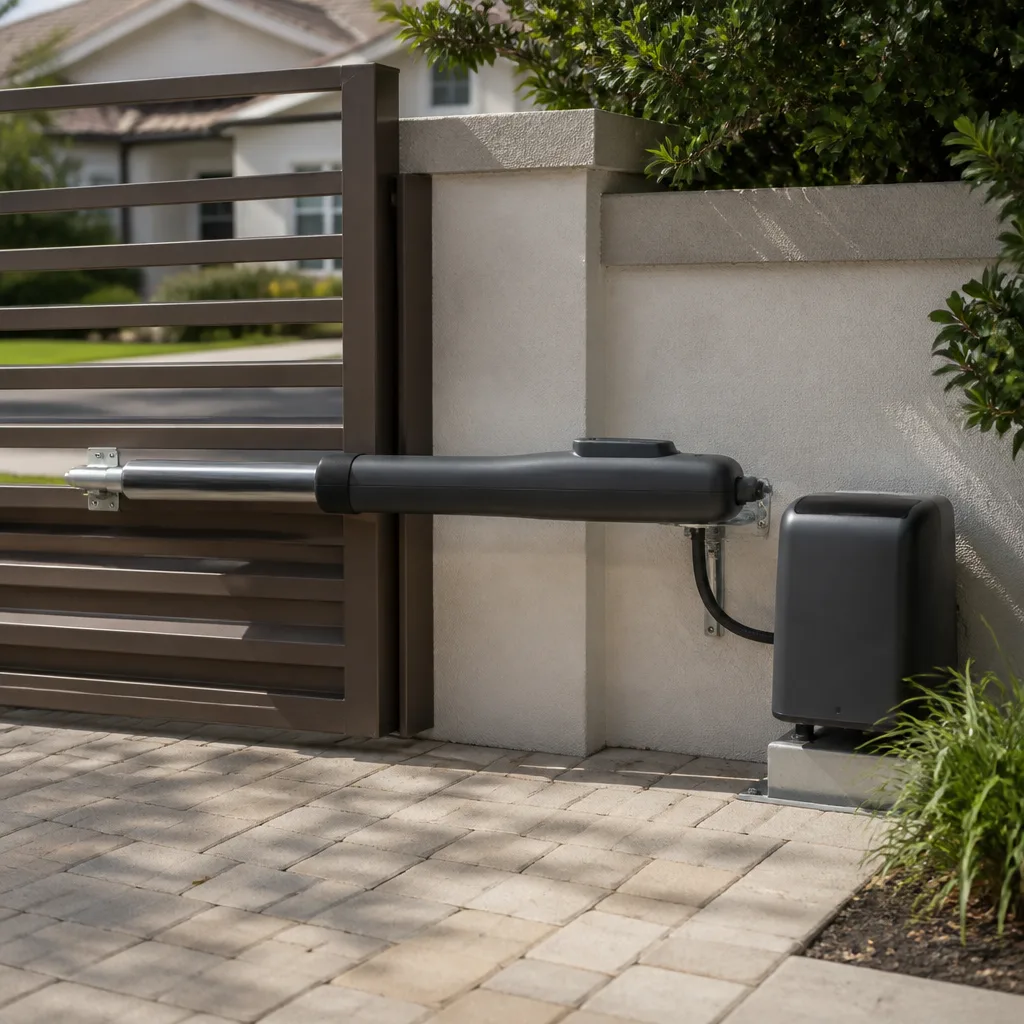
Automation work covers the opener itself: the motor, the circuit board, the keypad, the sensors, the remote receivers, and the wiring. This is an electrician’s discipline with a programmer’s attention to detail. An operator from FAAC programs differently than one from Viking, and a technician who doesn’t know the difference can waste two hours trying to make a FAAC behave like a Viking. The right fix comes from someone who’s worked on that specific brand before.
The best repairs happen when one company handles both halves. At Ironworks Gate Co., that’s how we’ve always worked. The gate and the opener have to function as one system, and when a single crew understands both the hinge and the circuit board, the repair is diagnosed correctly the first time. When the mechanical and the electronic sides get split between two companies, each blames the other, and you end up paying twice.
Labor Costs in Grapevine: What You’re Paying For
Most gate companies in the DFW metro charge between $75 and $125 per hour for gate work, with a minimum service call fee that covers the first hour. In Grapevine specifically, you’ll see a spread between national-franchise pricing and independent-shop pricing. The franchise truck has overhead to cover. The independent shop either has less overhead or fewer resources, and the quality follows the company more than the price.
Here’s what that labor rate actually buys you, and what a low rate leaves out:
- The diagnostic time. A good technician spends the first 15 to 30 minutes testing, observing, and measuring before turning a single wrench. A cheap technician starts replacing parts and hopes. You pay for the knowledge either way – the difference is whether you pay once or twice.
- Insurance and licensing. Reputable gate companies in Grapevine carry liability insurance and workers’ comp. That’s not free. A company quoting under $60 per hour is usually cutting something – and it’s often the insurance.
- The truck, the tools, and the parts inventory. A well-stocked service truck carries capacitors, sensors, remotes, hinges, and welding gear. That inventory costs money to carry, and it’s the reason the repair happens in one visit instead of three.
- Training on multiple brands. A technician certified on one opener brand costs less to employ than one trained on nine. But when your gate has a Ghost Controls opener and the tech only knows Mighty Mule, you’re paying for that tech’s learning curve.
- The drive to Grapevine. Some companies based in Dallas or Fort Worth charge a trip fee for Grapevine calls. Local companies don’t, because the drive is five minutes.
Victor Salinas founded this company on a simple idea: a gate repair should be a one-visit job with a price agreed before work begins. That’s not a slogan. It’s the business model. When a customer calls us at (432) 237-4128, they get a live person, a scheduled appointment, and a technician who arrives with the parts he’ll likely need on the truck. That’s what the labor rate pays for.
Parts: Where the Money Goes and What’s Fair
Every trade marks up parts. Plumbers do it, electricians do it, and gate companies do it. The standard markup on gate components runs 20% to 50% over wholesale, and that markup covers the cost of buying, stocking, and warranting the part. When you see a $200 circuit board on an invoice for $290, that’s not gouging. That’s the cost of a company that has the part in stock and stands behind it.
Here’s where it gets less fair. Some companies buy the cheapest aftermarket parts available and price them at name-brand retail. You pay for a FAAC-quality board and get a generic substitute that fails in a year. Here’s how to protect yourself:
- Ask for the part brand by name. If your opener is a Linear, the new board should say Linear on it. Don’t accept “it’s compatible.” Compatible means it fits, not that it lasts.
- Ask about the warranty on the part. Name-brand parts carry a manufacturer’s warranty that any honest company will pass through to you. If there’s no part warranty offered, something’s off.
- Look for the labor warranty too. A part is only half the bill. If the part fails in a month, you want the labor covered too. Our 90-Day Done Right Promise covers parts and labor on every repair, in writing, with no fine print and no arguments.
One more thing on parts: Grapevine’s distance from major distribution centers means most gate parts are stocked in Dallas warehouses, not local supply houses. A well-run service company keeps a rolling inventory of the most common parts – capacitors, sensors, remotes, hinge sets – so the job doesn’t wait on a FedEx truck. That inventory is part of the markup.
Why Grapevine’s Climate Works Your Gate Harder
Grapevine sits in a hard climate for anything made of metal and electronics. Three factors work against your gate all year long, and they directly affect what you’ll pay to repair it.
The Summer Heat
Texas summers aren’t just hot – they’re long. Grapevine gets 90-plus days of 95-degree heat, and a steel gate panel sitting in that sun can hit surface temperatures over 150 degrees. That heat does two things. First, it expands the metal, which changes gate alignment by fractions of an inch – enough to make a gate scrape or bind. Second, it cooks electronics. Circuit boards inside operator boxes bake in enclosed housings, capacitors age faster, and battery backups die earlier than their rated lifespans. We’ve been servicing gates in Grapevine since 2013, and we schedule more motor and board replacements in August and September than any other months.
The Humidity and Rain
Grapevine’s humidity, especially in spring and early summer, gets into everything. Operator boxes that aren’t sealed properly collect condensation. Electrical connections corrode. Hinges without grease pick up rust. The wet season brings a wave of sensor failures and keypad corrosion calls. A gate that survives the summer often fails in May.
The Wind and Dust
North Texas wind blows fine dust into tracks, hinges, and roller assemblies. That dust mixes with heat-aged grease and turns into a grinding paste that wears wheels flat and scores tracks. Slide gates in Grapevine need track cleaning at least once a year, more if the property is near open ground or construction. The $89 Seasonal Tune-Up we offer exists because we know what the wind does to these mechanisms.
Iron Gates vs. Steel Gates vs. Aluminum: How Material Affects Repair Cost
Not all driveway gates are the same, and the material your gate is made from changes the repair picture in meaningful ways. Grapevine has a mix of all three, and each behaves differently in this climate.
Wrought Iron and Ornamental Steel Gates
These are the traditional Texas driveway gate, found in older Grapevine neighborhoods and estates. They’re heavy, they’re strong, and they last decades when maintained. Repair costs skew higher because the work involves welding and real metalwork, not bolt-together parts. A cracked ornamental iron gate needs a welder who can work around decorative scrollwork without ruining it. The good news: iron and steel gates rarely need full replacement. They get repaired, reinforced, and put back into service for another 20 years.
Tubular Steel and Aluminum Gates
Lighter, more modern gates use hollow steel or aluminum framing. Aluminum doesn’t rust, which is a real advantage in Grapevine’s humid months, but it’s also more prone to cracking at welds because aluminum has less fatigue resistance than steel. Tubular steel gates fall somewhere in between – they rust if the factory coating is compromised, and they’re harder to patch invisibly. Repairs on these gates tend to cost less per hour because the panels are lighter and easier to handle, but finding someone who welds aluminum competently narrows your list of qualified contractors.
Whatever the material, the mechanic of the repair is the same: fix the wear point, restore alignment, verify the whole system works. The material just determines whether you need a welder with a steel rig or an aluminum rig, and that’s a question worth asking before the truck rolls.
DIY vs. Hiring a Pro: A Straight Answer
We’re going to be straight with you, because you deserve a straight answer. Some gate work is genuinely doable for a handy homeowner. Some is absolutely not.
What a Careful Homeowner Can Handle
- Keypad battery replacement. Pop the cover, swap the battery, test the code. Five minutes.
- Remote battery replacement. Same deal. If a new battery doesn’t fix it, the remote’s dead and needs replacing.
- Visual inspection. Walk the gate line. Look for sagging, scraping, rust at the hinges, cracks at welds, and wheels that aren’t round anymore. Catch it early and the repair stays cheap.
- Light lubrication. A spray of white lithium grease on hinge pins, twice a year, keeps things moving. Don’t overdo it – excess grease collects dust.
What You Should Not Touch
- Anything involving the opener motor. Gate operators live inside housings with high-voltage wiring. A wrong move gets you shocked or the board fried.
- Welding. A bad weld on a 600-pound iron gate is a failure waiting to happen. This is not the place to learn.
- Spring or tension adjustments on swing gates. Some gates use torsion systems that store serious energy. A spring letting go under tension can hurt you badly.
- Safety sensor work. Your sensors are the difference between a gate that stops for a child and a gate that doesn’t. This is a professional’s job, full stop.
If your gate repair involves a motor, a circuit board, a weld, or a sensor, call a pro. The money you think you’re saving on DIY evaporates the first time the repair goes wrong, and a gate is a heavy object that can do real damage.
Common Mistakes to Avoid
- Ignoring the scraping sound. A gate that scrapes is telling you something. Usually it’s a sagging hinge or a failing wheel, and every week of ignoring it adds wear to the motor. What starts as a $200 hinge job becomes a $900 motor job if you wait through a Grapevine summer.
- Hiring a general handyman for automation problems. A handyman can swap a hinge. He cannot diagnose a BFT control board, and he knows it. The problem is, he’ll try anyway because the truck’s already there. You pay for the attempt, then pay a real gate company to do the job right.
- Choosing the lowest quote without asking what’s included. A $99 diagnostic visit that turns into “$700 of additional work after we open it up” is not cheaper than an honest $250 repair priced before work starts. Upfront pricing protects you. “We’ll see when we get in there” protects the contractor.
- Replacing instead of repairing. Some companies only do full replacements because replacements are more profitable. A gate operator that needs a $300 board does not need a $2,000 operator. Ask if the existing unit can be repaired before agreeing to replacement.
- Skipping the yearly tune-up. Grapevine’s climate punishes neglected gates. The $89 Seasonal Tune-Up pays for itself the first time it catches a failing capacitor instead of a fried board.
- Throwing away the old remote. If you lose or break a remote, keep the old one. A technician can often reuse the housing and just replace the internals, which saves you real money over a factory-new remote.
- Not asking about the service call fee. Every Grapevine gate company charges a trip fee, and some roll it into the repair while others charge it on top. Ask before you book, in writing if you can. No reputable company should hesitate to tell you.
When to Call a Professional
Call a professional when the gate won’t move, when it moves then stops midway, when it opens on its own, when it makes a grinding noise, when the safety sensors won’t stay aligned, or when you see a crack in the metal or a post leaning. These aren’t problems that fix themselves. They get worse, and they get more expensive. Also call a professional if you’re unsure about the age or condition of your gate and just want a straight answer. That’s what inspections are for. Ironworks Gate Co. offers free estimates in Grapevine – call (432) 237-4128 and we’ll send someone out to look. No obligation, no pressure, just an honest assessment of what your gate needs and what it’ll cost.
Frequently Asked Questions
Most gate repairs in Grapevine run between $275 and $650 in 2026. Small fixes like keypad battery replacement run $125 to $200, while motor replacements run $500 to $1,100. Emergency calls add $75 to $150. Call (432) 237-4128 for an exact quote – estimates are free.
In most cases, yes. We keep service slots open for genuine emergencies – gates stuck open, gates that won’t close, broken springs, and safety sensor failures. A live person answers our phone 24 hours a day, so you’ll know immediately whether a same-day visit is possible. Call (432) 237-4128 and we’ll tell you straight.
A full operator replacement includes the new motor and control board, new mounting hardware, arm or chain components as needed, complete limit and force setup, safety sensor verification, and programming of all remotes and keypads. The price is quoted in full before work begins, with no surprises on the bill.
Yes. When we replace or repair a gate operator, we check the entire power delivery system from the breaker to the motor – which includes the conduit run, the junction boxes, and the wiring condition. Safety edges, photo eyes, and other entrapment protections are tested and replaced if they’re not working properly. Every gate that leaves our hands meets current safety standards.
We service LiftMaster, FAAC, BFT, Linear, Viking, Ghost Controls, DoorKing, Elite, and Mighty Mule. If your opener is a less common brand, call us anyway – if we can’t fix it, we’ll tell you honestly and point you to someone who can. We’d rather see you get the right fix than take a job we can’t do well.
Yes, and the math favors it. Our $89 Seasonal Tune-Up catches failing capacitors, worn hinges, corroded sensors, and misaligned tracks before they become breakdowns. A tune-up costs less than a single service call. If you live in Grapevine and want to keep repair bills down for the next 20 years, yearly maintenance is the cheapest decision you’ll make about your gate. Call (432) 237-4128 to schedule one.
The Bottom Line
Gate repair in Grapevine costs what it costs because the work is real: diagnosing electronics, lifting heavy steel, welding cracked metal, and programming openers that have to work safely every single time. The 2026 price ranges in this guide – $275 to $650 for most repairs, $500 to $1,100 for motor work, $1,200 to $2,500 for full operator replacement – are honest numbers for our market. The best way to keep your own costs low is to catch problems early, maintain the gate yearly, and hire a company that fixes the root cause instead of just the symptom. Grapevine homeowners who do all three rarely pay more than a tune-up bill in any given year.
Written by Victor Salinas, Owner at Ironworks Gate Co., serving Grapevine since 2013.