
Last updated August 25, 2026
Free on-site gate assessment - hinges, posts, and your LiftMaster or Nice gate operator checked before anything is quoted
The assessment is free and the quote is the invoice.

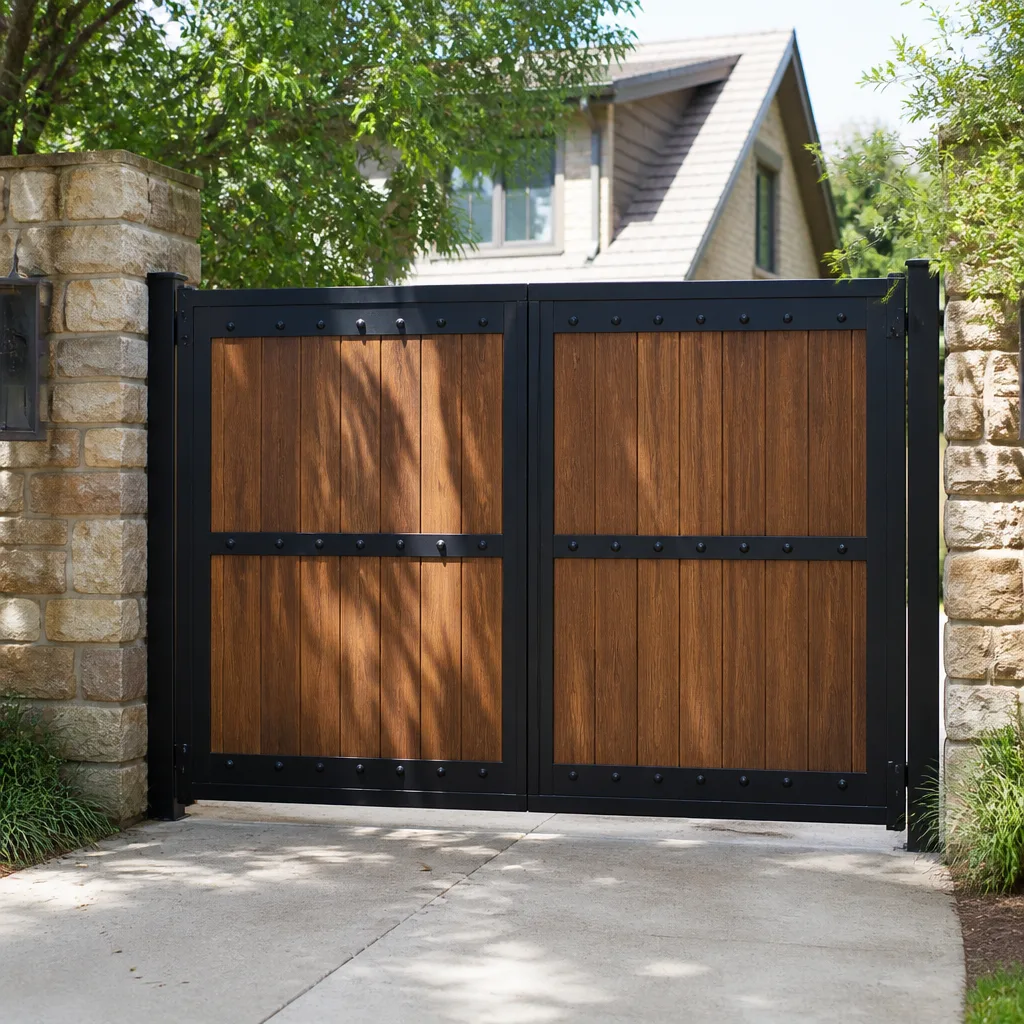
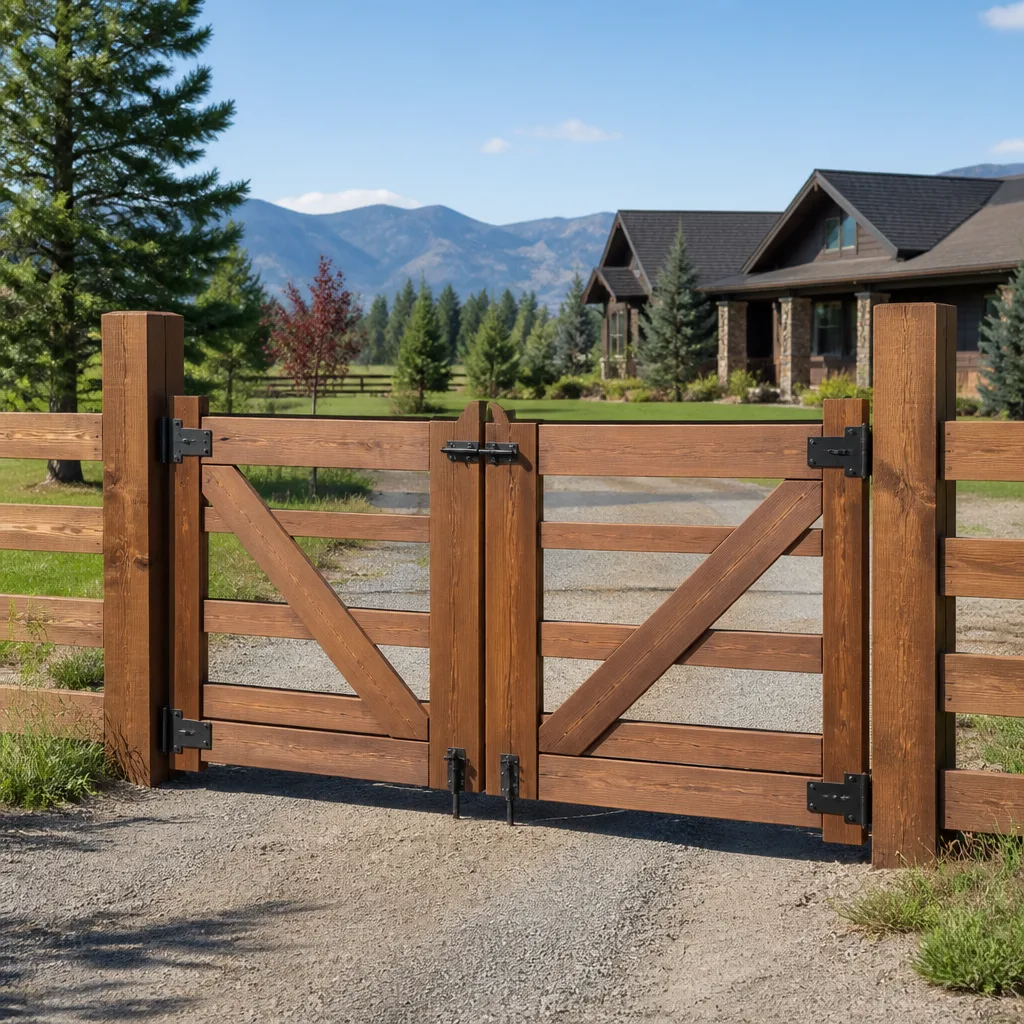
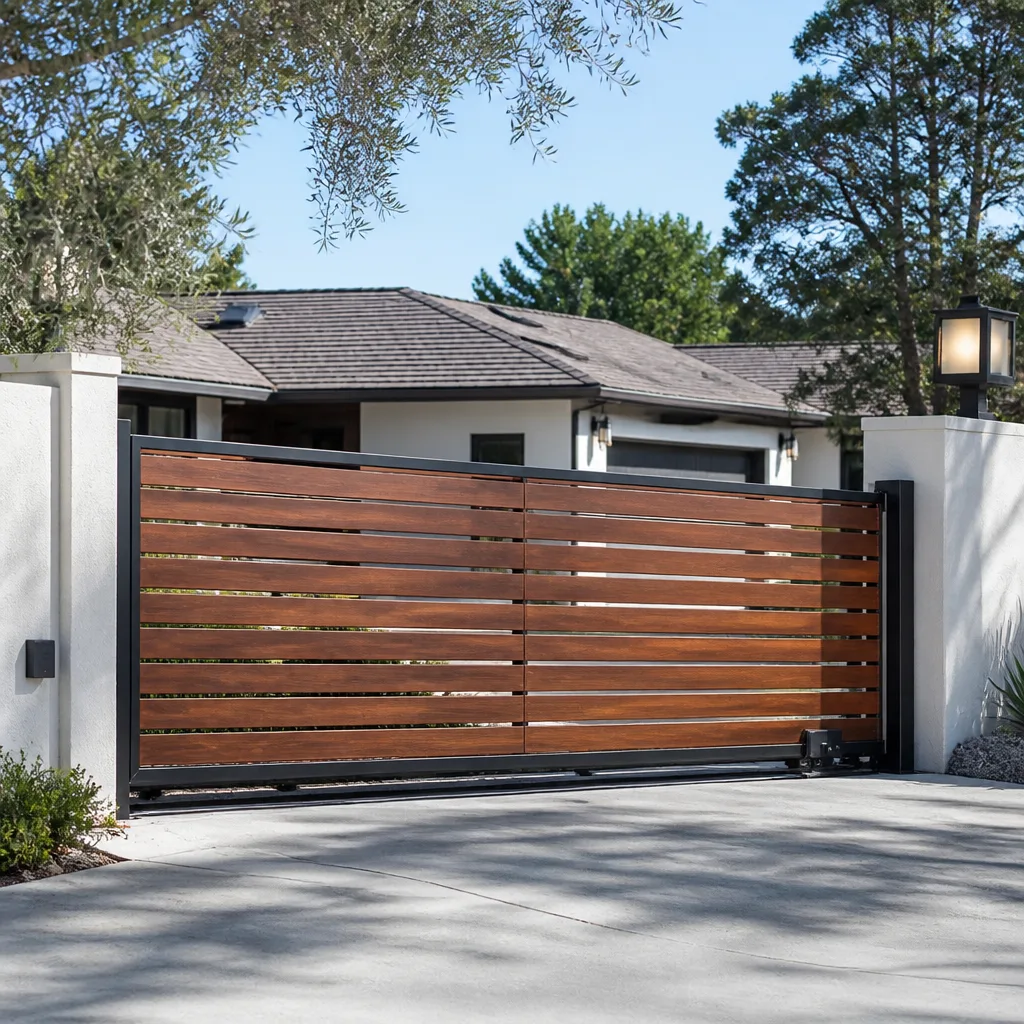
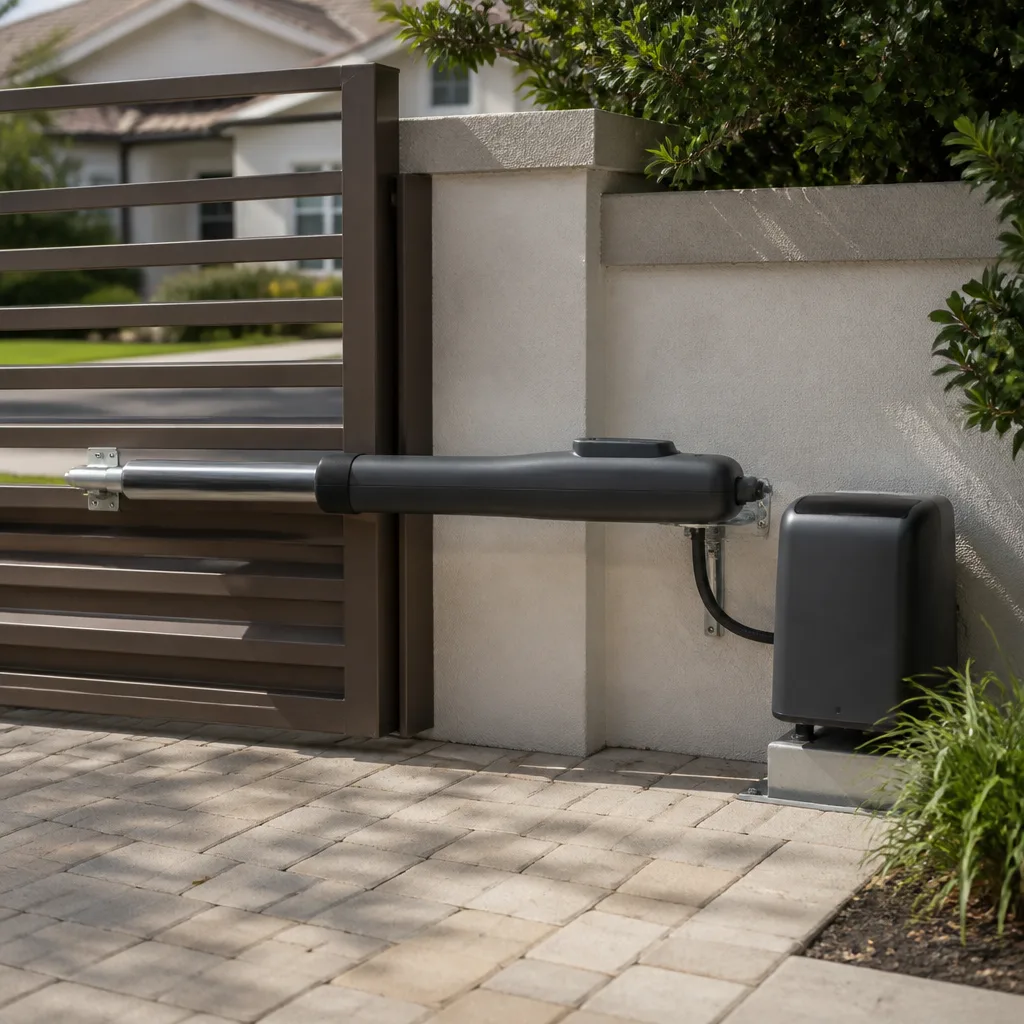
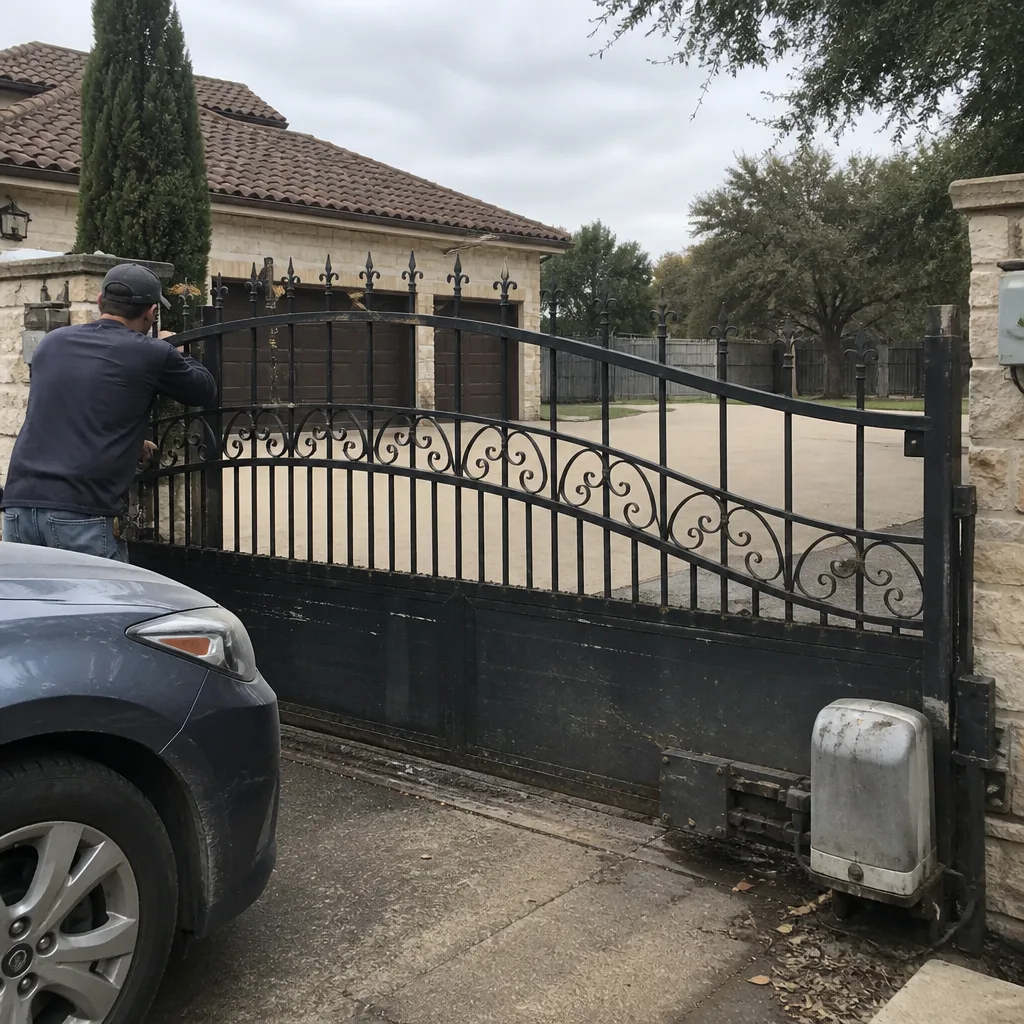 Before
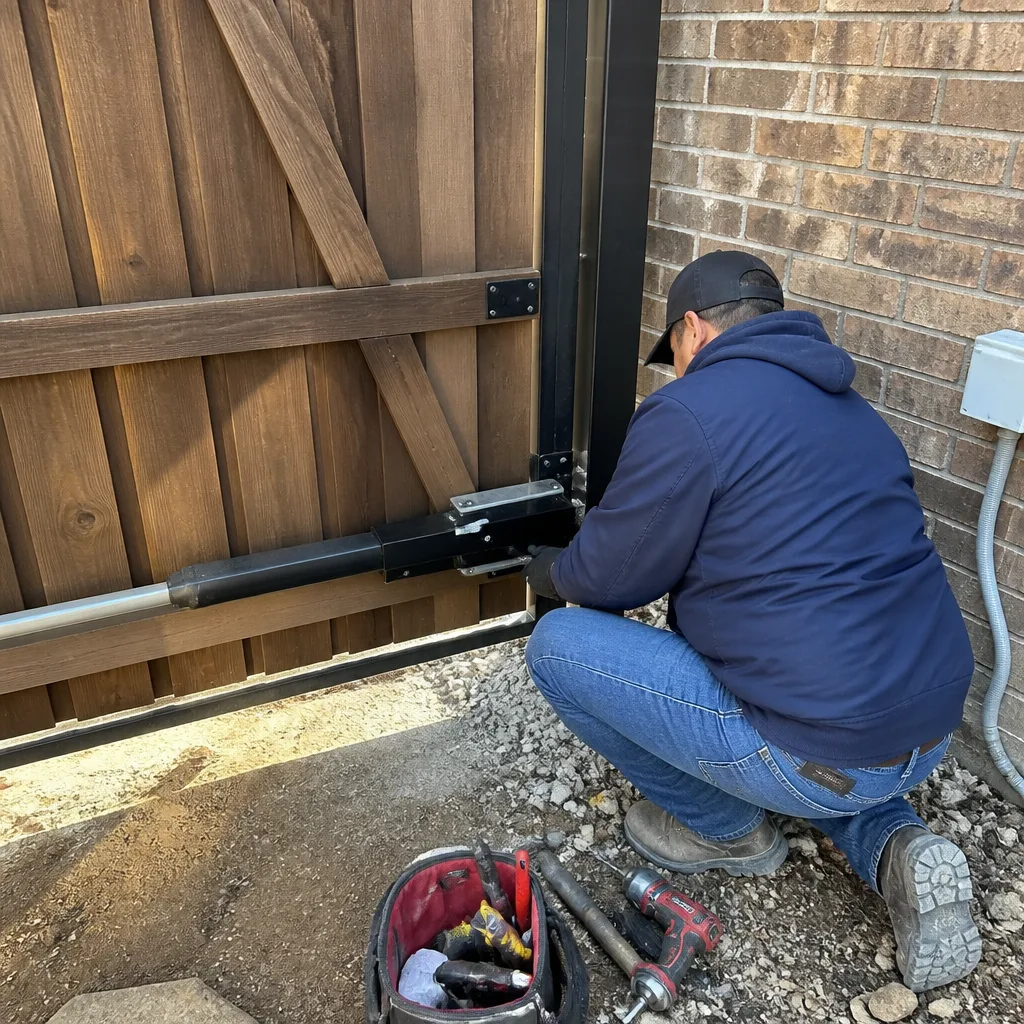 After
After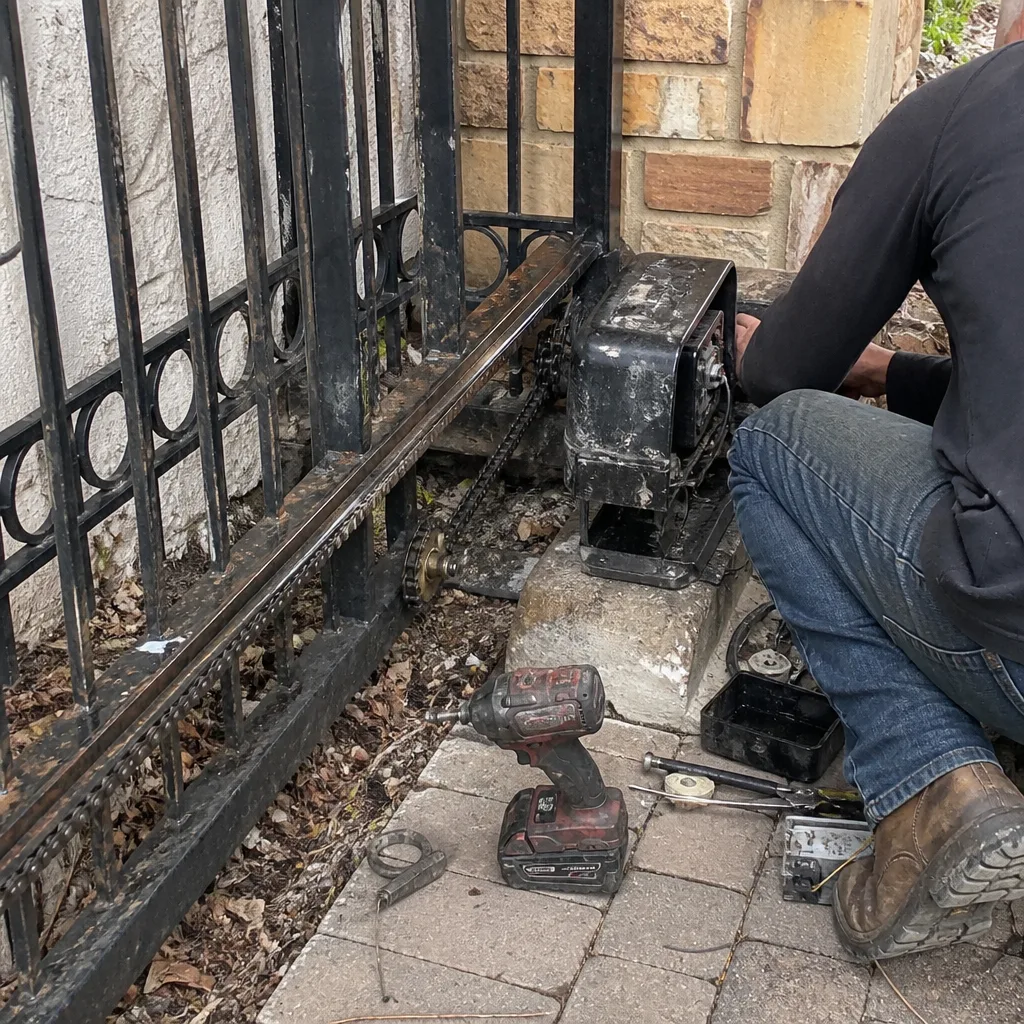 Before
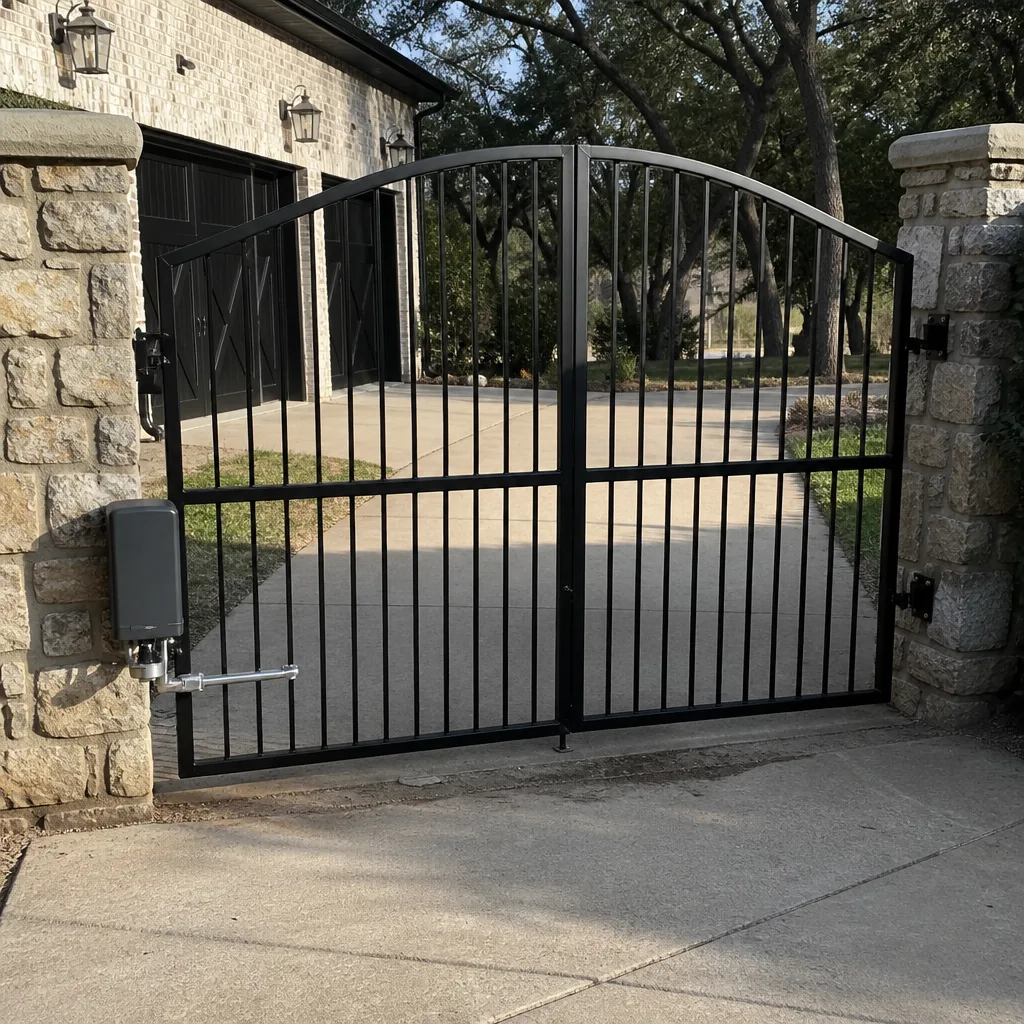 After
After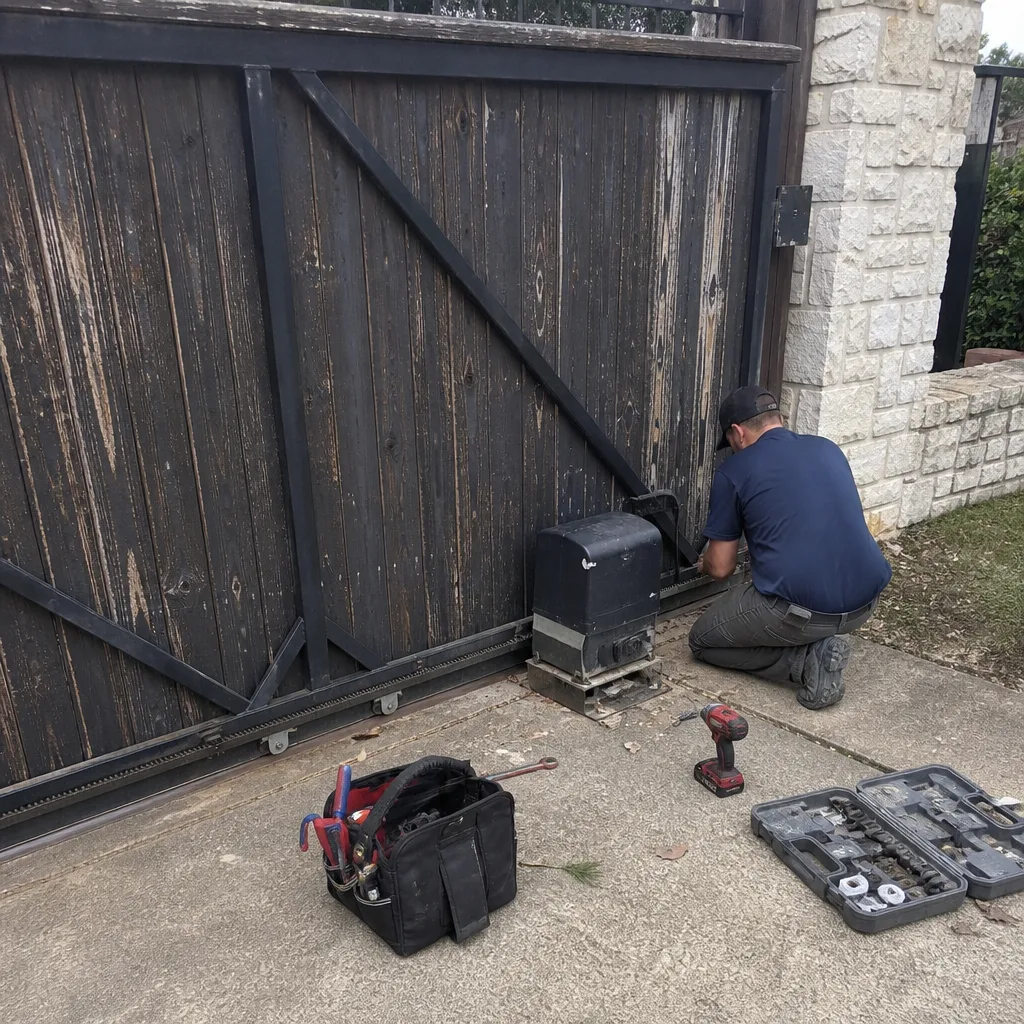 Before
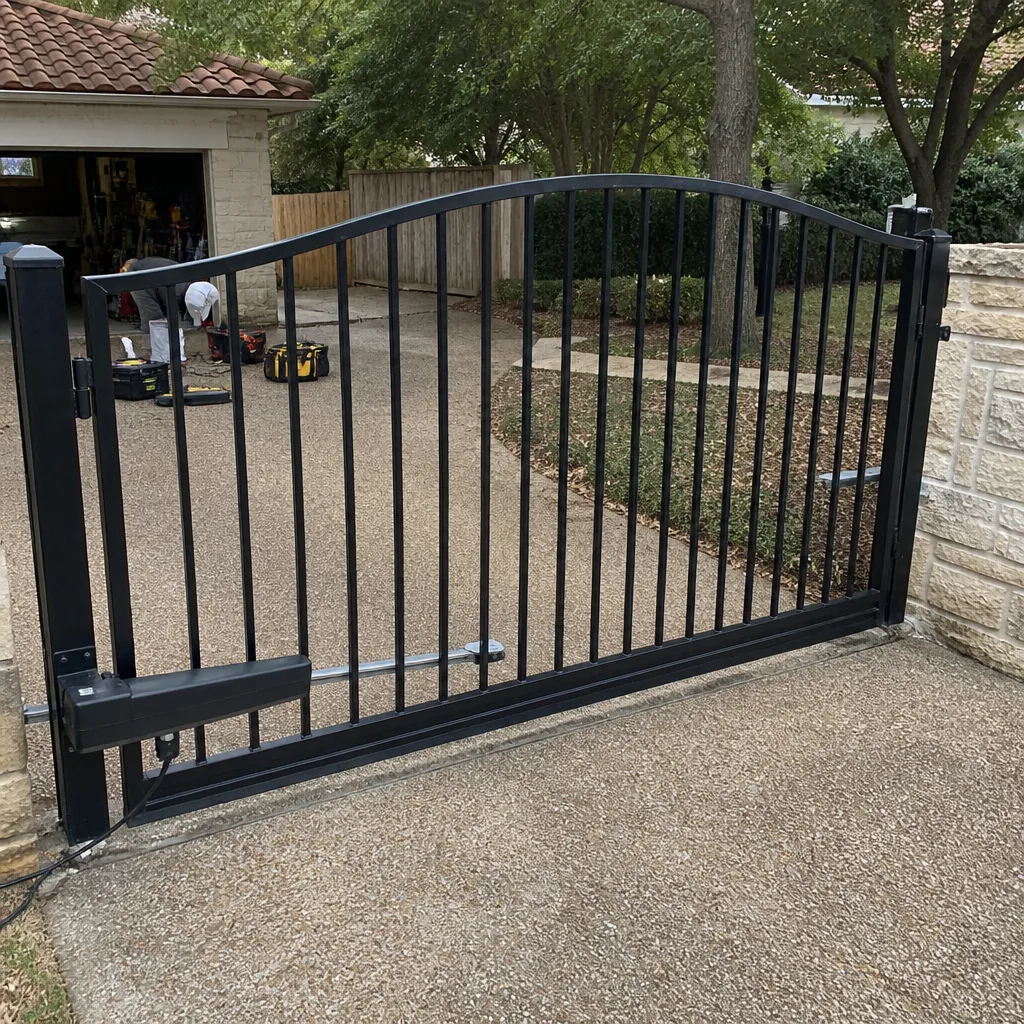 After
AfterDIY vs Professional Gate Repair: The Grapevine Homeowner’s Decision Guide
Here’s a number most Grapevine homeowners don’t expect: roughly 6 out of every 10 gate repairs we walk into started as a weekend DIY attempt that went sideways. The hinge that was “just a little stiff” became a bent post. The opener that “only needed a new battery” had a fried control board. This guide walks you through which gate repairs a careful homeowner can reasonably handle, which ones call for a trained technician, and what each path actually costs in time, money, and frustration here in Grapevine. You’ll learn how to tell the difference before you pick up a wrench.
Quick Answer
For most Grapevine homeowners, simple maintenance like tightening hinge bolts, cleaning photo-eye lenses, and lubricating rollers is safe DIY work. But anything involving gate springs, motor internals, control boards, or structural welding is a professional job. The cost of a botched DIY repair typically runs two to three times what calling someone trained would have cost in the first place.
Table of Contents
- What You Can Safely Fix Yourself
- What You Should Never Attempt
- The Real Cost of DIY Gate Repair
- Why Grapevine Climate Makes Gates Fail Differently
- How a Professional Diagnoses a Gate Problem
- What Professional Gate Repair Costs in Grapevine
- Questions to Ask Any Gate Contractor Before They Start
- Common Mistakes to Avoid
- When to Call a Professional
- Frequently Asked Questions
- The Bottom Line
What You Can Safely Fix Yourself
There’s a real satisfaction in keeping your gate running with your own hands, and some jobs genuinely are homeowner-appropriate. The key is working on parts that don’t store mechanical energy or require specialized alignment. If you can see it, reach it, and it isn’t under spring tension, it’s usually fair game.
Here are the gate maintenance tasks we consider safe for a careful Grapevine homeowner:
- Cleaning photo-eye lenses. Dust, pollen, and the fine North Texas clay that blows through Grapevine in spring settle on the safety sensors. A dry cloth clears most false obstruction errors. This is the single most common “broken gate” call that turns out to be dirt.
- Tightening visible hinge bolts. If the gate sags slightly and the bolts are accessible, snugging them with a socket wrench is fine. Use a level to check the gate didn’t shift before you tighten.
- Lubricating hinges and rollers. Use a silicone-based or white lithium spray, not WD-40. WD-40 displaces moisture but doesn’t lubricate long-term. A shot of the right lubricant on hinge pins twice a year is good practice.
- Checking and replacing remote batteries. Dead transmitter batteries mimic control-board failures. Replace the battery, check the LED on the remote, and only then consider a deeper problem.
- Clearing debris from the gate track. Slide gates in Grapevine collect everything from mesquite leaves to landscaping gravel. A clean track prevents most binding issues.
These tasks take minutes, require tools most homeowners already own, and carry very little risk when done with ordinary care. Anything beyond this list gets into territory where a mistake costs more than the service call would have.
What You Should Never Attempt
Gate systems have two dangerous components that most homeowners don’t fully appreciate: stored mechanical energy in springs and high-torque motors that can move a 600-pound gate faster than you can react. A gate is not a garage door. It’s heavier, it swings or slides over a longer distance, and when it fails under tension, the release is sudden.
Do not attempt any of the following repairs yourself:
- Gate spring replacement or adjustment. Torsion and extension springs on gates hold hundreds of pounds of tension. A slipped spring can break a hand, an arm, or worse. This is the number one gate injury source we see. Call a professional.
- Motor replacement or internal opener repair. Modern gate openers from brands like FAAC and BFT have capacitor banks that retain charge even when unplugged. Opening the housing without discharging them is a shock hazard, and reassembly requires alignment tolerances measured in millimeters.
- Control board diagnosis or replacement. A Linear or Viking control board is a computer. Testing it properly requires a multimeter, a wiring schematic for your exact model, and experience reading intermittent faults. Guessing and swapping boards is an expensive way to learn.
- Any welding on the gate or post. A cracked gate frame or a bent hinge post needs filler material, heat control, and re-alignment before the weld cools. An improper weld fails, and a 500-pound gate falling off its post is unforgiving.
- Safety sensor re-wiring. Photo eyes and edge sensors are life-safety devices. An incorrectly wired sensor can fail closed, meaning the gate reverses when it shouldn’t, or fail open, meaning the gate closes on a car, a child, or a pet. This is not a place for guesswork.
In our experience, the homeowners who avoid injury are the ones who respect the gate as a machine with real power behind it. The bridge to a good outcome is calling someone who has the tools, the training, and the insurance to do it right.
The Real Cost of DIY Gate Repair
The math on DIY gate repair looks great on paper: a replacement hinge is $18, a control board is $140, a new remote is $35. The problem is that the part is rarely the whole story. Here’s what DIY gate repair actually costs in Grapevine when it doesn’t go to plan.
Scenario 1: The Sagging Gate That Got Worse
A homeowner notices the gate dragging on the ground. He buys a replacement hinge for $22 and spends a Saturday afternoon bolting it on. But the sag wasn’t a hinge problem. The post had shifted in the clay-heavy soil that runs through parts of Grapevine. Two weeks later, the new hinge is binding, the post has moved another half inch, and the gate won’t close. The eventual professional fix: reset the post in concrete, re-hang the gate, replace the hinge again. Real cost: $22 wasted plus a $550 repair that the original $22 couldn’t address.
Scenario 2: The Opener That Wasn’t Dead
A different homeowner’s gate won’t respond to the remote. He assumes the opener is dead, orders a replacement online for $300, and spends an evening swapping it in. The new opener doesn’t work either. The actual problem: a corroded wire splice buried in a junction box near the gate. The professional fix took 40 minutes and cost $180. The homeowner spent $300 and several evenings to generate the same outcome plus an unnecessary part.
These aren’t rare. We see them monthly. The recurring theme is that without diagnostic experience, a homeowner replaces the most expensive suspect rather than the actual fault. The rule we tell our own neighbors: the wrong part is always the most expensive one.
When DIY Makes Sense
DIY gate work makes sense when the task is visual, accessible, and non-structural. You can see the dirty photo eye. You can see the loose bolt. You can hear the squeaky hinge. If the problem requires a guess before you even pick up a tool, the math flips in favor of hiring someone who has already made their learning mistakes on someone else’s gate.
Why Grapevine Climate Makes Gates Fail Differently
Gates in Grapevine don’t fail the same way gates in Houston or Dallas do. Houston gates rot from humidity and rust from salt air. Dallas gates wear out from sheer traffic volume. Grapevine gates face a particular set of conditions that homeowners in other parts of the Metroplex don’t have to think about.
The biggest factor is the soil. Grapevine sits on a mix of expansive clay that shrinks in drought and swells after rain. A gate post set in that soil moves. Over a decade, even a properly set post can shift enough to throw the gate out of square. That’s why some Grapevine gates that worked fine for fifteen years suddenly bind: the post didn’t fail, the soil did.
The second factor is wind. Grapevine gets the same north-south wind corridor that runs through the airport and up through Flower Mound. A solid-panel estate gate catches that wind like a sail. Every gust pushes on the hinges, the post, and the opener gears. Wind isn’t a one-time event; it’s a daily stress test.
The third is heat. Summer temperatures over 100 degrees for weeks at a stretch age plastic gears, dry out lubricant, and stress motor capacitors. The openers we service in Grapevine tend to run hot in July and August, and the failures cluster around the heat, not the cold.
What this means for the DIY question is simple: a gate problem that seems minor is often environmental. The loose hinge is a symptom of post movement. The burned-out motor is a symptom of a gate that binds in the heat. A trained eye can see the root cause; a weekend repair addresses the visible symptom.
How a Professional Diagnoses a Gate Problem
The difference between a pro and a guesser is the order of operations. Here’s how a trained gate technician at Ironworks Gate Co. approaches a repair call in Grapevine, step by step.
- Listen first. A homeowner describing the problem almost always provides the first clue: when the gate fails, what it sounds like, whether it’s been getting progressively worse. Ten minutes of listening beats thirty minutes of guessing.
- Check power before mechanicals. Is the opener getting power? Is the breaker tripped? Is the battery backup engaged? Half of all “dead gate” calls resolve before anyone touches the gate itself.
- Inspect for obstruction. Photo-eye alignment, debris in the track, a branch touching the gate. These are five-minute fixes that masquerade as major problems.
- Test the manual operation. Disengage the opener and cycle the gate by hand. If it’s heavy, stiff, or binding, the problem is mechanical and the opener is just the messenger. If it moves freely, the problem is the opener or controls.
- Test the opener under load. Run the gate through a full cycle and observe: motor strain, gear noise, clutch slip, limit-switch behavior. Each symptom points to a specific subsystem.
- Meter the controls. For brands like BFT and LiftMaster, test voltage at the control board, check for error codes, and verify safety device behavior with the proper test equipment.
- Quote the fix before touching anything. Once the diagnosis is complete, the homeowner gets an exact price for parts and labor. Nothing gets replaced, removed, or modified until that number is agreed.
This is not special expertise. It’s a methodical process that any trained technician follows. The difference is that a professional has done it hundreds of times and knows which tests to skip based on the symptoms, while a DIY homeowner is testing everything and still guessing.
What Professional Gate Repair Costs in Grapevine
Grapevine gate repair pricing is consistent across most established companies. You’ll find the occasional handyman quoting lower, but the lower quote usually reflects lower skills, no insurance, no warranty, and no oversight. Here’s what to expect from a licensed, insured gate specialist in the Grapevine area.
| Repair Type | Typical Range in Grapevine | Notes |
|---|---|---|
| Diagnostic service call | $75 – $120 | Often waived or applied to repair if you proceed |
| Hinge replacement (single) | $95 – $180 per hinge | Cost varies by gate weight and hinge style |
| Opener repair (non-motor) | $140 – $300 | Limit switches, capacitor, gear lube, sensor alignment |
| Control board replacement | $250 – $600 | Parts vary by brand: FAAC, Linear, BFT, Viking, and others |
| Full opener replacement | $1,600 – $3,800 | Slab-mount vs. gate-mount, capacity, and brand affect price |
| Gate re-hang and realignment | $350 – $800 | Requires setting gate on blocks, leveling, re-securing |
| Post replacement (set in concrete) | $600 – $1,400 | Includes removing old post, digging footing, concrete, and re-hang |
| Safety sensor repair or replacement | $150 – $350 | Photo-eye, edge sensor, and wiring |
Every reputable gate company in Grapevine will provide a written quote that includes parts, labor, and a warranty period before any work begins. If a contractor refuses to put a number in writing before starting, that’s your signal to call someone else. At Ironworks Gate Co., the price is agreed up front, on paper, and it doesn’t change unless the scope changes and you approve it first.
Questions to Ask Any Gate Contractor Before They Start
Whether you call us or someone else, these are the questions that separate professionals from learners. A good contractor answers them comfortably. A bad one gets defensive.
- “Are you licensed and insured for gate work specifically?” General handyman insurance doesn’t cover a 600-pound gate falling on a car. Ask to see it.
- “What brands are you actually trained on?” A FAAC opener and a Viking opener are different machines with different boards, wiring, and failure modes. If the answer is “all of them, yeah,” ask for specifics.
- “Do you provide a written quote before starting?” The answer must be yes. No exceptions. If a contractor can’t commit to a number, they don’t know the job yet.
- “What’s your warranty on parts and labor?” Standard is 30 to 90 days. Anything less than 30 days on labor tells you they don’t trust their own work. At Ironworks Gate Co., every job carries a 90-day written promise: if it’s not right, we come back and make it right, no paperwork, no arguing.
- “Who’s actually coming to my house?” Are they employees or subcontractors? Background-checked and uniformed, or someone hired that morning? You have a right to know who is on your property.
- “Can you show me the failed part and explain the fix?” A professional can explain what failed, why it failed, and how the repair addresses the cause. If they can’t, they’re guessing.
Common Mistakes to Avoid
After four decades in the trade, these are the mistakes we see most often from Grapevine homeowners who tried the DIY path first or hired the wrong help.
- Lubricating with WD-40. It’s a water displacer, not a lubricant. It strips the existing lube and accelerates wear. Use white lithium or silicone spray on gate hinges and rollers.
- Adjusting a spring without proper tools. Gate springs under tension can release suddenly. This is the most common source of serious hand injuries in gate work. Leave spring work to someone trained for it.
- Replacing the opener when the problem is wiring. A corroded splice or a worn wire can mimic a dead opener. The homeowner buys a $400 opener that doesn’t work, and the original problem remains. Diagnose before you buy.
- Ignoring a sagging gate. A gate that drags today is a gate that kills hinges, gears, and motors within months. The longer a sag goes unaddressed in Grapevine’s shifting clay, the more expensive the eventual repair.
- Buying parts online without matching specs. A hinge that fits a 300-pound gate won’t carry a 700-pound estate gate. The spec on the box matters. So does the spec on your actual gate.
- Hiring a general handyman for a specialized gate system. Gate automation has wiring, sensors, and controls that are outside a generalist’s playbook. A cheap hourly rate paired with guesswork is an expensive combination.
- Waiting until the gate completely fails. A noisy gate is a talking gate. It’s telling you the hinges are dry, the gear is worn, or the alignment is off. Minor noise now beats major repair later.
When to Call a Professional
Call a professional when the gate involves stored energy, structural integrity, or electronics. That means any spring work, any welding, any opener or control-board diagnosis, any post movement or re-alignment, and any safety-sensor concern. Also call when your own repair attempt didn’t solve the problem within two hours. At that point, continuing to guess is more expensive than a service call. Ironworks Gate Co. offers free estimates on gate repair in Grapevine. Call (432) 237-4128 for an honest diagnosis and a written quote before any work begins.
Frequently Asked Questions
Gate repair in Grapevine typically runs $75 to $120 for the diagnostic call and $150 to $600 for most standard repairs, including hinge replacement, sensor alignment, and control-board work. Full opener replacement runs higher, from $1,600 to $3,800. The fixed price depends on your exact gate weight, opener brand, and what the diagnostic finds. Call (432) 237-4128 for a written quote, free of charge, before you commit to anything.
A homeowner can replace remote batteries and clean photo-eye lenses, but internal opener repair is not safe without training. Openers from brands like FAAC, BFT, Linear, and Viking contain capacitors that hold charge even when unplugged, and miswiring the controls can disable the safety reversal system. If the opener isn’t responding to fresh batteries and clean lenses, call a professional.
The most common gate problem in Grapevine is a gate that binds or drags due to post movement in the area’s expansive clay soil. As the ground shrinks and swells through wet and dry seasons, gate posts shift enough to throw the gate out of square. The gate then strains the opener gears and wears out hinges prematurely. A professional can reset or re-hang the gate to correct the alignment.
Most gate repairs in Grapevine are completed in a single visit of one to three hours. The exception is post replacement, which requires removing the old footing, pouring new concrete, and allowing it to cure before re-hanging the gate. That job typically requires two visits spread over several days. Your technician should give you a clear timeline as part of the written quote.
If the opener is under eight years old and the failure is a single component, repair is almost always cheaper, running $140 to $300. If the opener is over twelve years old and the control board has failed, replacement is often the better long-term value, especially if you’re pouring repair money into an old motor that will fail again next season. A good technician will show you the math for both paths and let you decide.
Yes. Any full gate repair includes testing and, where needed, replacement of the safety photo eyes and edge sensors. If your gate requires a new or extended low-voltage power run, we handle that as part of the job and it’s included in the written quote before work starts. The safety edges and the photo eyes are not optional. They’re what keeps the gate from closing on a car, a child, or a pet.
The Bottom Line
DIY gate repair in Grapevine comes down to one rule: touch what you can see, and call for what you can’t. Bolts, batteries, lubricant, and photo-eye lenses are homeowner territory. Springs, posts, motors, control boards, and welds are professional territory, full stop. The cost of guessing wrong is always higher than a service call. A well-maintained gate in this climate, with its shifting soil and triple-digit summers, needs an expert’s eye at least once a season. The investment is small compared to replacing a gate that failed from neglect.
Written by Victor Salinas, Owner at Ironworks Gate Co., serving Grapevine since 2013.