
Quick Summary
Common automatic gate opener problems typically stem from power supply interruptions, misaligned optical sensors, dead remote batteries, or track obstructions that trigger critical safety reversals. While routine sensor cleaning and battery swaps are safe DIY fixes, complex electrical diagnostics and corroded wiring require professional service from specialists like Ironworks Gate Co. Readers will learn how to isolate specific failure points, perform a proper motor reset, and know when to schedule on-site professional diagnostics for reliable gate operation.
Automatic Gate Opener Problems: Troubleshooting and Repair Guide
When an automated gate stops cycling, the failure usually traces back to a handful of predictable hardware or electrical faults. Most day-to-day automatic gate opener problems involve power interruption, dead remote or keypad batteries, blocked photocell sensors, physical obstructions, misaligned safety sensors, worn rollers, corroded wiring, and failing backup batteries. Before replacing expensive parts, walking through a systematic diagnostic process recommended by Ironworks Gate Co. can pinpoint the exact failure point.[2]
Automated gate operators pack substantial mechanical force. The U.S. Consumer Product Safety Commission (CPSC) established federal safety rules and supported UL 325 safety standards to prevent serious entrapment and impact risks, especially for children. Historical federal estimates from 2011 to 2015 documented about 300 emergency-room injuries per year tied to automated gates. Every modern installation relies on monitored safety devices like photocells and edge sensors to prevent harm, so safety mechanisms should never be bypassed during troubleshooting.[1] See also Electric Gate Troubleshooting | Call Now-10% Off | Same-Day Service | Free Estimate.
1. Power Interruption and Corroded Wiring
If an operator fails to respond or loses power mid-cycle, the issue often stems from power interruptions or damaged electrical connections.
Power Supply and Corroded Wiring
Check the line voltage at the operator terminal block with a multimeter to confirm the unit receives full power. Power interruptions may be caused by tripped breakers, blown fuses, or utility outages. Inspect terminal connections for corroded wiring or burned terminal lugs, and clean or replace damaged wiring to restore solid electrical contact.
2. Blocked Photocell Sensors and Misaligned Safety Sensors
When an electric gate opens normally but stops or immediately reverses, the safety optical circuit has likely been triggered.[3]
Safety Sensor Alignment and Blockages
Modern operators will not allow a gate to close if the optical path between photocells is interrupted. Common sensor issues include:
- Blocked photocell sensors: Dirt, insect nests, high weeds, or debris covering the infrared lens inside the housing will break the beam. Clean the optical face with a soft cloth.
- Misaligned safety sensors: Vibrations or impacts can knock transmitter and receiver eyes out of alignment. Adjust the mounting brackets until the indicator light confirms proper alignment.
3. Physical Obstructions and Worn Rollers
Physical resistance along the travel path can stop a gate from opening or closing smoothly.
Clearing Obstructions and Inspecting Rollers
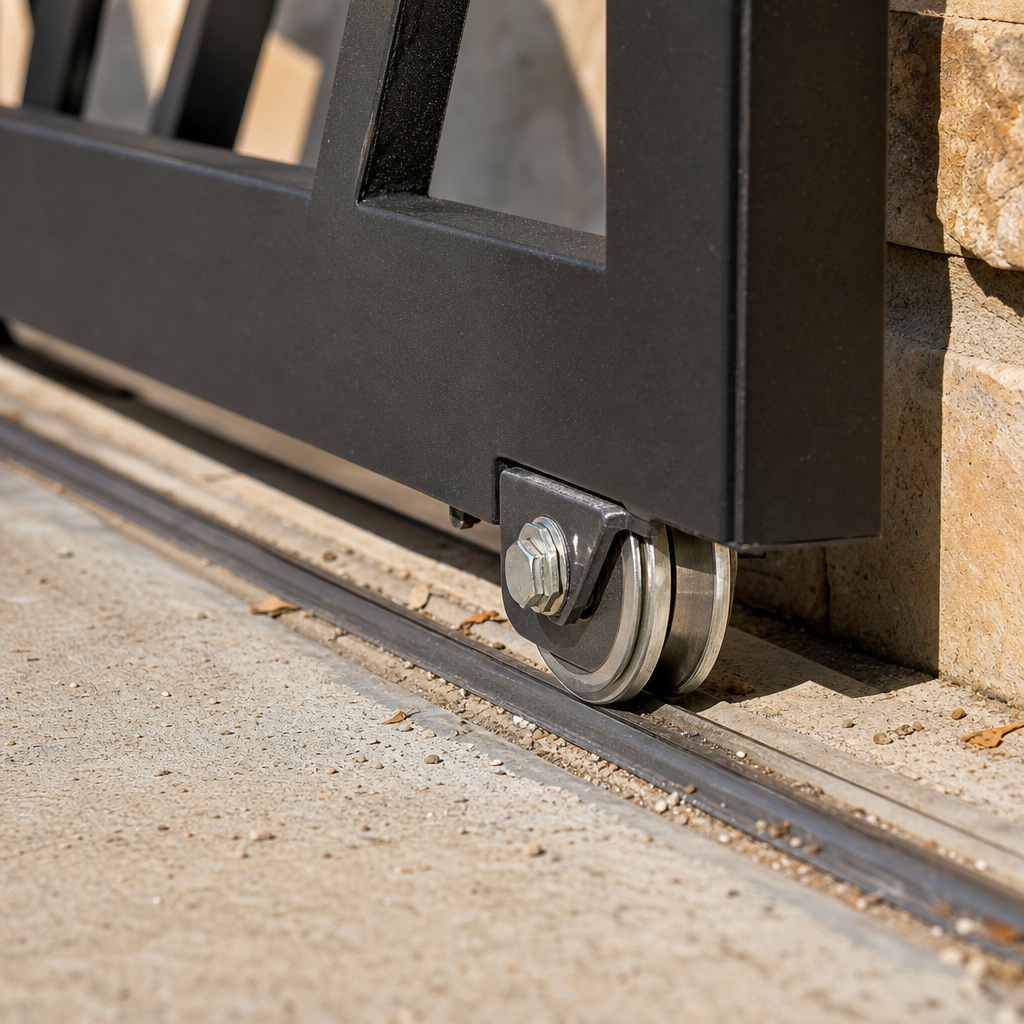
Check the gate track and path for physical obstructions such as gravel, stones, ice, or packed mud. In addition, inspect the hardware for worn rollers that cause excessive drag and binding. As technicians at Ironworks Gate Co. emphasize, clearing physical obstructions and replacing worn rollers allows the gate to glide freely along its track.
4. Failing Backup Batteries
Need automatic gate opener problems?
We’re available now - call for a fast, free estimate.
Power outages and utility surges can leave an automated gate inoperable if the secondary power supply has degraded.
Testing Backup Batteries
Most operators rely on sealed lead-acid backup batteries that degrade over time. A failing backup battery may hold nominal voltage while idle but collapse under the load of starting the motor. Test backup batteries under load and replace failing batteries that can no longer supply sufficient operating current.
5. Dead Remote or Keypad Batteries
When the gate operates directly at the control board but fails to respond to wireless controls, battery depletion is the primary cause.
Remote and Keypad Battery Replacement
An automatic gate remote or outdoor keypad failing to send a signal is commonly caused by dead batteries. Replace depleted coin-cell, 9V, or AA batteries in your remotes and wireless keypads before attempting other repairs.
Example Reset Procedure: How to Reset an Electric Gate Motor
The following is a general example of a power-cycle reset procedure used to clear temporary microprocessor fault codes:
- Turn off the high-voltage breaker supplying power to the gate.
- Disconnect the backup battery harness inside the operator housing so the board is completely unpowered.
- Wait 60 seconds to allow the board capacitors to fully discharge.
- Reconnect the backup batteries, then restore the main AC power breaker.
- Test the operator to verify standard cycling.
DIY Gate Repair vs. Professional Service
Basic maintenance tasks like cleaning blocked photocell sensors, replacing remote and keypad batteries, and clearing physical obstructions from tracks are common DIY tasks. However, complex diagnostic or electrical work may require professional assistance.
Below are general examples of estimated professional repair costs for illustrative purposes:
| Repair Task (General Examples) | DIY Feasibility | Example Professional Cost Range |
|---|---|---|
| Photocell cleaning and sensor realignment | Safe for DIY | $125 – $200 (Service Call) |
| Backup battery replacement | Safe for DIY | $150 – $275 |
| Remote or keypad battery replacement | Safe for DIY | $15 – $50 |
| Roller replacement and track clearing | Experienced DIY / Pro | $200 – $450 |
| Corroded wiring repair or replacement | Professional Only | $250 – $600 |
If troubleshooting points to severe power delivery issues or extensive corroded wiring, consider contacting professional automatic gate repair services such as Ironworks Gate Co., equipped with specialized testing tools and replacement hardware.
Frequently Asked Questions
How do I fix an electric gate that won’t close?
Check the optical safety photocells. Clean off any dirt or debris blocking the lenses, verify that misaligned safety sensors are pointed directly at each other, and clear any physical obstructions along the track.
Why is my gate opener not responding to the remote or keypad?
The most common cause is dead remote or keypad batteries. Replace the internal batteries in the transmitter or keypad before checking other components.
What should I check if my gate stops working after a power outage?
Check for failing backup batteries that can no longer supply load current, and verify that the main power interruption has been resolved at the circuit breaker.
How much does it cost to repair an automatic gate opener?
As a general example, routine repairs such as sensor realignments or battery replacements often range from $125 to $275, while addressing corroded wiring or replacing worn rollers may range from $200 to $600 depending on the system.
Need automatic gate opener problems?
We’re available now - call for a fast, free estimate.
Sources
- Injury patterns and epidemiology of automatic door-related … – pubmed.ncbi.nlm.nih.gov (2024)
- New Safety Standard for Automatic Security Gates Helps … – cpsc.gov (2001)
- Safety Commission Publishes Final Rules For Automatic … – cpsc.gov
Related reading: Electric Gate Manual Release Key | 10% Off & Free Estimate | Same-Day Service
Related reading: How to Manually Open Electric Gate | Call Now-10% Off | Same-Day Service | Free Estimate
Frequently Asked Questions
What should I do if a power-cycle reset fails to fix my automatic gate opener?
If a full power-cycle reset does not restore operation, the issue usually indicates a blown control board fuse, internal circuit failure, or persistent safety loop fault. Scheduling same-day diagnostics with Ironworks Gate Co. allows a certified technician to test board voltages and repair damaged electrical components directly from a fully stocked service truck.
How often do automatic gate backup batteries need to be replaced?
Sealed lead-acid backup batteries generally need replacement every two to three years because they lose the ability to deliver peak startup current as they age. If your gate slows down or fails during a power outage, Ironworks Gate Co. can perform an on-site load test to verify whether your secondary power system needs fresh cells.
Why is my gate opener motor humming or buzzing without moving the gate?
A humming motor typically means the operator is receiving electrical power but is mechanically stalled by a failing start capacitor, stripped internal gearing, or severe track binding from worn rollers. Cut power immediately to prevent motor burnout, then schedule a professional gate opener assessment to safely isolate the mechanical failure.
About the author
 |
Steven Caldwell Steven Caldwell is a licensed access control technician and technical writer with over 12 years of experience in residential and commercial gate systems. He holds an associate degree in electronics technology from Tarrant County College. Drawing on his field experience, Steven writes informative guides to help property owners in North Texas understand gate maintenance, troubleshoot common issues, and navigate repair costs. |
Gate not opening, off track, or opener dead?
We’re available now - call for a fast, free estimate.
Call Now - Free Estimate