
Quick Summary
Automated driveway gate failures often stem from electrical surges, misaligned safety sensors, or track friction rather than a blown motor, making systematic electric gate troubleshooting essential for safe and cost-effective repairs. Diagnostic experts at Ironworks Gate Co. recommend performing immediate checks on power supplies, breaker switches, optical photo-eyes, and manual release clutches to isolate minor sensor faults from severe mechanical binding. Readers will understand how to safely perform basic diagnostic evaluations and determine when to schedule a professional on-site diagnostic assessment or call for 24/7 same-day repair service.
Electric Gate Troubleshooting: Fast Fixes and Pro Guide
When an automated driveway gate stops responding, sticks half-open, or reverses without warning, finding the root cause quickly saves time and prevents unneeded part replacements. While many property owners think of an automated entry gate as a heavy-duty garage door, gate operators rely on motors, electrical circuits, and sensitive entrapment systems. The U.S. Consumer Product Safety Commission (CPSC) estimated roughly 300 emergency-room injuries annually from automated gates between 2011 and 2015.[2]
The diagnostic steps below outline safe initial checks on your power supply, safety beams, and mechanical hardware before you call in a specialist.
Quick Diagnostic Steps and Immediate Safety Checks
Quick troubleshooting summary: Start by testing line power at the dedicated breaker and sub-panel GFCI outlets. Next, inspect the optical photo-eyes for cobwebs, moisture, and beam alignment shifts. Look at the control board for diagnostic LED error codes or tripped entrapment circuits. If the motor hums but the panel stays still, check whether the manual disconnect clutch is engaged, inspect the track for physical obstructions, and verify remote transmitter batteries or programming.
A systematic diagnostic approach recommended by specialists like Ironworks Gate Co. helps separate mechanical binding and safety-circuit lockouts from genuine motor burnout. Property owners dealing with an unresponsive gate must prioritize safety above all else. Historical CPSC data recorded 32 gate-related fatalities between 1985 and 2001, and recent ASTM reports warn that gate derailment and falling panels remain serious hazards during unguided maintenance.[4]
First 60-Second Checks: Power, Breakers, and Obstructions
- Check Primary Power: If the gate stops after a storm or power outage, check the main breaker box and secondary GFCI outlets. Many gate operators will shut down safely during a surge, tripping an external breaker rather than blowing the main board.
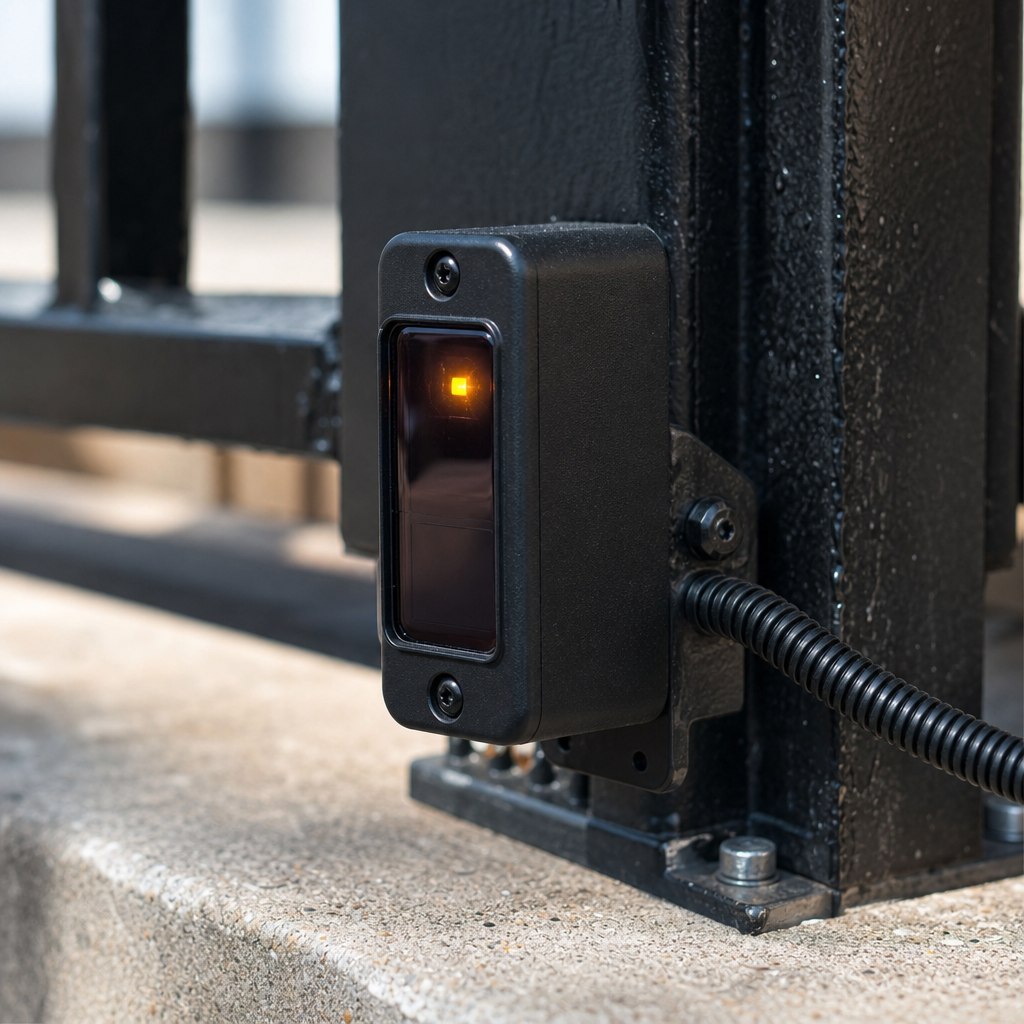
- Inspect Safety Photo-Eyes: Shifting ground or mounting brackets can tilt photo-eyes out of level. Clean debris and cobwebs off the lenses, and confirm that both the sender and receiver units show a solid alignment LED. A flickering or unlit indicator suggests a broken optical beam, which can lock the system in safety reverse.
Visual Safety Inspection and Manual Release Disengagement
- Safe Manual Disengagement: If you need to open or close the gate by hand, switch off the master power switch first. Insert the manual release key to unlock the gearbox clutch. Never force an articulated arm or pull a chain-drive slide gate while the drive gears remain locked.
If safety circuits refuse to clear or the mechanical track shows physical damage, a trained technician should perform a complete system evaluation.
Automatic Gate Repair
Automated gate troubleshooting restores perimeter security by identifying the real source of the problem, whether that is a mechanical bind, a tripped entrapment sensor, or a drop in supply voltage. Thorough diagnostics test safety loop continuity, photo-eye alignment, and board power before concluding that an expensive motor needs replacement.
Common Symptoms of System Failure
Ghost cycling (opening and closing on its own), stopping midway through a cycle, or refusing to open can point to an active safety sensor circuit, remote control signal issue, or sensor misalignment rather than a dead motor.
Diagnostic Triage for Residential and Commercial Systems
Because automated gates handle high mechanical loads, precision during testing is vital. Industry safety data compiled by ASTM highlights that gate failures can involve derailment, dropped panels, and serious trauma. CPSC records from 2001 reported nearly 25,000 gate-related injuries over a multi-year period, with roughly 9,000 involving children under 15. Safe testing procedures protect both your family and your property investment.[3]
Gate Opener Repair
Opener diagnostics isolate issues within electromechanical drive assemblies, master control boards, start capacitors, and internal limit switches. When an opener hums without moving or stalls under light load, direct component testing finds the failed part.
Limit Switch Calibration and Motor Drive Failures
When an operator fails to start its stroke or stops incorrectly, the limit cams or magnetic encoders may have drifted out of calibration. Misaligned limits can trigger an immediate stop or reverse cycle. Calibrating these limits ensures the gate slows down and stops properly at designated travel points.
Capacitor, Gearbox, and Internal Board Replacements
Following electrical storms or grid outages, testing the operator internals reveals whether you are dealing with a logic lockout or hardware damage:
- Capacitor Testing: Check start and run capacitors for drops in capacitance ratings, which can leave AC motors humming without enough torque to move the gate.
- Control Board Inspection: Look for blown fuses, scorched components, or damaged capacitors caused by power surges.
- Gearbox Diagnostics: Check internal drive gears for stripped teeth, sheared output keys, or binding components.
Comprehensive component testing ensures the correct parts are identified and repaired safely.
Electric Gate Repair
Low-voltage electronics, secondary entrapment sensors, and command relays handle the primary control logic for modern gate operators. In compliance with UL 325 safety standards, automated systems incorporate monitored entrapment protection devices designed to halt or reverse gate movement when an obstacle is detected.
Photo-Eye Sensor Realignment and Entrapment Lockouts
Seasonal ground movement can shift mounting posts, pulling infrared beams out of alignment. Technicians inspect edge sensors and realign photo-eyes before adjusting system settings. As a workplace safety example, California Cal/OSHA records cited by ASTM show that between 1990 and 2024, 47 workplace accidents involved gates derailing or falling, causing 35 injuries and 12 fatalities. This data underscores the hazards of gate derailment and falling panels, emphasizing why safety devices must never be bypassed.[1]
Loop Detector Diagnostics and Underground Wiring Faults
Buried inductive vehicle loops can fail when soil shifts, rodents chew through conduit, or moisture penetrates the wiring. When an operator ignores vehicle presence, technicians test loop inductance and connections to distinguish wiring faults from faulty plug-in loop detector modules.
Gate Installation
Need electric gate troubleshooting?
We’re available now - call for a fast, free estimate.
Proper gate installation prevents chronic binding and track drag by using deep concrete footings, adequate drainage, and operators sized specifically for the gate weight and wind exposure. Solid ground preparation stops soil movement from twisting safety brackets out of line.
Precision Engineering for Long-Term Reliability
Reliable gate installations require matched motor horsepower, continuous-duty ratings, and structural posts that remain plumb over time.
Groundworks, Dedicated Power Runs, and Access Infrastructure
Building a reliable entry system requires several key groundwork steps:
- Digging deep concrete footings that sit below the active soil line, complete with gravel drainage beds.
- Running dedicated electrical conduit with properly sized wire gauge and integrated battery backup systems.
- Installing heavy-gauge steel support posts, hanging balanced gate leaves, and wiring UL 325 compliant monitored safety equipment.
Driveway Gate Repair
Driveway gate troubleshooting addresses hinge drag, frame sagging, and track friction that trigger safety overrides. When physical shifting creates drag on the motor, the internal control board registers the resistance as an obstruction and halts operation to protect the drive train.
Structural Sagging, Post Shift, and Hinge Binding
Expansive soils and heavy wind gusts can pull hinge posts out of plumb over time. While adjusting force settings on the circuit board might temporarily mask the issue, correcting post deflection and hinge alignment addresses the underlying mechanical problem.
Track Obstructions and V-Wheel Bearing Seizures
On sliding gates, seized roller bearings or bent ground tracks create heavy mechanical drag. This extra friction causes the motor to exceed its operational limits and shut down. Replacing worn roller assemblies and clearing the track restores free travel and protects the gearbox.
Iron and Wrought Iron Gate Repair and Alignment
According to specialists at Ironworks Gate Co., heavy wrought iron gates require structural realignment and welding repairs when fatigue and rust create drag. Swing gates need strong hinge mounting points and balanced geometry to prevent the opener from stalling under high physical resistance.
Weld Fractures and Heavy Frame Reinforcement
Large iron gates exert significant leverage on hinge barrels and mounting plates. When stress or high winds crack these brackets, property owners often suspect motor failure. Welding repairs can reinforce cracked mounting plates, repair damaged pickets, and rebuild operator attachment brackets.
Rust Remediation and Bearing Lubrication Schedules
Dry hinge bearings increase motor load over time. Lubricating sealed bearing hinges with high-pressure grease reduces friction, keeps current draw normal, and protects internal drive components.
Sliding Gate and Swing Gate Troubleshooting Specifics
Sliding and swing mechanisms encounter different mechanical problems that look like motor failure on the surface. Slide gates frequently deal with chain slack and roller wear, while swing operators run into actuator stroke limits, hydraulic fluid leaks, and wind drag.
Sliding Gate Chain Tension, Track Deflection, and Roller Wear
Proper roller spacing and secure track anchoring prevent drive binding. Drive chains must maintain proper tension; excessive sag allows the chain to jump teeth on the drive sprocket, throwing off the operator limit sensors and leaving the gate out of position.
Swing Gate Articulated Arms, Linear Actuators, and Wind Resistance
Solid-panel wood or sheet metal swing gates act like sails during storms. Strong wind gusts increase the mechanical resistance on linear actuators, which prompts the board to halt movement. Technicians inspect swing arms, recalibrate internal stroke limits, and check hydraulic fluid levels to keep systems moving smoothly.
Wood Gate and Custom Automated Entry Systems
Custom wood gates often experience seasonal trouble during rainy months. Waterlogged wood adds substantial dead weight, which can push operator current draw past safety thresholds and trigger an obstruction stop.
Moisture Weight Gain and Frame Warping
Soaked wood panels absorb water, causing the gate leaf to sag downward and drag against the latch post or ground. When motor current spikes to overcome the extra weight, the control board halts operation to prevent internal drive damage.
Steel Internal Subframe Reinforcements
Fastening custom timber pickets directly to a welded steel frame prevents the frame from sagging. This internal metal skeleton stops wood flex, preserves hinge alignment, and protects the opener from seasonal overload during wet seasonal periods.
Parts and Components Commonly Repaired and Replaced
Need electric gate troubleshooting?
We’re available now - call for a fast, free estimate.
Effective repairs rely on manufacturer-grade replacement parts rather than temporary patches. Testing the entire system isolates damaged hardware and electrical components before any parts are swapped out.
Motors, Gearboxes, and Electronic Control Boards
Following power fluctuations or lightning strikes, damaged surge boards, blown contactor relays, or failed limit switches are common. Technicians use replacement control boards, gear reducers, and multi-channel radio receivers to restore proper operation.
Safety Sensors, Keypads, Loop Detectors, and Mechanical Hardware
To clear entrapment faults and restore operation, standard replacement components include:
- Machined guide rollers, drive chains, sprockets, and heavy-duty ball-bearing hinges.
- Inductive ground loop sensors, monitored optical photo-eyes, and rubber safety edges.
- Cellular access controllers, telephone intercom units, and commercial digital keypads.
Gate Automation Brands and Diagnostic Protocols
Modern gate operators utilize integrated control boards with specific diagnostic tools and indicators. Technicians read digital error codes, inspect monitored safety circuits, and configure access interfaces.
Diagnostic Protocols and Safety Architecture
Automated gate operators often feature onboard LED diagnostic displays or error logs to help identify power faults, optical misalignment, and loop sensor issues quickly.
OEM Parts Compatibility and Safety Standards
Systematic troubleshooting confirms that all replacement components match manufacturer specifications and maintain full UL 325 compliance.
What Does Electric Gate Troubleshooting and Repair Involve?
Repair costs vary based on what the diagnostic process uncovers, ranging from quick sensor realignments and limit resets to complete board or gearbox replacements. Technicians conduct an on-site evaluation before starting work so you receive a clear, upfront estimate.
Factors Influencing Project and Hardware Expenses
Total repair expenses depend on gate leaf weight, access control wiring complexity, and trenching needs. Diagnostic testing prevents unnecessary motor replacements when all the system needs is a realigned sensor or fresh mechanical hardware.
Professional Service and Repair Procedures
Professional gate troubleshooting services help property owners identify sensor faults, clear entrapment lockouts, and correct mechanical failures safely.
Residential and Commercial Service Support
Whether seasonal ground movement has shifted photo-eyes or an electrical surge has affected the control board, trained technicians use diagnostic tools and compatible replacement components to evaluate the system.
Diagnostic Evaluation
For high-traffic commercial distribution gates and residential properties alike, technicians focus on diagnosing the underlying mechanical and electrical source of the failure before replacing major components.
Frequently Asked Questions About Electric Gate Troubleshooting
Systematic troubleshooting clears electronic faults and safety stops safely. As technicians at Ironworks Gate Co. often note, most automated gate failures stem from simple sensor shifts or physical track drag rather than a burnt-out motor, making structured testing the smartest first step.
Common DIY Inquiries vs When to Call an Expert
- Why does my gate open and close by itself? Dirty photo-eye lenses, remote transmitter issues, or damaged underground loop wiring can send false reverse signals to the board.
- What should I do if the gate is dead after a power outage? Check your main breaker panel and any dedicated GFCI outlets first. To reset the motor logic safely, turn off main power for 60 seconds and switch it back on. If the gate remains locked, use the manual release key rather than forcing the gate by hand.
- Why is the gate motor humming but not moving? A humming motor that fails to turn the drive shaft usually points to a failed start capacitor, severe mechanical binding at the hinges or track, or a seized internal gearbox.
Safety Warning: Automatic gates present real mechanical and electrical hazards. ASTM safety studies highlight that maintenance and troubleshooting carry high risks of gate derailment and bodily injury. High-tension springs, heavy gate leaves, and electrical wiring should always be handled with care by trained technicians.
Diagnostic Timelines
Structured diagnostic procedures help pinpoint system faults quickly, keeping your property secure and your gate running reliably.
Need electric gate troubleshooting?
We’re available now - call for a fast, free estimate.
Sources
- [PDF] 2024-11-20-COPF-CODD-Hummingbird-Alliance-Meeting-Log.pdf – cpsc.gov (2024)
- [PDF] 2017 annual report – Consumer Product Safety Commission – cpsc.gov (2017)
- New Safety Standard for Automatic Security Gates Helps … – cpsc.gov (2000)
- Energy and Water Utility – pubs.naruc.org
Related reading: Electric Gate Manual Release Key | 10% Off & Free Estimate | Same-Day Service
Related reading: How to Manually Open Electric Gate | Call Now-10% Off | Same-Day Service | Free Estimate
Frequently Asked Questions
Why does my electric gate stop halfway through its cycle and reverse?
Automated gates reverse when safety circuits detect resistance, which is commonly triggered by misaligned optical photo-eyes, physical track debris, or hinge drag from ground settling. High wind resistance against solid gate panels or drifted limit switches can also mimic an obstruction and trip safety reverse mechanisms. If cleaning the optical lenses and clearing the ground track fails to fix the issue, a technician can test force settings and safety circuit continuity.
How can I tell if my gate motor is burnt out versus just having a bad start capacitor?
A distinct humming noise without gate movement usually indicates that line power is active, pointing to a faulty start capacitor, seized gearbox, or track binding rather than a dead motor. Complete motor burnout typically produces no sound at all, trips breakers instantly, or emits an electrical burning odor from the operator housing. Diagnostic specialists at Ironworks Gate Co. test capacitor ratings and motor windings to determine if a simple component swap can restore function.
When is it unsafe to continue DIY troubleshooting on an automatic gate?
You should halt DIY troubleshooting immediately if you encounter severe physical track derailment, fractured hinge welds, or internal high-voltage board arcing. Heavy structural panels and high-tension hardware carry significant crushing risks that require professional rigging and safety equipment to handle. Ironworks Gate Co. offers 24/7 same-day repair services and on-site diagnostic assessments to resolve high-risk mechanical and electrical failures safely.
About the author
 |
Steven Caldwell Steven Caldwell is a licensed access control technician and technical writer with over 12 years of experience in residential and commercial gate systems. He holds an associate degree in electronics technology from Tarrant County College. Drawing on his field experience, Steven writes informative guides to help property owners in North Texas understand gate maintenance, troubleshoot common issues, and navigate repair costs. |
Gate not opening, off track, or opener dead?
We’re available now - call for a fast, free estimate.
Call Now - Free Estimate