
Last updated August 25, 2026
Free on-site gate assessment - hinges, posts, and your LiftMaster or Nice gate operator checked before anything is quoted
The assessment is free and the quote is the invoice.

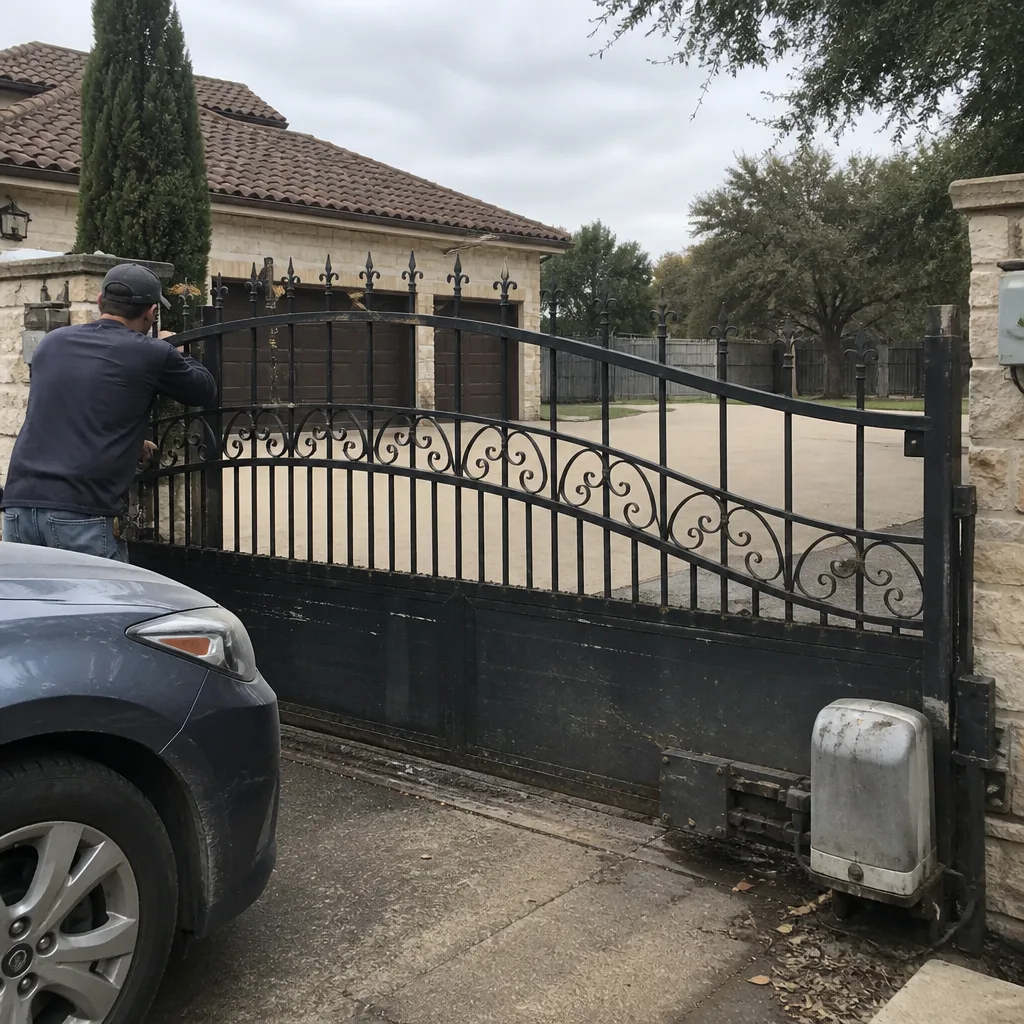 Before
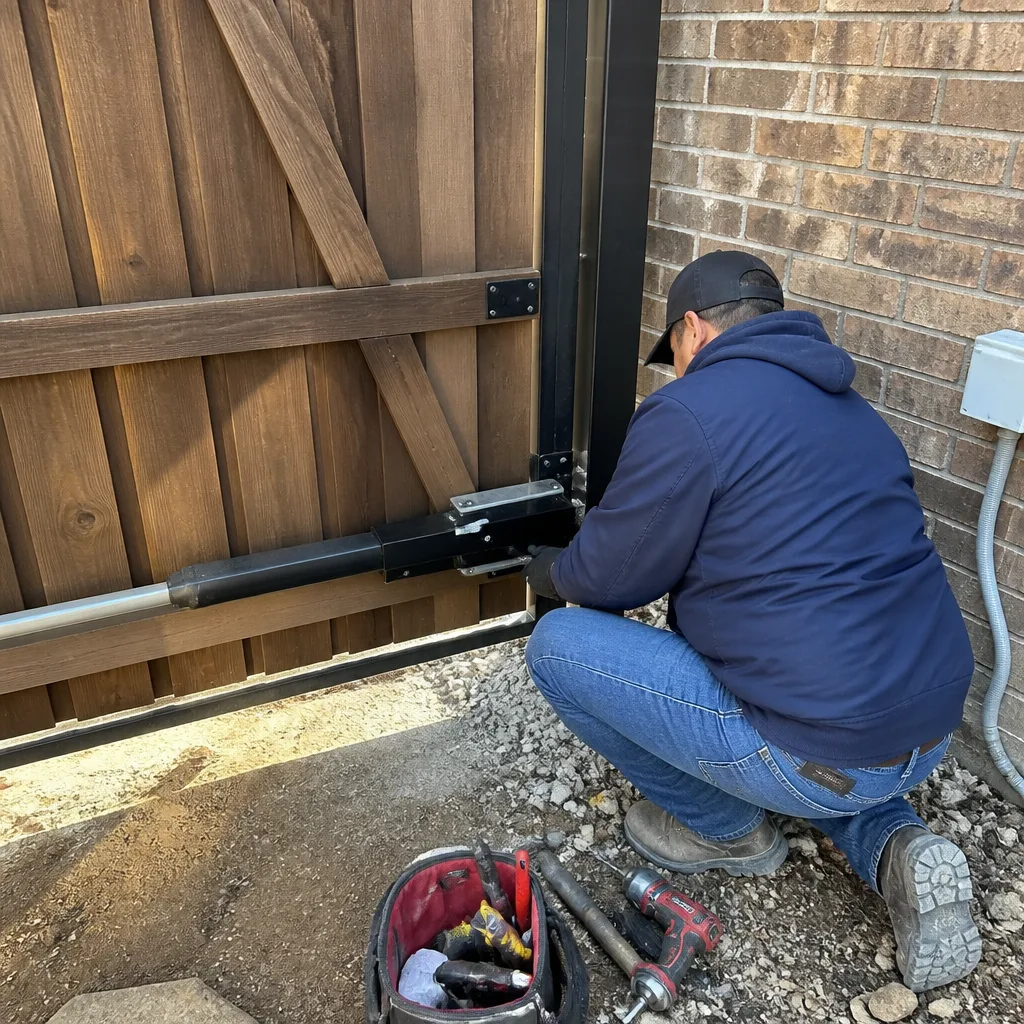 After
After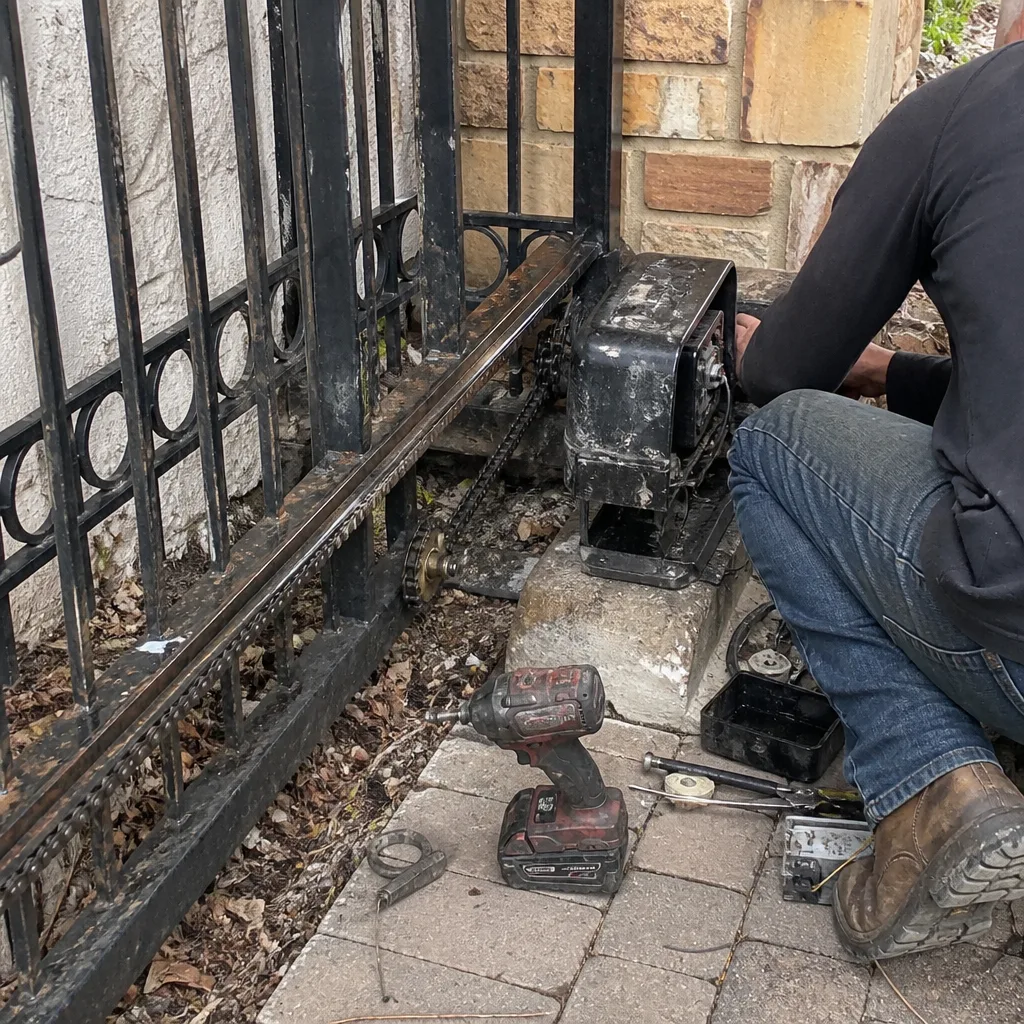 Before
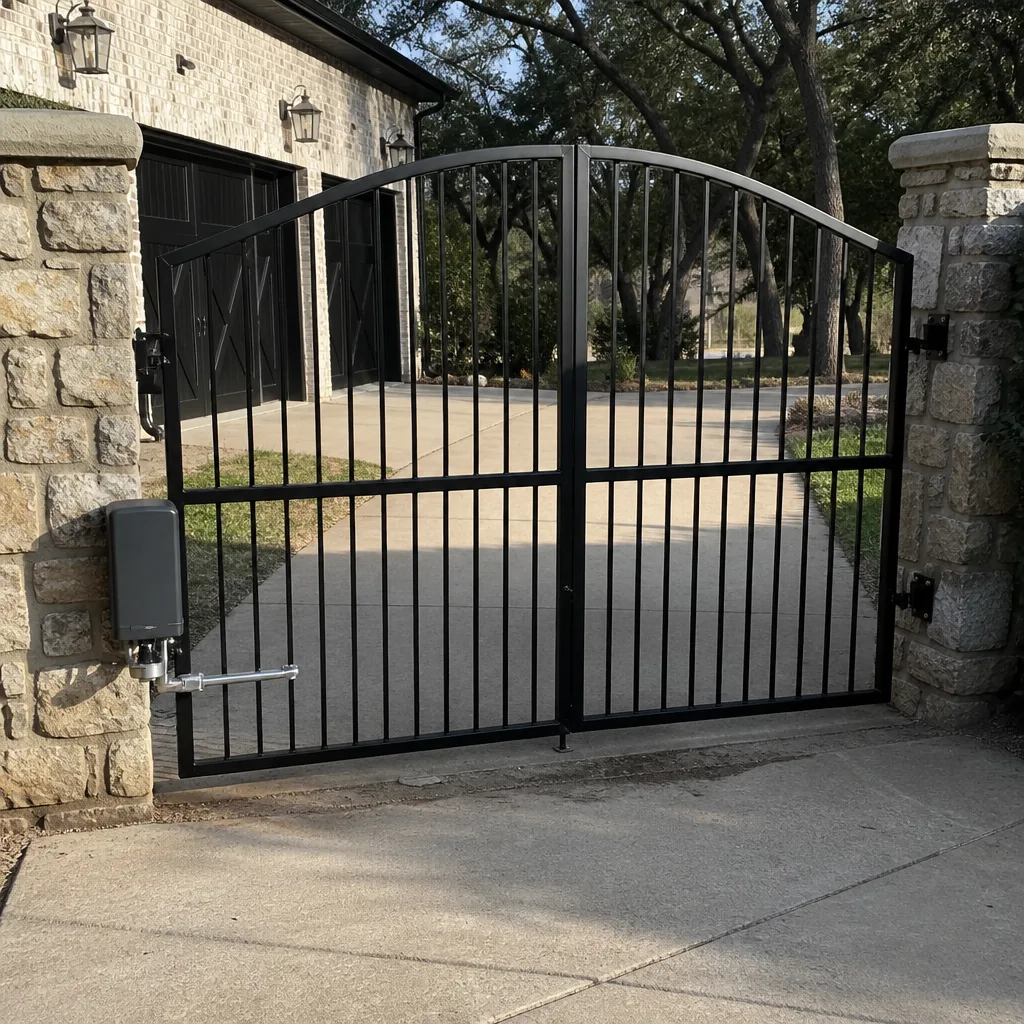 After
After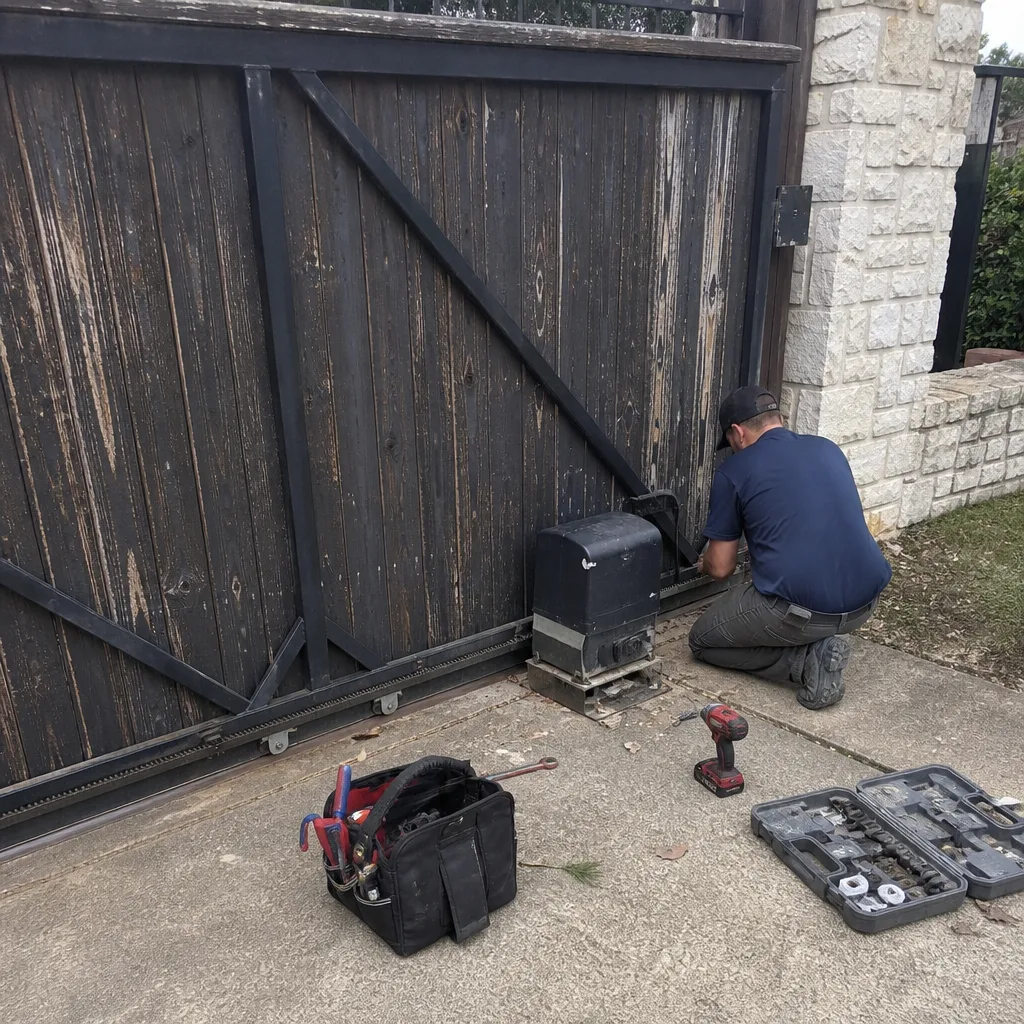 Before
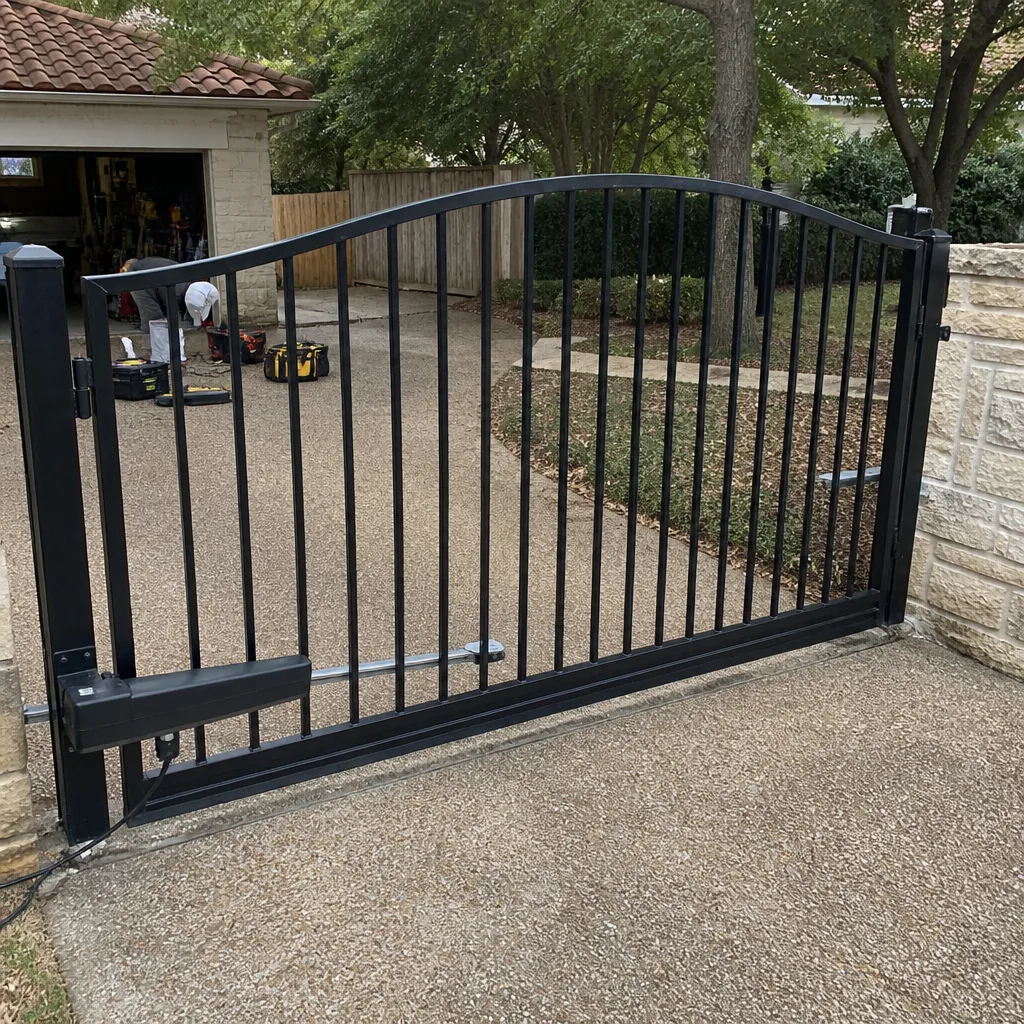 After
AfterGate Repair Maintenance Checklist for Grapevine Homeowners
A gate that has swung open and closed without complaint for fifteen years doesn’t fail because of one bad day. It fails because of a thousand small, ignored moments: a hinge that dried out, a battery that sat too long in the Texas heat, a sensor that got nudged an eighth of an inch out of alignment during a storm. Grapevine homeowners deal with a specific set of conditions: clay soil that shifts with every wet-dry cycle, summer temperatures that cook electronics inside metal boxes, and the kind of gusty spring winds that push a gate like a sail. This guide walks through the maintenance routine that catches those small moments before they become a Tuesday morning gate that won’t budge, with the car stuck on the wrong side. By the end, you will know exactly what to check, how often to check it, what needs a professional hand, and what a reasonable repair should cost here in Grapevine.
Quick Answer
A Grapevine driveway gate needs about fifteen minutes of attention every month, a deeper inspection twice a year, and professional service roughly every twelve to twenty-four months depending on the opener and how much wind the gate catches. The items that fail most often in this area are battery backups, hinge pins, and photo-eye sensors, all three of which telegraph their failure long before the gate stops moving. Catching a dry hinge or a low battery early usually costs under $200; ignoring it turns into a $600 to $1,800 motor replacement.
Table of Contents
- The Seasonal Rhythms That Wear Down a Grapevine Gate
- The 15-Minute Monthly Checklist
- The Twice-Yearly Deep Inspection
- Hinges and Hardware: Where Gates Actually Fail
- Opener and Motor Maintenance: The Electrical Side
- Safety Systems: Photo Eyes, Edges, and Reverse
- Track and Wheel Gates: A Different Set of Rules
- Common Mistakes to Avoid
- When to Call a Professional
- Frequently Asked Questions
- The Bottom Line
The Seasonal Rhythms That Wear Down a Grapevine Gate
Grapevine sits on expansive clay soil, the kind that swells after a heavy rain and shrinks during a drought. That movement travels straight into your gate posts. A post that was perfectly plumb in April can be out of square by August, not because anyone hit the gate, but because the ground under the post shifted by a fraction of an inch. That fraction changes the geometry of the entire gate. The latch no longer lines up. The wheels bind on one end of the track. The opener works harder than it should, which shortens its life. We’ve pulled openers apart in Grapevine service calls where the motor looked like it had been through three lifetimes, and the root cause was a post that moved half an inch in 2019 and was never corrected.
Then there is the heat. A black metal gate in direct Grapevine sun can reach 160 degrees on an August afternoon, and the metal box that houses the circuit board gets even hotter. Electronics do not like that. Capacitors swell, solder joints flex, and batteries fail faster here than they do in cooler climates. Homeowners who understand this rhythm, the wet spring that moves the ground and the hot summer that cooks the components, tend to catch problems early because they know when to look.
Grapevine’s Problem Months:
- March through May: Rain saturates clay soil, posts shift, and rust accelerates on exposed hardware.
- June through September: Heat stresses batteries, control boards, and motors. The inside of an opener housing can exceed 140 degrees.
- October through February: Temperature swings cause condensation inside control boxes, which corrodes terminals and connectors.
None of this means Grapevine is a uniquely hostile place for gates. It just means the maintenance calendar here looks different than it would in Houston or Amarillo. Adjust your inspection schedule around these local conditions and most failures become predictable, which means preventable.
The 15-Minute Monthly Checklist
Monthly maintenance is not about doing repairs. It is about gathering information. A gate tells you it is failing long before it fails, but only if someone is listening. Set a recurring calendar reminder on the first Saturday of the month, grab a rag and a can of spray lubricant, and walk the gate once.
Step-by-Step Monthly Walkthrough:
- Watch one full open-and-close cycle from start to finish. Stand where you can see the hinges, the wheels, and the gate’s leading edge. Listen for grinding, squealing, or a motor that sounds like it is straining. A healthy gate moves smoothly and almost quietly. A gate that hesitates, jerks, or slows in one spot is telling you something.
- Look at the gap between the gate and the latch post when the gate is closed. If the gap is wider at the top than the bottom, or wider than it was last month, a post or hinge is moving. Take a photo with your phone and compare month to month. Grapevine clay will move posts, and the earlier you catch it, the cheaper the fix.
- Check the battery backup if your opener has one. Most openers with battery backup have a small indicator light or a test button on the control board housing. If the light is red or the battery is more than three years old in Grapevine heat, plan to replace it before storm season.
- Spray the hinges, wheels, and any moving pivot points with a dry silicone or PTFE lubricant. Avoid grease and heavy oils; they collect dust and turn into grinding paste. A light spray, wiped down, is all that is needed.
- Clear debris from the gate path and the track. Grapevine wind pushes leaves, grass clippings, and the occasional palm frond into the track channel. A blocked track is the most common reason a slide gate reverses itself or trips its safety system.
- Test the safety reverse once. Place an empty cardboard box in the gate’s closing path. The gate should stop and reverse before crushing the box. If it doesn’t, stop using the gate in automatic mode until a professional checks the safety sensors. This is not optional; an automatic gate without a working reverse is a serious injury risk.
That entire routine takes under fifteen minutes. The people who do it consistently are the ones who never call us for an emergency at 7am. The people who don’t are the ones who do.
The Twice-Yearly Deep Inspection
Twice a year, in October and April, give the gate a more thorough once-over. October matters because winter temperature swings are coming, and April matters because the spring rains will soon put the clay soil through another swell cycle. These are also good months to schedule a professional tune-up if you’d rather have trained eyes on it. Ironworks Gate Co. offers an $89 Seasonal Tune-Up that covers most of what is listed in this section.
Spring Inspection (April):
- Inspect every weld joint and bolt with a flashlight. Look for hairline cracks in the metal, especially around hinges and where the opener arm connects to the gate. A crack the width of a pencil lead will become a break, and a gate that breaks free of its hinge is a serious hazard.
- Check the gate’s weight balance. With the opener disengaged, the gate should swing or slide with one hand’s worth of effort. If it takes two hands, or it wants to run away from you in one direction, the hardware is binding or the posts have moved.
- Run the opener through five full cycles. Watch the motor’s temperature. A motor that is too hot to touch after five cycles is working too hard and will fail early.
- Examine all wiring for sun damage. Texas UV light degrades wire insulation faster than most places. Look for cracking, brittleness, or exposed copper on any low-voltage wire running to keypads, sensors, or the motor.
Fall Inspection (October):
- Replace batteries in keypads, remote controls, and the backup battery. Cold weather exposes weak batteries. Do this in October and you will not be locked outside during a January cold snap.
- Lubricate the chain or belt drive on the opener if accessible. Follow the manufacturer’s guidance for the specific opener model. Most chain drives take a light machine oil; most belt drives need no lubrication at all.
- Check the weather seal and drainage around the opener box. Condensation from temperature swings is the silent killer of control boards. Make sure the box seals tightly and that water drains away from the mounting area.
- Test the manual release mechanism. If the power goes out, can you open the gate by hand? If the release lever is stiff or rusted, clean it and lubricate it now, before you actually need it.
Hinges and Hardware: Where Gates Actually Fail
When a gate breaks in Grapevine, it is almost never the gate panel itself. It is the hardware. Hinges, bolts, wheels, and track brackets carry the entire weight of a gate every single day, and they fail in predictable, preventable ways. Think about it: a typical steel driveway gate weighs between 300 and 800 pounds. Every hinge pin carries a portion of that weight through thousands of open-and-close cycles per year. When a hinge pin dries out, the metal-on-metal friction grinds the pin thinner. When the pin gets thin enough, it shears, and the gate drops.
Signs of hinge trouble are easy to spot once you know what to look for. A gate that sags toward the latch side is the number one indicator. So is a gap at the top hinge that widens when the gate is halfway open. You may also see bright metal or fine metal dust around the hinge pin, which means something is grinding. The fix for most hinge problems is straightforward: replace the pin or the entire hinge before it fails completely. In Grapevine’s clay-swell environment, a hinge that binds due to post movement will also cause the gate to work against itself, which shortens the life of both the hinge and the opener.
What to Check on Your Gate Hardware:
- Hinge pins: no wobble, no bright metal dust, no sagging.
- Bolts and brackets: all tight, no rust blooms, no hairline cracks around bolt holes.
- Wheels and rollers: spin freely, no flat spots, no wobble.
- Track and guide brackets: clean channel, no bends, brackets securely anchored.
- Post anchors: no visible movement at the base, no cracking in the concrete or soil around the post.
One honest note about Grapevine’s soil: if your gate posts have moved more than about a quarter inch out of plumb, adjusting the gate on the existing posts will only buy time. The real fix is resetting the posts, which means digging out the old footing, re-setting with proper depth below the clay line, and re-hanging the gate. It is more work up front, but done correctly, it typically ends the problem instead of moving the problem to next spring.
Opener and Motor Maintenance: The Electrical Side
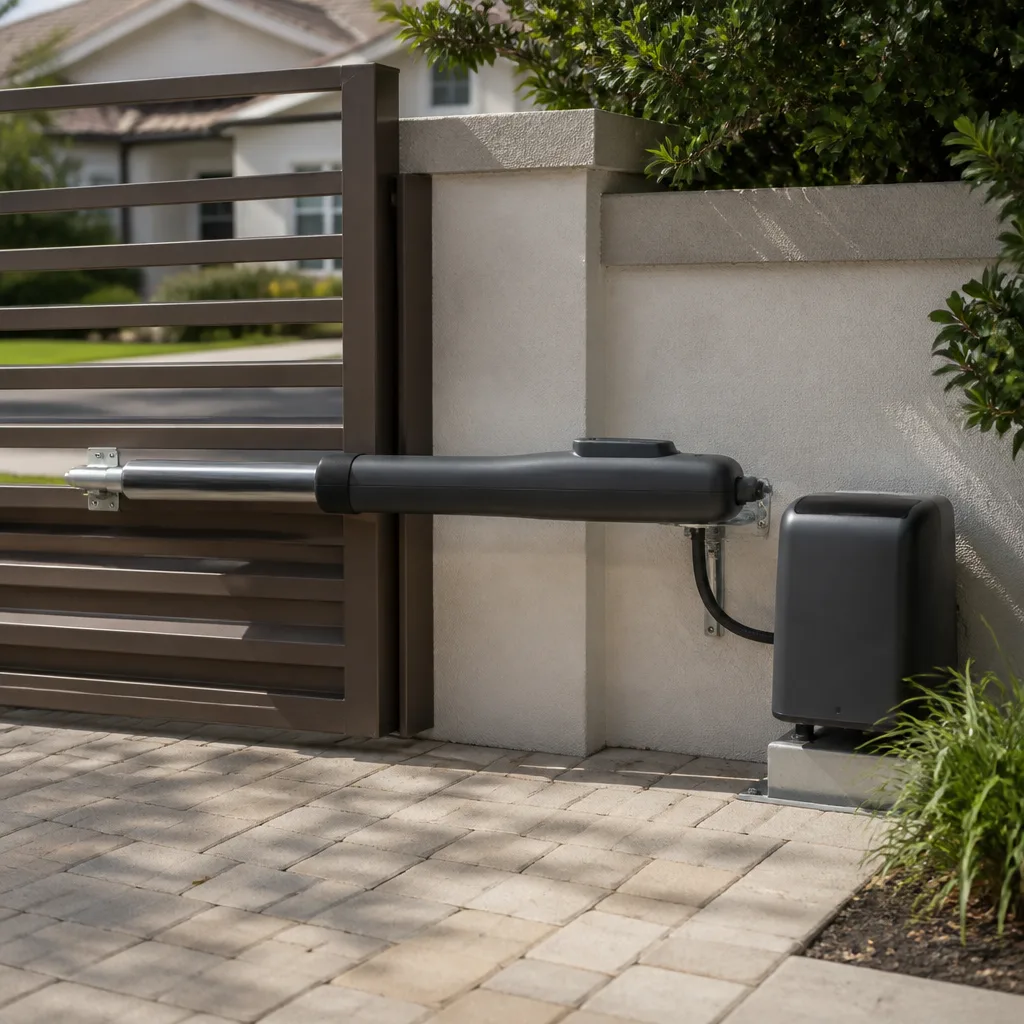
Gate openers are simple machines: a motor, a gearbox, a control board, and a limit switch. But they live outside in a metal box in Grapevine, which means they run hot, collect dust, and shake every time a heavy gate starts or stops. Most opener failures we see are not motor failures. They are control board failures, limit switch problems, or battery failures, all of which are easier to prevent than to repair after the fact.
Battery backups deserve special attention for Grapevine homeowners. A battery that sits inside a hot metal box through a Texas summer lasts about two to three years, significantly shorter than the manufacturer’s stated lifespan in a climate-controlled test. When the battery dies, it often takes the control board with it, either through a surge or through the slow corrosion of leaking battery acid. If your opener’s battery is over three years old, replace it. The part costs less than a service call, and the peace of mind is real: when the next storm knocks out power, your gate still opens.
If your opener uses a chain drive, listen for a slapping or rattling sound from the chain. That means the chain has stretched and needs tensioning. If you hear a grinding sound from inside the motor housing, that is usually a gearbox problem. Do not ignore a noisy opener. A noisy opener is a loud countdown to a dead one.
Signs Your Opener Needs Professional Attention:
- The gate starts and stops erratically, or reverses for no reason before fully opening or closing.
- The motor runs but the gate does not move, which usually indicates a stripped gear or a broken coupling.
- The opener loses its limit settings and repeatedly tries to push the gate past its stops.
- The control board shows visible scorch marks, melted solder, or a swollen capacitor.
- The opener makes a loud buzzing sound without moving the gate.
Ironworks Gate Co. is trained and equipped on nine gate-automation brands, including FAAC, BFT, Linear, and Viking, so when a specific opener needs service in Grapevine, the correct diagnostic happens on the first visit, not the third. Most jobs we do are completed in a single visit, with the price settled before any work begins.
Safety Systems: Photo Eyes, Edges, and Reverse
Automatic gates are powerful machines. The average swing gate opener can exert several hundred pounds of force at the gate’s leading edge, which means an improperly adjusted gate can injure a person, a pet, or a vehicle. This is not a theoretical concern. It is the reason the safety systems exist, and it is the reason they should be tested every month with the cardboard box test described earlier.
Photo eyes, the small sensors mounted near the ground on each side of the gate opening, are the most common safety component to fail or drift out of alignment. A Grapevine storm with high winds can bump a sensor post just enough that the beam misses its receiver. The gate interprets this as an obstruction and either refuses to close or reverses as soon as it starts. If your gate starts acting like it sees an invisible obstacle, check the photo eyes first. Clean the lenses with a soft cloth, make sure they are both pointing directly at each other, and remove any grass or debris blocking the beam.
Safety edges, the pressure-sensitive strips on the leading and trailing edges of the gate, are another common failure point. These are rubber strips that collapse when they touch something and send a stop signal to the opener. Over time in Grapevine sun, the rubber dries out and cracks. A cracked safety edge will eventually short out or fail entirely, and a failed safety edge means the gate’s main safety backup is gone. If your safety edge is cracked, brittle, or missing chunks, have it replaced. This is not a component to postpone.
Professional Safety Checks:
- Ultrasound or gate-edge sensor calibration and replacement.
- Load-sensing reverse adjustment, which teaches the opener how much force is normal for your specific gate.
- Obstruction detection testing at multiple points along the gate’s travel path.
- Photo-eye alignment and wiring inspection after any storm or landscaping work near the gate posts.
We recommend that homeowners do the cardboard box test monthly and leave the deeper safety calibration to a trained professional. Getting the force settings wrong can make the problem worse. A gate that reverses too aggressively can be damaged by its own opener, and a gate that doesn’t reverse at all is a liability waiting to happen.
Track and Wheel Gates: A Different Set of Rules
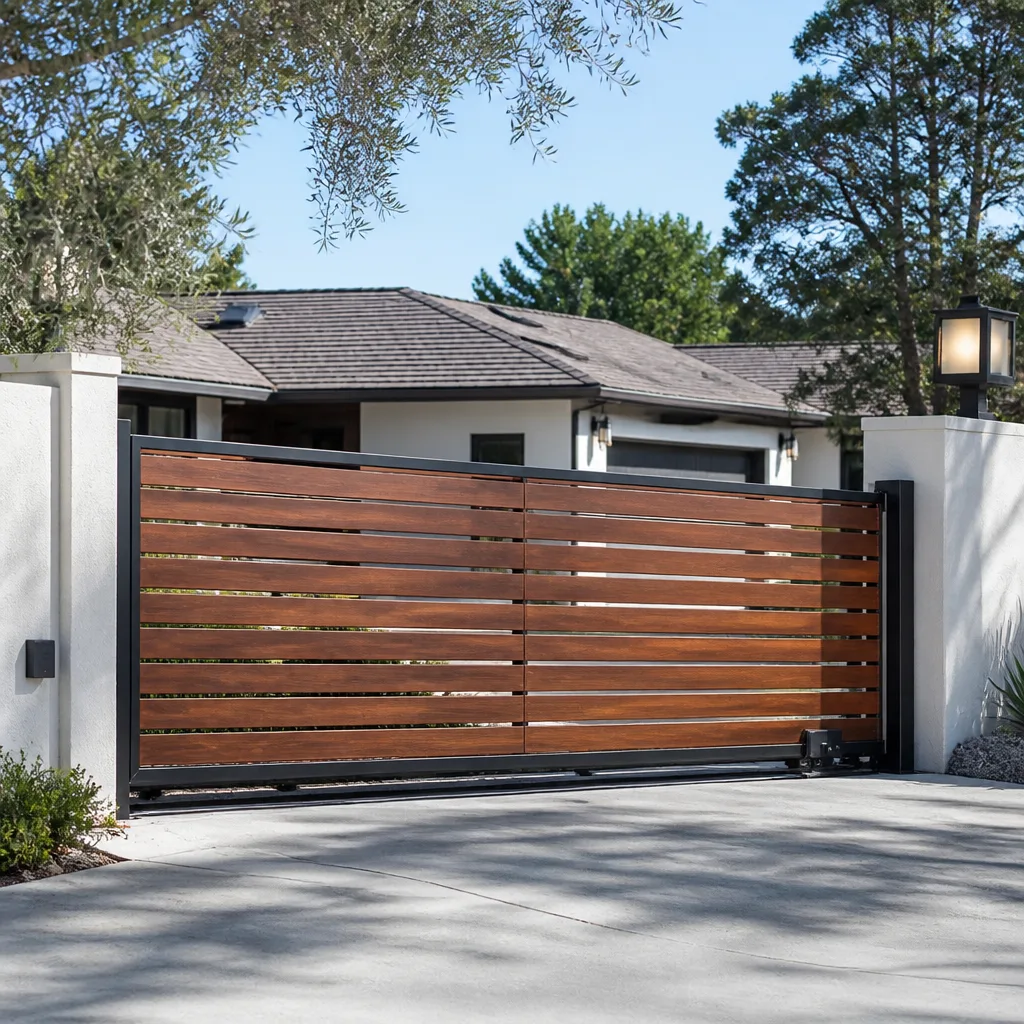
If your Grapevine home has a sliding gate rather than a swing gate, the maintenance priorities shift. Sliding gates ride on wheels along a metal track laid across the driveway opening, and that track is the gate’s greatest vulnerability. A track that fills with gravel, mud, or grass clippings turns a smooth-gliding gate into one that jerks, groans, and eventually jams. In the fall, wet Grapevine leaves packed into the track solidify into a mulch that stops the wheels cold. In the spring, mud from the clay soil coats the track and then hardens in the summer heat.
Clean the track every month, or more often if you have oak trees or heavy landscaping near the gate. Use a stiff brush and a garden hose, and never use grease on the track. The wheels need to roll on clean metal, not slide on lubricant. Check the track for bends or dents, which happen when a car tire catches the edge. A bent track section causes the gate to bounce every time the wheels pass over it, and that bouncing translates directly into vibration for the opener and wear on the wheels.
Slide gate wheels also wear unevenly. Look at the wheels from the side: if one wheel is visibly smaller in diameter than the others, or if the gate is riding lower on one end, the wheels need replacement. Worn wheels put stress on the gate frame and the track, and eventually the gate starts scraping or the opener burns out. Wheel replacement is a quick job for a gate professional and far cheaper than replacing the entire track or the opener.
Common Mistakes to Avoid
- Using the wrong lubricant. Heavy grease and automotive oils attract dust in Grapevine’s dry, windy conditions and turn into a gritty, abrasive paste that accelerates wear. Use a dry silicone or PTFE spray on hinges and wheels, and wipe off the excess.
- Ignoring a gate that slowly changes its travel path or the size of its latch gap. A gate that’s an eighth-inch off today will be half an inch off next season, and then you are paying for post resetting instead of a simple hinge bushing replacement.
- Postponing battery replacement. Grapevine heat kills backup batteries in two to three years, and a dead battery can take the control board with it. A $60 battery is cheap insurance compared to a $400 control board.
- Testing the safety reverse with your hand or a small object. Use a cardboard box. If the reverse fails, a cardboard box will not send you to urgent care. Your hand is another story.
- Letting landscaping grow into the gate’s path. Grapevine’s aggressive shrubs and vines will wrap around hinges, block photo eyes, and push sensor posts out of alignment. Keep plant growth trimmed at least eighteen inches away from every moving part of the gate.
- Forcing the gate open or closed when the opener is malfunctioning. A gate that will not open under power should be disengaged properly using the manual release, never forced. Forcing it bends brackets, strips gears, and turns a simple repair into a replacement.
- Assuming the opener is the problem before checking the gate itself. Most “opener failures” are actually gate problems: a binding hinge, a blocked track, a moved post. The opener is just the first thing to complain. Fix the gate first, and the opener usually calms down.
When to Call a Professional
Some maintenance tasks are sensible for a homeowner. Others are not. Gate springs under tension, especially the counterbalance springs on heavier swing gates, carry enough stored force to cause serious injury if they let go. If your gate has a broken or stretched spring, call a professional. Similarly, any work on the opener’s internal components, control board, or safety sensors involves both electrical hazards and the risk of miscalibrating a system that keeps your family safe. Welding cracks in a gate frame or resetting a post that has moved in Grapevine’s clay soil requires tools and experience that most homeowners simply do not have, which is fine. You should not be expected to. Ironworks Gate Co. offers free estimates in Grapevine; call (432) 237-4128 and describe what your gate is doing. A live person answers, 24 hours a day, every day of the week.
Frequently Asked Questions
Most gate repairs in Grapevine run between $150 and $450 for common issues like hinge replacement, wheel replacement, photo-eye realignment, or battery replacement. More involved repairs, such as replacing a control board, a gearbox, or resetting posts, typically range from $500 to $1,800 depending on the gate’s size and the opener model. Call (432) 237-4128 for an exact quote, and remember that Ironworks Gate Co. offers $50 off any repair over $250 and free second opinions on written estimates.
We recommend a professional inspection and tune-up twice a year, in the spring and fall, with monthly homeowner checks in between. Grapevine’s clay soil and summer heat accelerate wear on posts, hinges, and opener electronics, so a twice-yearly rhythm catches problems before they become emergencies. An $89 Seasonal Tune-Up from Ironworks Gate Co. covers the professional portion of that schedule.
This pattern is usually caused by heat expansion or a failing control board that overheats in the afternoon sun. In Grapevine’s summer, an opener housing can exceed 140 degrees, and a failing capacitor or solder joint may work fine when cool but fail when hot. The fix is usually a control board replacement or improved ventilation for the opener box, which is a quick professional diagnosis.
Yes, if you are comfortable with basic electrical work and can access the battery inside the opener box. Most backup batteries are 12-volt sealed lead-acid or lithium units that plug in with simple connectors. Disconnect power to the opener first, note the orientation of the old battery’s terminals, and match the replacement battery’s voltage and amp-hour rating. If any of that process feels uncertain, call a professional. A wrong battery or reversed polarity will damage the control board.
The most common gate problem in Grapevine is a gate that fails because the posts have shifted in the clay soil. The gate starts sagging, the latch misses, and the opener strains against the misalignment until something gives. The fix often requires resetting the posts deeper than the original installation, which addresses the root cause rather than just adjusting the gate to accommodate the movement. Call (432) 237-4128 for an evaluation.
Yes. Ironworks Gate Co. is based locally and services Grapevine and the surrounding area with most appointments available within the same week. A live person answers the phone 24 hours a day, so you can call (432) 237-4128 any time to schedule. Emergency calls, such as a gate stuck open or a safety system failure, are prioritized.
The Bottom Line
A Grapevine gate is a machine that lives outside in a place with shifting clay, blazing summers, and wind that never quite stops. It will not maintain itself, but it does not need much: fifteen minutes a month, a deeper look twice a year, and a professional on call when something needs more than basic care. The homeowners who follow this checklist are the ones whose gates last twenty years and whose service calls are quick and planned, not panicked and expensive. Keep the hardware lubricated, the track clean, the battery fresh, and the safety systems tested, and your gate will do its job for decades. When something does need a professional, call Ironworks Gate Co. at (432) 237-4128 for a free estimate, and we will be there when we say. Done right, and backed in writing.
Written by Victor Salinas, Owner at Ironworks Gate Co., serving Grapevine since 2013.